The families and friends who have fallen out over the US-Israel war on Iran
The conflict has fractured relationships and exposed long-running tensions between those who support regime change at any cost and those who don’t

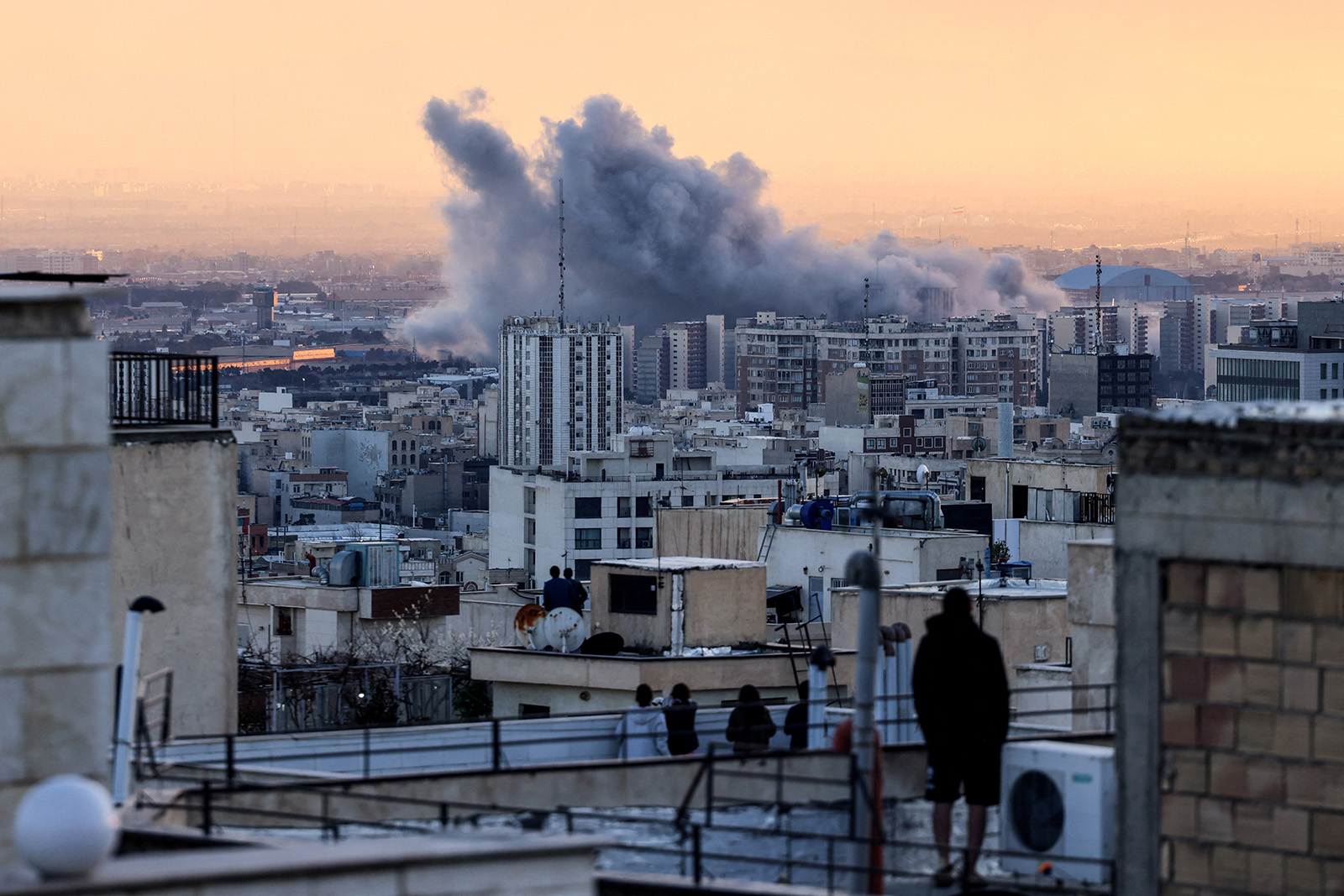
When the US and Israel began their now months-long military attack on Iran in February, many Iranians found themselves navigating two different forms of grief: that of watching their homeland destroyed, and also of watching people they know celebrate it.
Rifts have developed within families and friend groups, particularly between those who support foreign military intervention and those who do not.
There has long been tension among the members of the Iranian diaspora around the political future of their homeland. Even among those who want an end to the country’s current regime, there are disagreements on how that should be achieved. But in the past four months of war and the killing of Iran’s supreme leader, these divisions have deepened and exposed fractures among friends and family that in some cases now feel irreparable.
Related content
Some have been blocked by loved ones on social media for their refusal to support regime change at any cost. Others have cut off contact with people who they have seen reposting what they regard as Zionist propaganda and passionately supporting the war.
“I don’t know any other people in the world who have celebrated their homeland being bombed,” says Taraneh, 37, who was born in the UK to Iranian parents. When the attacks began in February, she posted her condemnation on Instagram and was shocked to see an old friend who had recently emigrated from Iran to Canada telling her that it was actually cause for celebration. He also voiced his support of Reza Pahlavi, the exiled son of the former Shah who was deposed in the 1979 revolution.
“We’re a similar age and I always thought of him as quite ‘liberal’, whatever that means,” she says. “I think you can end up being in an echo chamber online — or at least you think you are and then something like this happens.”
Though she tried to explain her anti-war position — clarifying that she didn’t support the Islamic Republic but also didn’t think Israel and the US were going to “free” the country — Taraneh says it was like “arguing with a brick wall”. She believes the fact that he had grown up in Iran and she hadn’t, meant that he felt he had authority on the matter because of his lived experience, reflecting an argument that is often used by Iranians who support regime change at any cost.
The former friends are no longer speaking and Taraneh has mostly withdrawn from social media, overwhelmed with frustration. “There’s already enough going on. We don’t need to be fighting with each other as well.”
Taraneh has also found herself limiting contact with members of her immediate family, including her father, who has shown unwavering support for the Islamic Republic.
“I thought we were more aligned in certain areas, but based on the conversations we’ve had recently it’s become clear that we’re not. I’m not checking in with him as much as I should because he starts going on his rants and it gets really heavy for me,” she says.
“There is no way for me to have those conversations and for it to be peaceful — I think everyone is entrenched in their own opinions at this point, and stubborn and emotional. They won’t change their minds and they’re going to be very upset if someone even dares to try.”
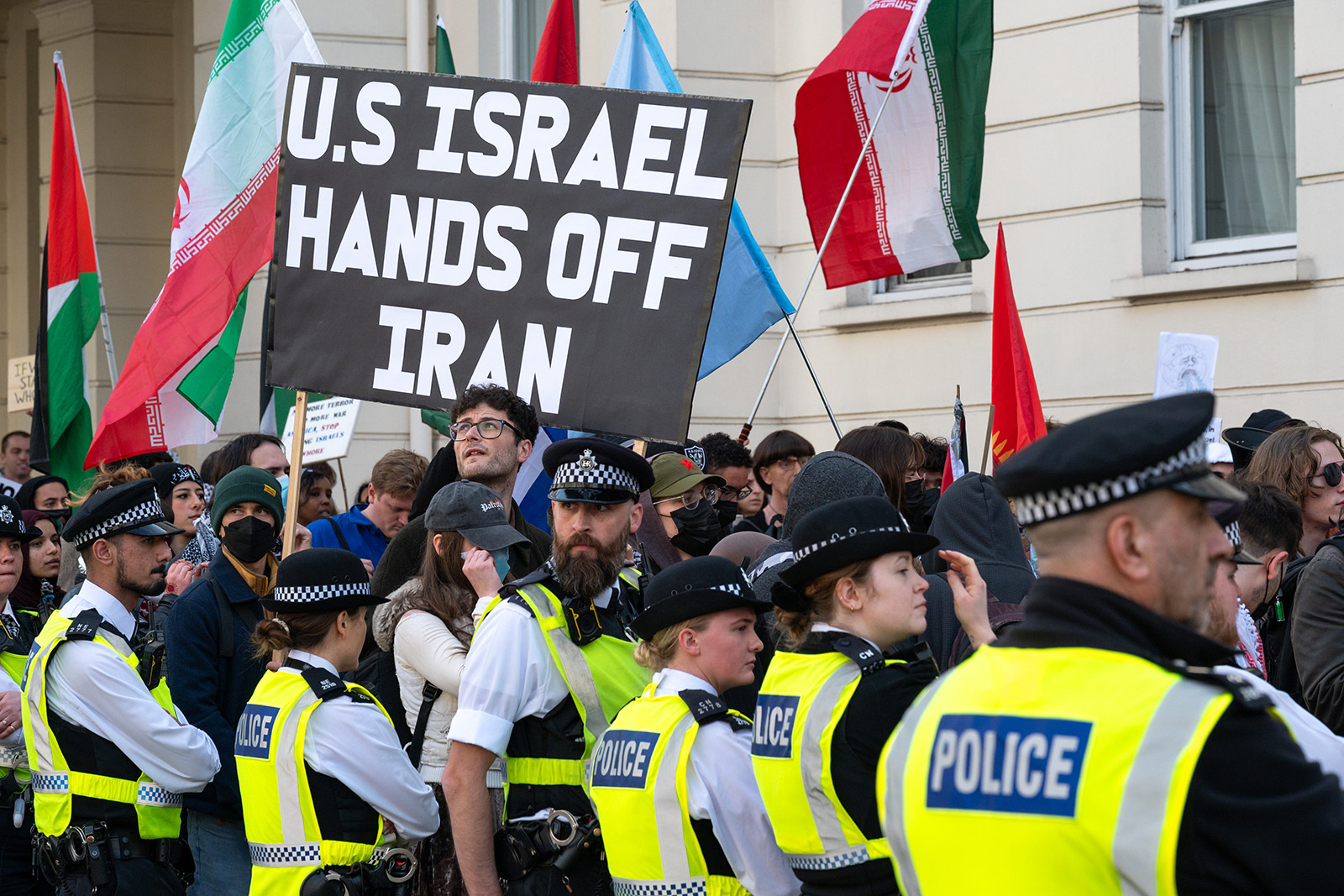
Layla, 36, who grew up between London and Los Angeles and was born to Iranian parents who left for the US post-revolution, was shocked at the fervor with which she saw some members of the diaspora — including some of her own family — advocating for strikes on Iran. “It was really insane to me to hear people trying to convince me that bombing a major city like Tehran was going to lead to anything but devastation and more tension,” she says.
“My parents and I have felt so devastated by what’s happened in Gaza. To understand that and see it every day for the past three years and to have that logic not applied to Iran has been extremely frustrating. At this point, the only people in my family whose opinions I actually care about are my parents. I’ve had to have tense conversations with them in order to maintain our relationship and to convince them that this is a bad idea.”
Following the US strike on Minab school, which killed at least 156 people — 120 of them children — Layla posted a scathing critique of the Iranians who had called for and rallied in favour of foreign intervention and those who have politically aligned themselves with Israel. One of her cousins responded telling her that she had no right to judge.
“If you are a proponent of death and destruction and bombing, I’m going to judge you,” she says. “I don’t care, I will always do that. This is not a disagreement about music and movies.”
A different cousin posted a story thanking Republican senator Lindsay Graham, a man who has repeatedly called for the destruction of Iran, for the attacks. Layla is no longer speaking to either of them.
“These experiences have made me feel incredibly distanced from and wary of my family,” she says. “How is this any different than finding out someone is racist, antisemitic, xenophobic, homophobic or Islamophobic?”
For Layla, anger has been a coping mechanism and a way to deal with her feelings of hopelessness.
“I think this experience is so brutal to the soul that anger is one of the few expressions that feels like it can balance it out,” she says. “I have no qualms in going toe to toe with people and eschewing all of these ideas of what a good Iranian girl is supposed to do. I’m sure there is a family Telegram chat somewhere discussing me being out of control, but I stand by my actions.”
Aida, 34, has also struggled with family in Germany, where she lives. “I’m lucky that my close relationships with Iranian friends and family are good, but I have some cousins and family friends that are monarchists, and actually outright fascists,” she says.
She mentions a second cousin in Iran who used to be like a sister to her, but who she is no longer speaking to. The relationship began to deteriorate when she left Iran to seek asylum in Germany and began engaging with far-right viewpoints, such as Islamophobic and anti-migrant rhetoric, and Zionist propaganda about Gaza.
Related content
“Something shifted between us; we had some disagreements and stopped seeing each other as much, especially during these last few months. Now, she’s no longer in my life. I don’t think that will change,” Aida says.
“I think at some point they will see how wrong they were. Maybe they already are at that point, because a lot of people are changing their views now. I try to engage more with the people who matter more to me — my brother, my father, my mother.”
Aida has dealt with her feelings by reconnecting more with the aspects of Iranian culture that bring her joy. “It’s a very painful time to be Iranian, but after seeing how the people in Iran reacted — the human chains, the loud resistance to foreign intervention despite their grievances with their government — it made me very proud again. It made me feel more connected to my country and to my people,” she says.
“I think my biggest hope for Iranians is that we see the connection between our own struggles and the rest of the world. If we stop viewing ourselves as something special, then change can come.”