
‘Skateboarding and Islam are really similar’
Perseverance, community and humility are at the core of the sport for Huda Kherati — and now she’s bringing that ethos to even more women
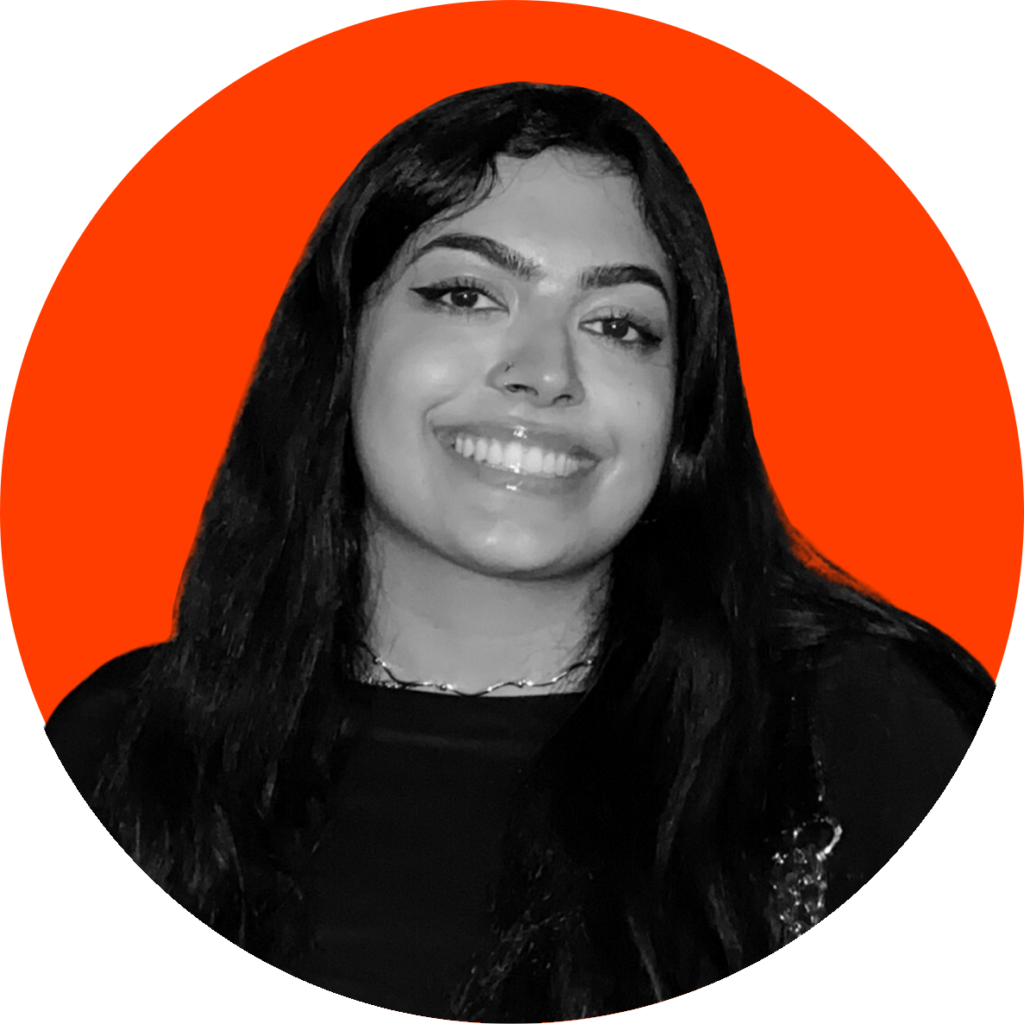
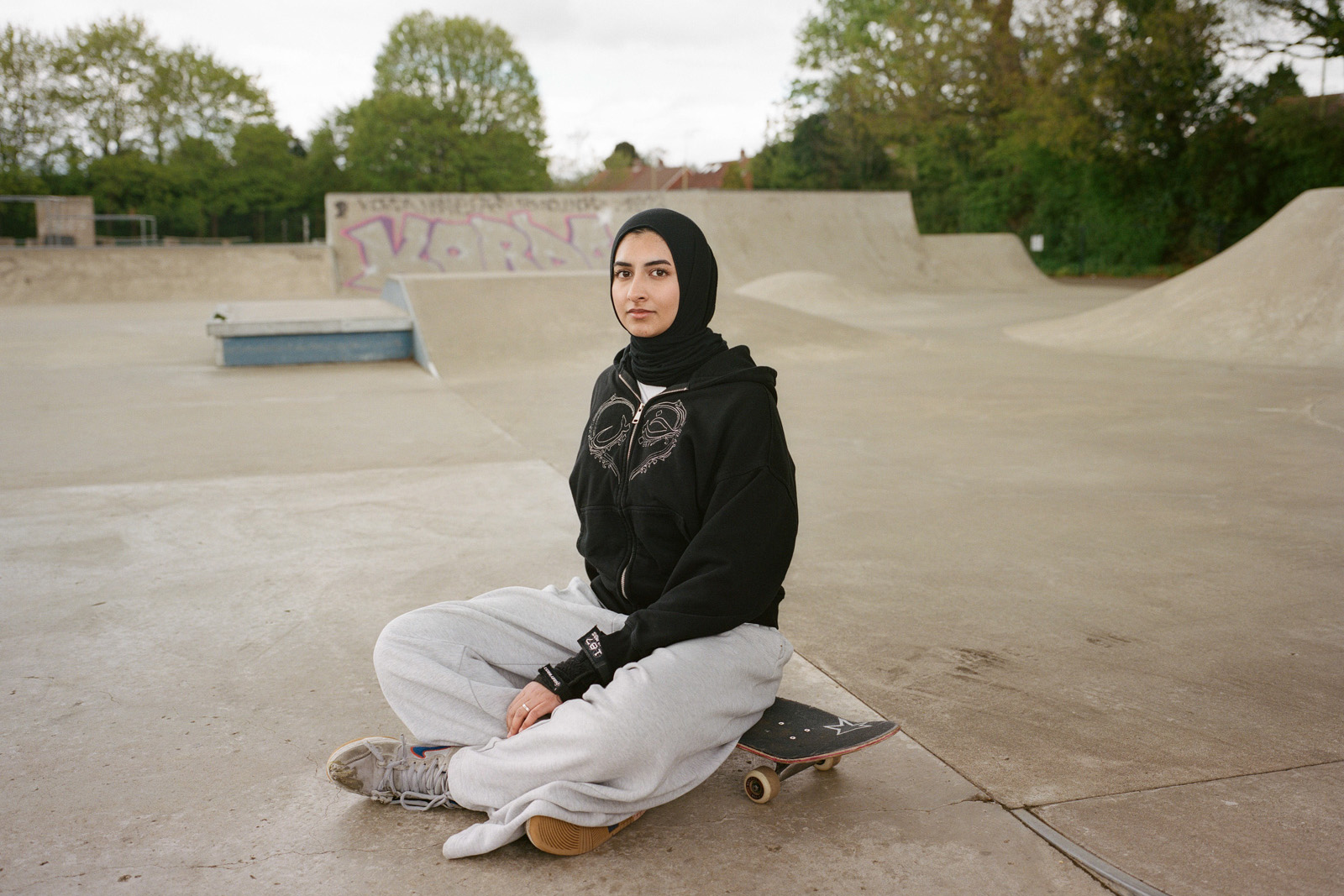
For Huda Kherati, skateboarding is a feeling: “The wind flying through your hijab is the best feeling in the world. You feel like nothing can put you down at that moment.”
We’re the only ones in Croxley Green Skate Park in Rickmansworth, Hertfordshire, and Kherati’s words perfectly describe the scene. The sky is heavy with clouds, the concrete slightly slick from earlier showers. A blur of grey and black darts across the ramps — she cuts across the graffiti-laden inclines, practising her kickflips, ollies and board slides, stopping only when she bails or starts laughing.
“You fail a million times before you land a trick,” she says later. “You just learn to be OK with it. One more failure just means you’re one try closer to success.”
Related content
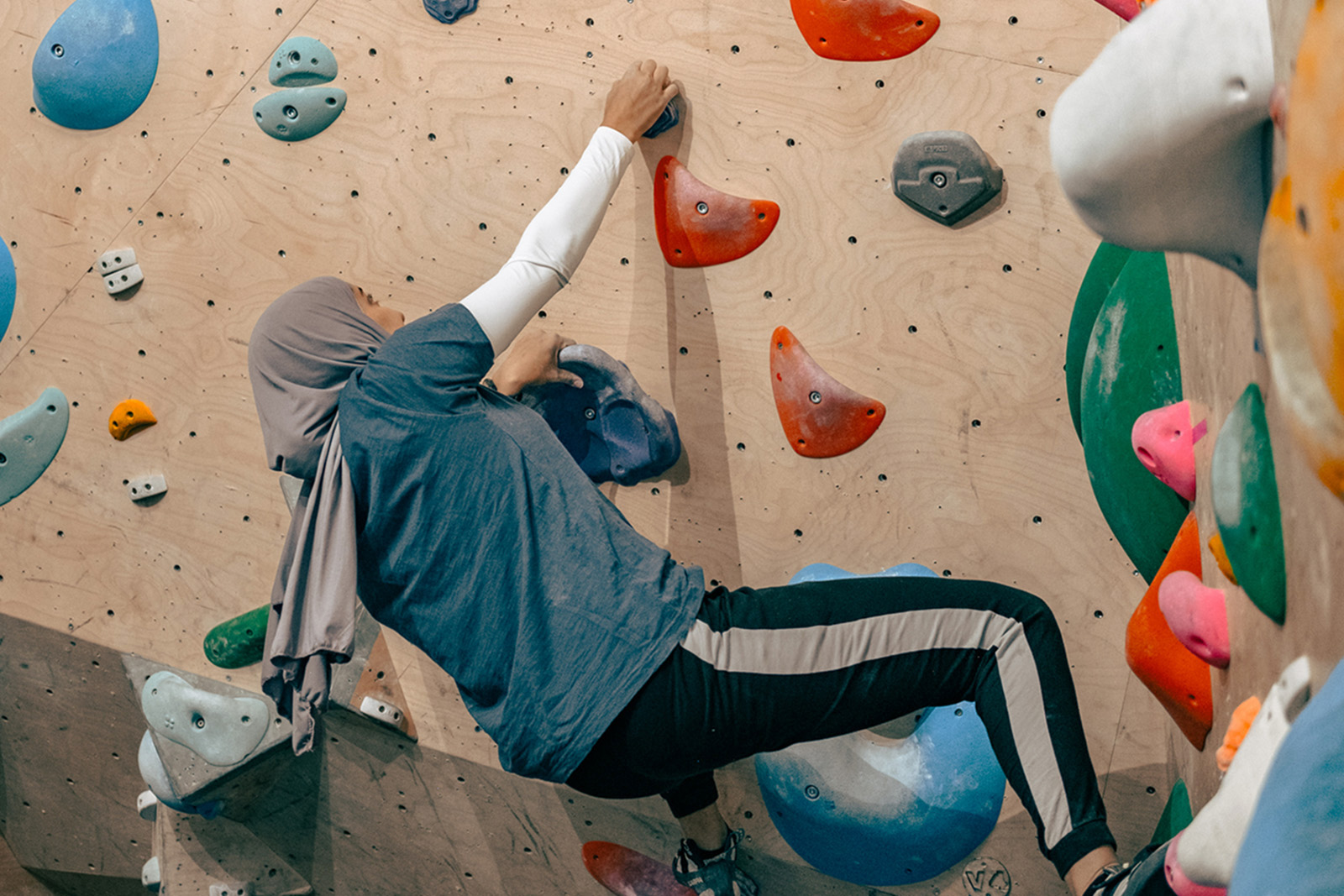
When Kherati, 23, has finished skating, we sit down and I quickly learn that she is always on the move. Alongside skateboarding, she started her own embroidery business, Kheiratelier, in 2021, and has recently taken up snowboarding.
Kherati started skating five years ago after seeing videos of women skaters on social feeds. “I wanted to try it because it looked fun,” she says. “I didn’t really overthink things, I just did them.”
Coincidentally, she began wearing her hijab at the same time, but never saw her faith as something that got in the way of the sport. Instead, for her, one encourages the other.
“Skateboarding and Islam are really similar in a way,” she says. “Skateboarding is non-conformative and so is wearing a hijab. Skateboarding teaches you resilience, focus and humility. You’re not doing what everyone else is doing. In a way, they actually go hand in hand.”
Kherati now offers one-to-one skateboarding lessons for women and girls. She first began coaching just two years into taking up the sport, while working at an indoor skate bowl in London.
“I’ve taught so many people, from 70-year-old women to six-year-olds,” she says. “You never know who you’re going to get. Everyone’s so different. I love seeing people progress and find their love for it.”
A few years ago, Kherati began posting skating videos on her TikTok account and was surprised by their reach.
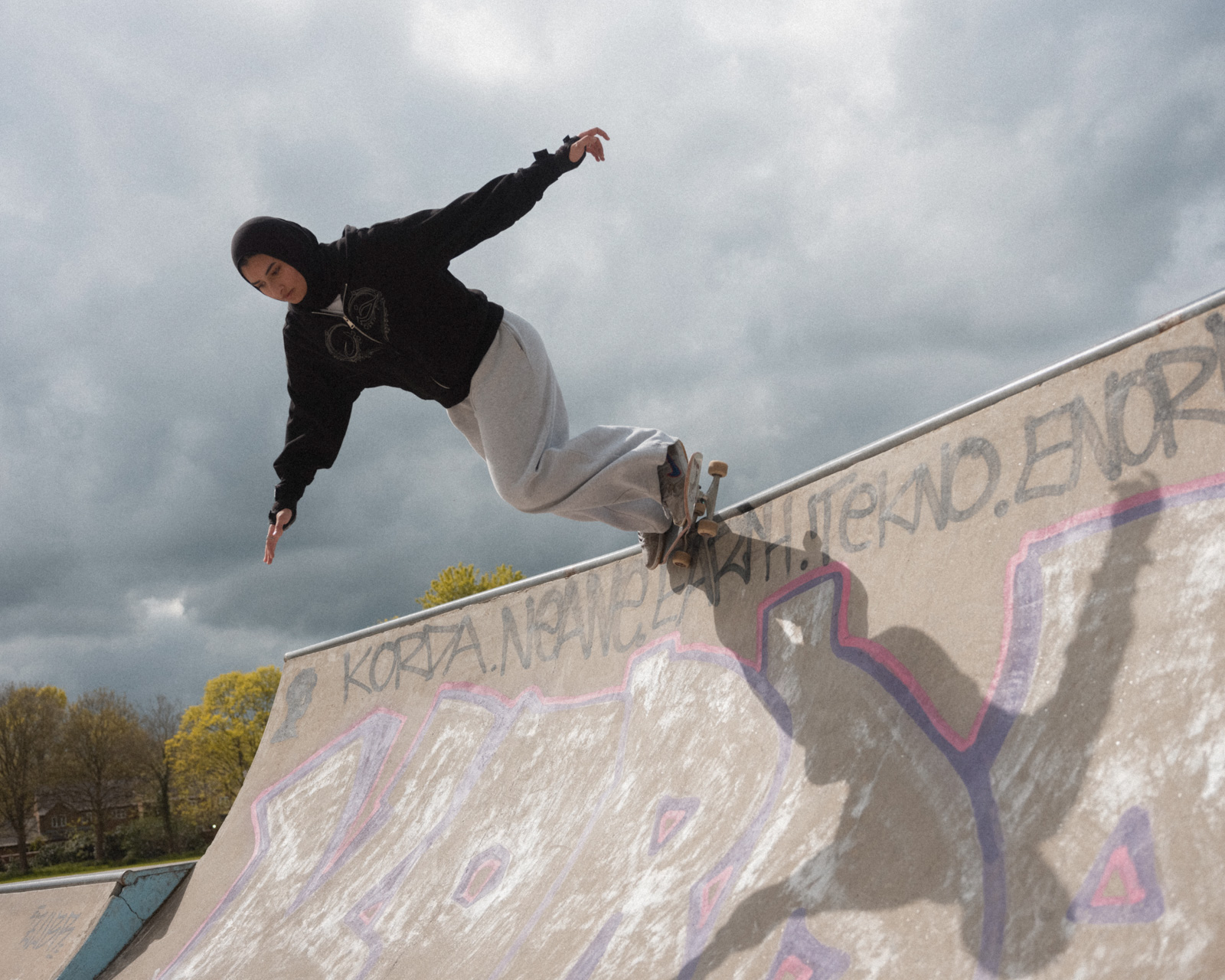
“A lot of the comments were like, ‘No way. Like, I didn’t know that hijabis could skate,’” she says. “They’d refer to hijabis as one homogenous group. A hijab is just a piece of cloth on your head. Why should it stop you from skating?”
Other messages came from young girls and their parents who saw something familiar in Kherati.
“Some parents told me it helped their daughters to see someone like me,” she says. “They’re like, ‘If she can do that, I can do that too.’ That’s been really nice to hear.”
One TikTok video that received more than 2 million views shows Kherati skating around a bowl while wearing an abaya. It’s not the most familiar silhouette at a skate park, but that’s precisely what made me want to speak to her.
“It was in Ramadan last year and I was going to go to the mosque after to pray taraweeh,” she says. “I just thought I’d just get in my abaya and get my co-workers to film me.”
While skateboarding has long been a male-dominated sport, the culture has shifted over the years. Now data from Skateboard GB suggests that women make up 25-30% of skateboarders globally.
Kherati has built a strong sisterhood around the sport, making friends who encourage and support each other both on and off the board. She credits skate collectives and spaces such as Skate Gals n Pals and Hop Kingdom which host beginner-friendly skateboarding sessions that helped her meet people and get into the sport. Walking into those sessions alone felt nerve-racking, but the atmosphere quickly put her at ease as everyone was learning at their own pace, whether they were practising riding the board or doing ollies on the nearby grass.
Related content
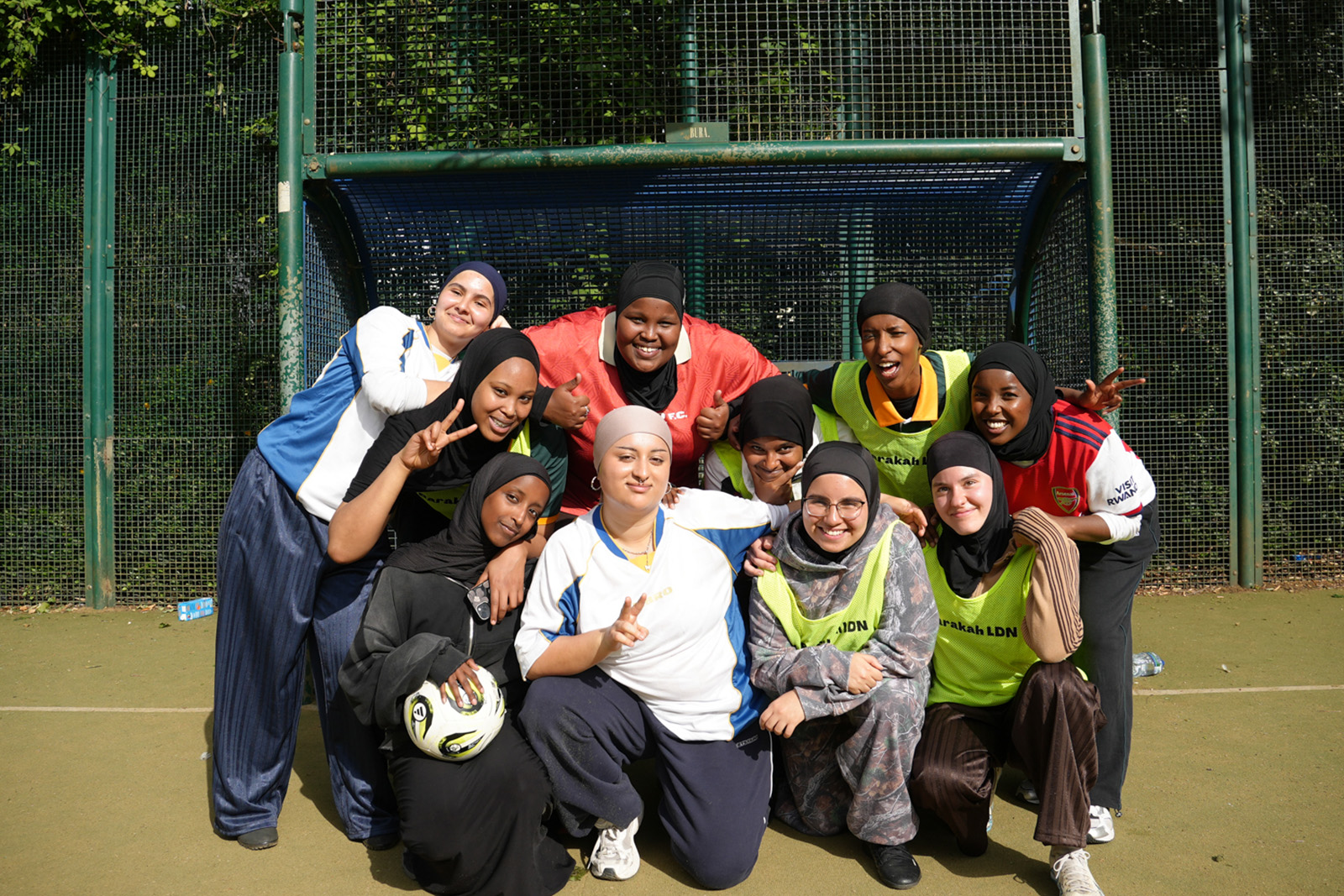
“Everyone at the skate park is so nice. But starting off and not knowing skate culture, you do think it’s scary,” she says.
The sense of community that skating creates crosses borders far beyond her home in Watford. Kherati recalls one skate trip to Milan in 2025, where complete strangers cheered her on as she landed tricks.
“It’s like an international language,” she says. “You can go somewhere and if you skate, you connect.”
That’s what she loves most about the sport, and something she sees in groups such as the Gaza Skate Team, whose members are still riding even in the toughest times. To Kherati, that reflects how skateboarding can be a lifeline that creates community and a shared sense of belonging.
“It shows the power of skateboarding — no matter what you’re going through, it can help you keep going.”