Sohrab Hura on the strange duality of life in Kashmir’s winter
The Magnum photographer’s new book Snow poignantly captures the humanity of a region that is both a tourist destination and one of the most militarised places in the world

“Photography has always been a way to meet people, a way for me to be in touch with the world,” Sohrab Hura says. “The joy is in the process of meandering without a precise destination and when it came to photographing Kashmir, it was the people who became the most important focus of all.”
The 44-year-old Indian photographer and visual artist has spent the past decade documenting the personal and deeply human stories taking place throughout his country.
A member of Magnum Photos, Hura has been shortlisted for Photobook of the Year in the Paris Photo-Aperture Foundation PhotoBook Awards and his work has been on display in New York’s MoMA PS1 and in London’s Kings Place. Entirely self-taught, he initially studied economics but developed an interest in photography while taking playful images of his classmates in college.
His self-published Sweet Life trilogy of photobooks recounted the intimate and often painful impact of his mother’s diagnosis with paranoid schizophrenia, while 2018’s The Coast explored the undercurrents of violence, caste and religion across India’s coastline.
Creating a visual language that often anchors the quiet familiarity of private moments in a wider symbolism, Hura’s latest work, Snow, sees him turn his gaze towards winter in Kashmir. The region is both a vastly popular tourist destination for Indians and one of the most heavily militarised places in the world.
Contested by India, Pakistan and China, Kashmir has faced bloody insurgencies since the 1947 Partition of India, most recently resulting in the Indian parliament revoking the special administrative status of the state in 2019. Yet, in popular Indian culture it has been depicted as a wintry paradise, providing the blanket white backdrop for Bollywood films such as 1949’s Barsaat and 1964’s Kashmir Ki Kali.
Travelling to the region for the first time in 2015, Hura witnessed first-hand the strange duality of life there.
“Growing up as a child of the 80s, my generation in India was very influenced by state television and we would always see a map of India with Kashmir included — it was part of this idea of nation-building,” Hura says. “We would see it as a beautiful place in films and fiction, while in the news we’d see it as a place with guns and bearded men branded as terrorists. It shaped an image of Kashmir that felt hostile and it took me finally going there in 2015 to question what the place really is.”
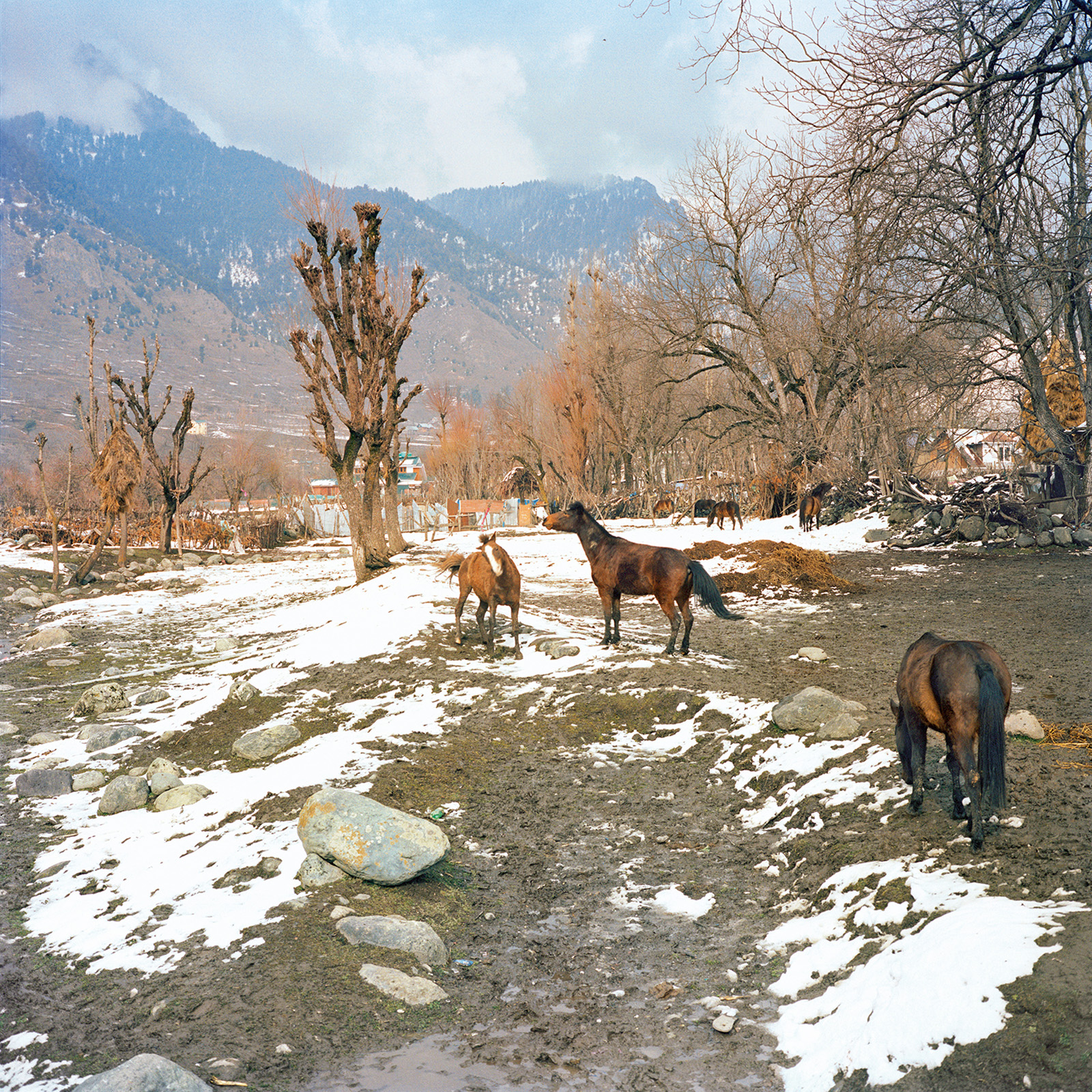
Making that first trip to the area in winter, Hura returned and documented the passing of the season, which locals divide into three phases: Chillai Kalan (harsh cold), Chillai Khurd (small cold), and Chillai Bache (baby cold). Toting his film camera, Hura travelled to the villages and mountain foothills before walking back to his base in the city of Srinagar, meeting and photographing locals along the way.
“They would tell me their stories and I began to see how the violence endured by a place like this is a trickle rather than a flood — it seeps into the consciousness of everything,” he says. “People would tell me about how blood flowed in the rivers after Kashmiris were martyred, or how the Indian army would fire pellet guns indiscriminately into crowds and blind women and children. I wanted to see how I could represent that history in visual metaphor, rather than make it feel reconstructed.”
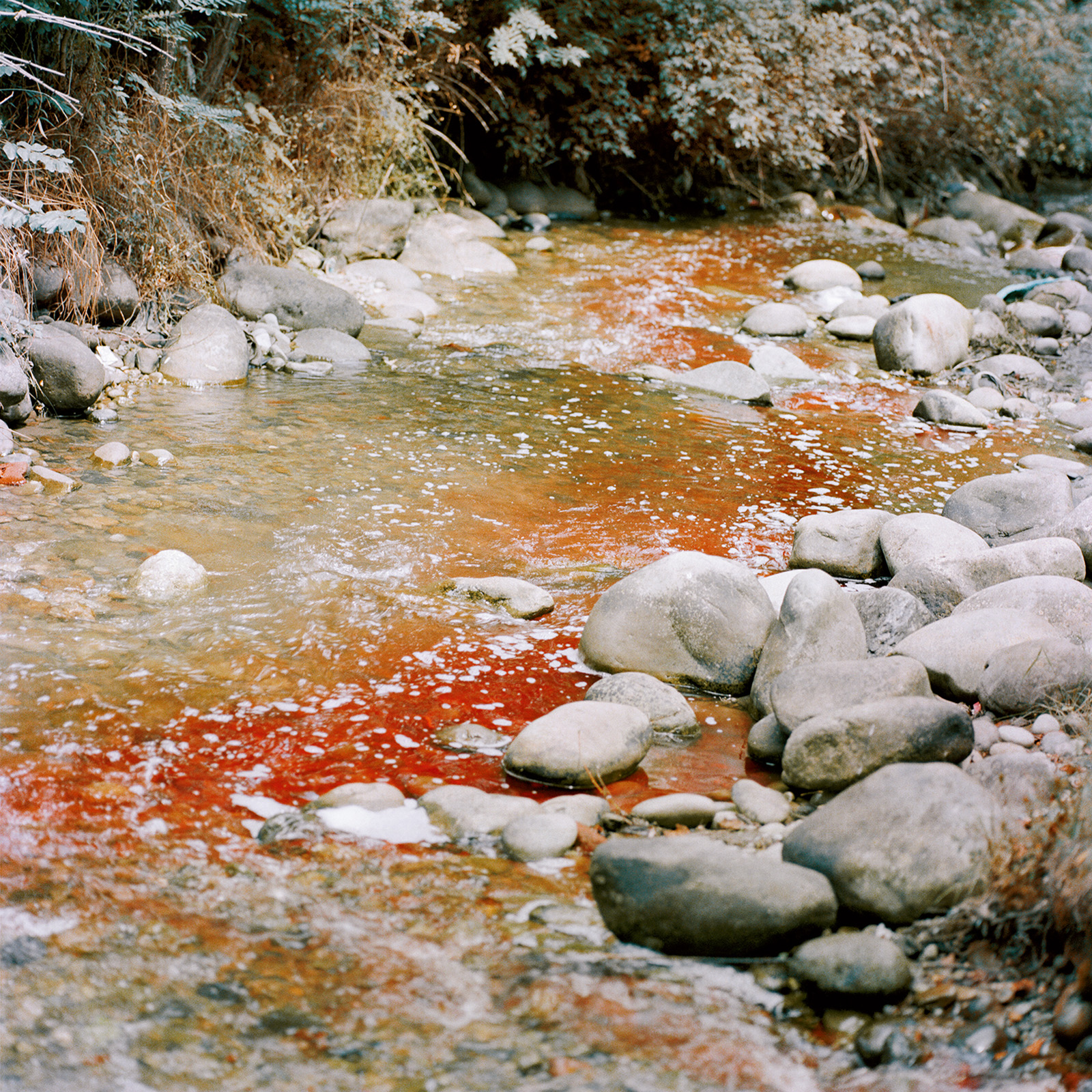
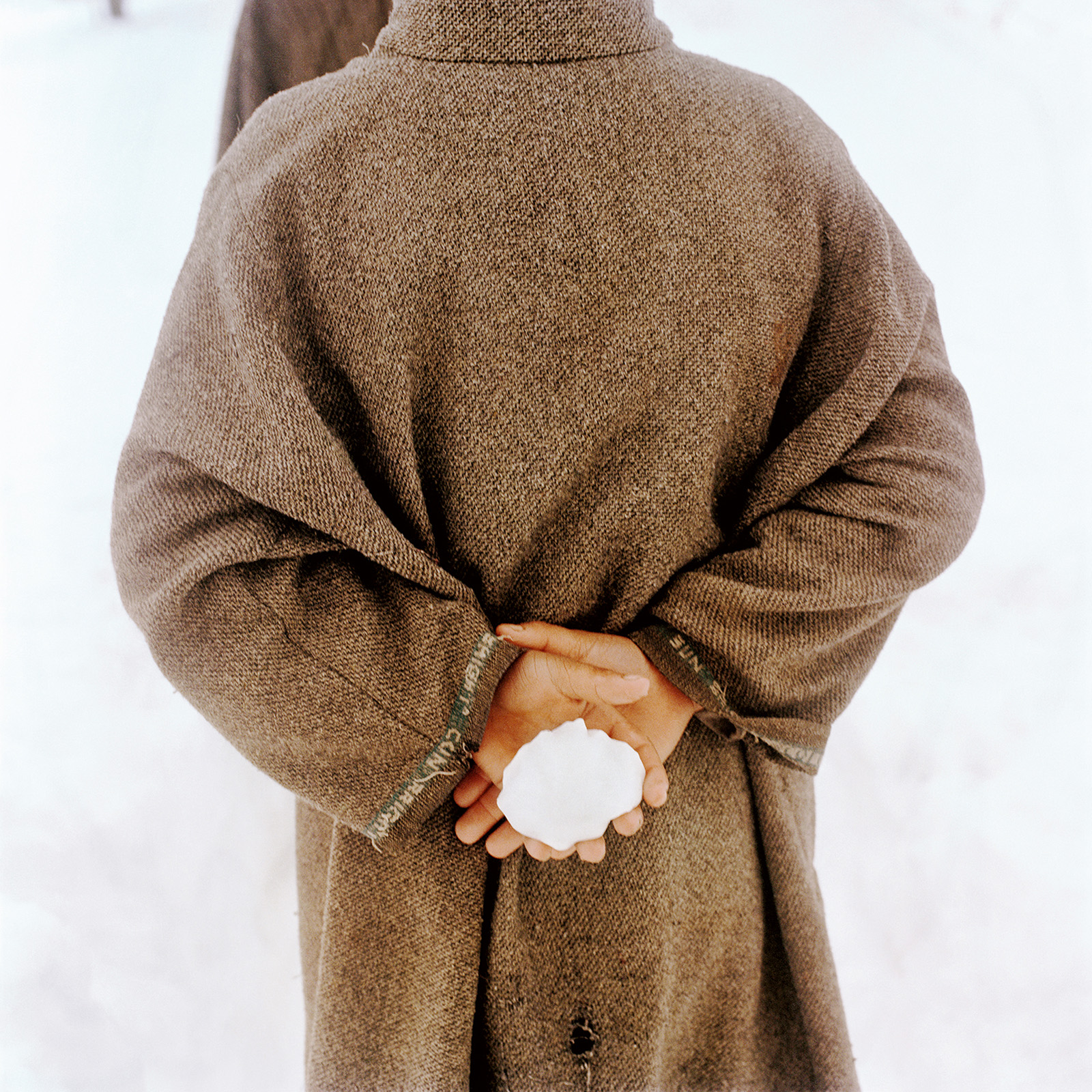
The result is the book’s slow passage from distant figures in the whiteout haze of heavy snowfall to the snowmelt displaying the emerging landscape’s scars. One image shows vermilion blood from an animal sacrifice trailing through a river, evoking the martyrdom Hura references. Another shows a child reclining on the grass with a white cotton pad laid over their face, drawing on the previous army blindings. There is no overt violence in these pictures but rather an uneasy tension between benign scenes and the history they carry.
“We’re always victims of the western media that displays these parts of the world and the people in them as passively enduring suffering,” Hura says. “Delhi does the same when it looks out with a specific gaze and narrative to other regions of India. I knew when I was going to Kashmir, I needed to photograph with love to break that distancing stereotype.”
Following the repeal of Article 370 in 2019 and the end of special status for Kashmir, the region was placed into a military lockdown and Hura was forced to cut his project short. As Covid-19 arrived and a lockdown of its own ensued for the country as a whole, Hura began looking back on his archive of images and slowly developing a form for the book. Alongside those eerie depictions of imagined violence, he began to realise how important play and levity would become.
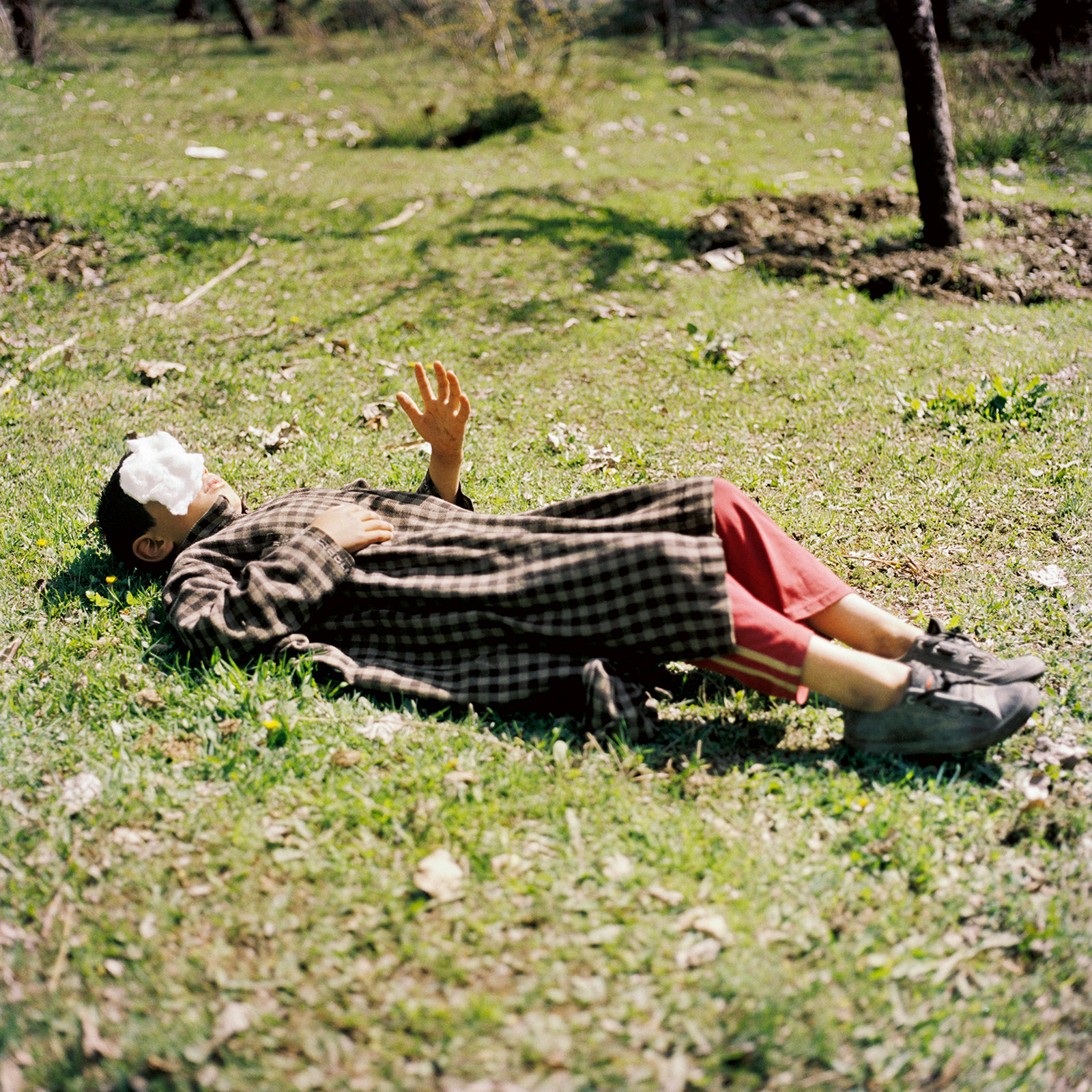
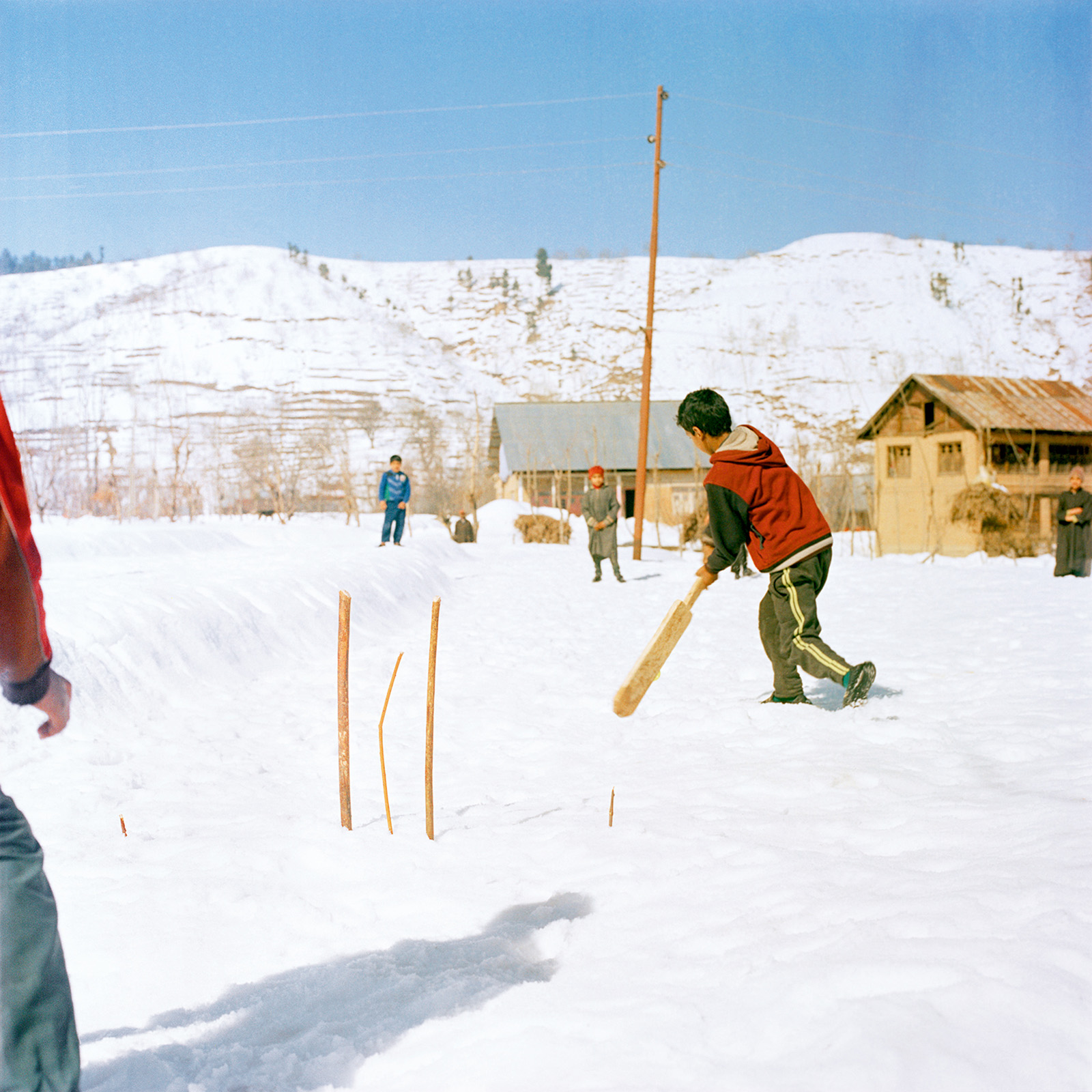
“After the genocide began in Palestine in 2023, I started seeing images of children everywhere and it made me want to bring in more families to the book, to depict the area as not just those bearded men from the news,” he says. “And I decided to show those men being silly with each other also, to depict their humanity as it really is. That’s why I have images of them making a snowman or playing cricket — they’re straightforward pictures but they carry an important meaning.”
While Hura edited his book, he also underwent a personal shift in his artistry. After 2021 he decided to stop taking photographs. Partly affected by a debilitating bout of Covid that left him housebound for months and unable to carry his equipment, Hura began teaching himself the new medium of pastels, gouache and oil paint.
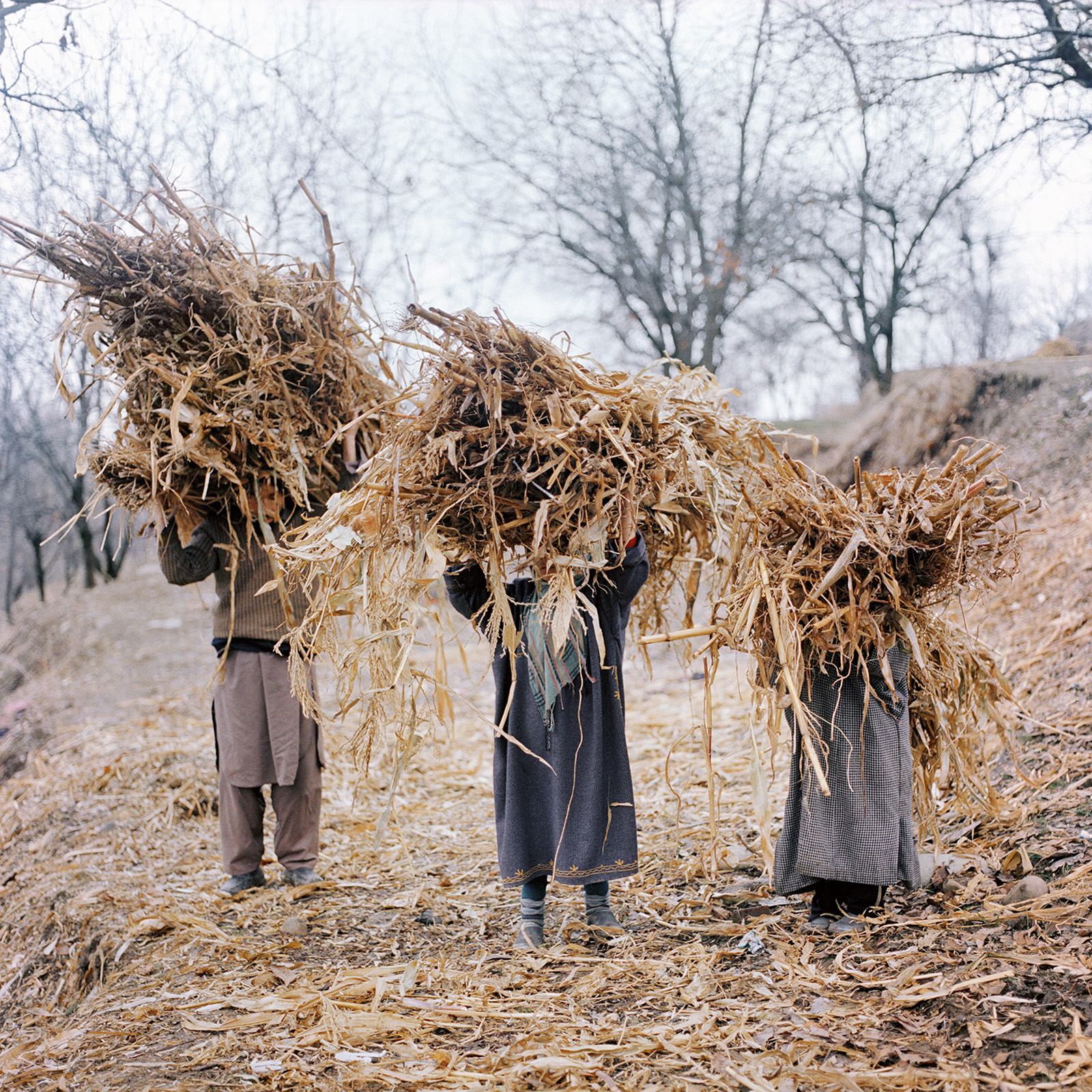
“I’d lost motivation in photography by that point. I was feeling numb from the medium’s burden of representation — how images have to carry so much information in our current era of being bombarded with pictures online,” he explains. “Making paintings, however, freed me up to make things from my imagination rather than represent one specific thing. I felt like I’d turned 40 and I needed silliness, so maybe it was my midlife crisis to start drawing.”
Hura is now working on a series inspired by the urban forest near his home in Delhi. His oil paintings are a riot of multicoloured self-expression, taking the symbolism of his photography one step further to create impressionistic images of surreal figures, flora and fauna.
“Whether it’s painting or photography, the impulse is the same: to meander and find the truth behind our perceptions of the story,” he says.
Snow by Sohrab Hura is published by MACK.