
How Muslim professionals are reshaping a Swedish city
In Södertälje, south of Stockholm, a mosque has grown from 100 families to 300 in a decade — driven not by asylum but by skilled workers putting down roots

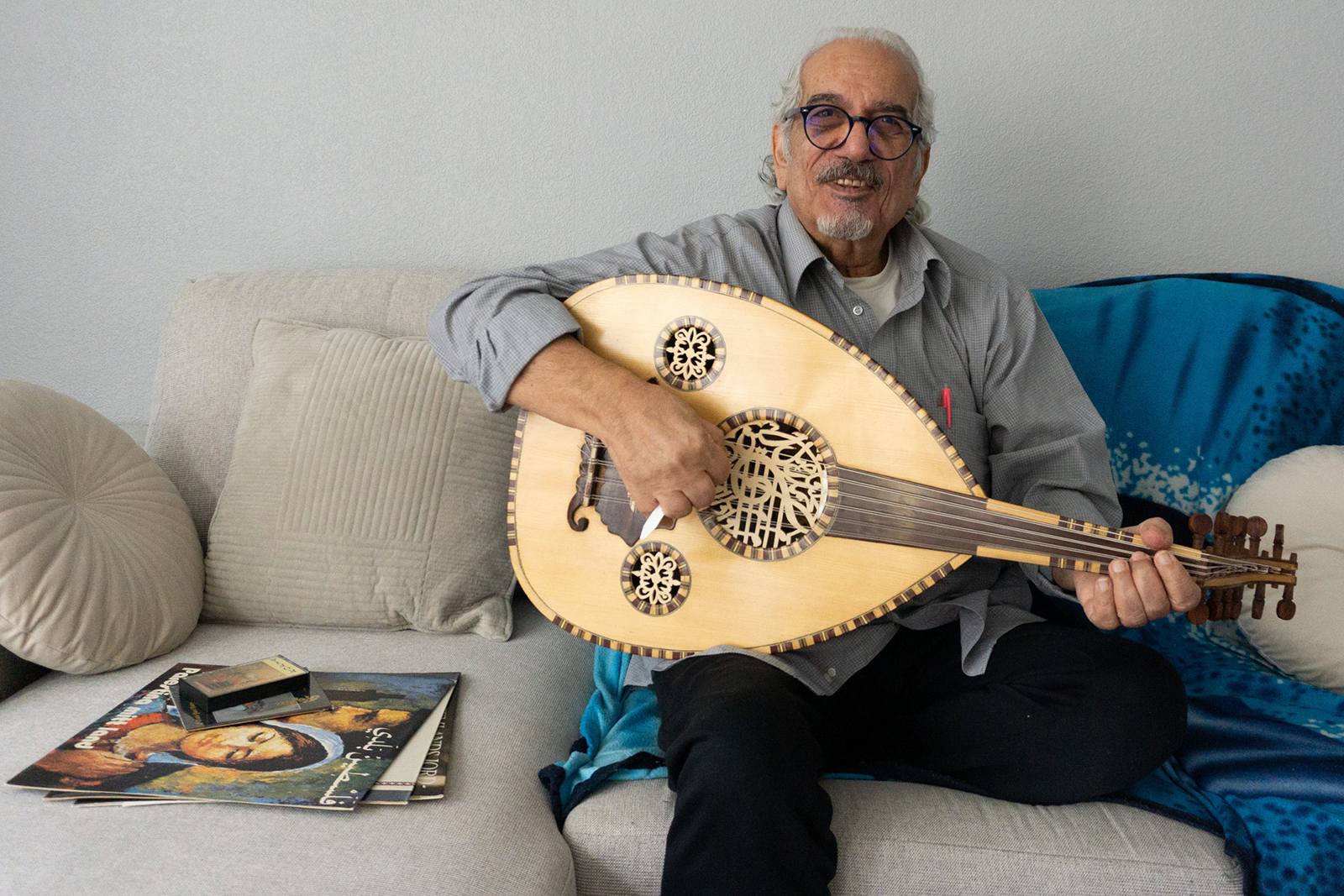
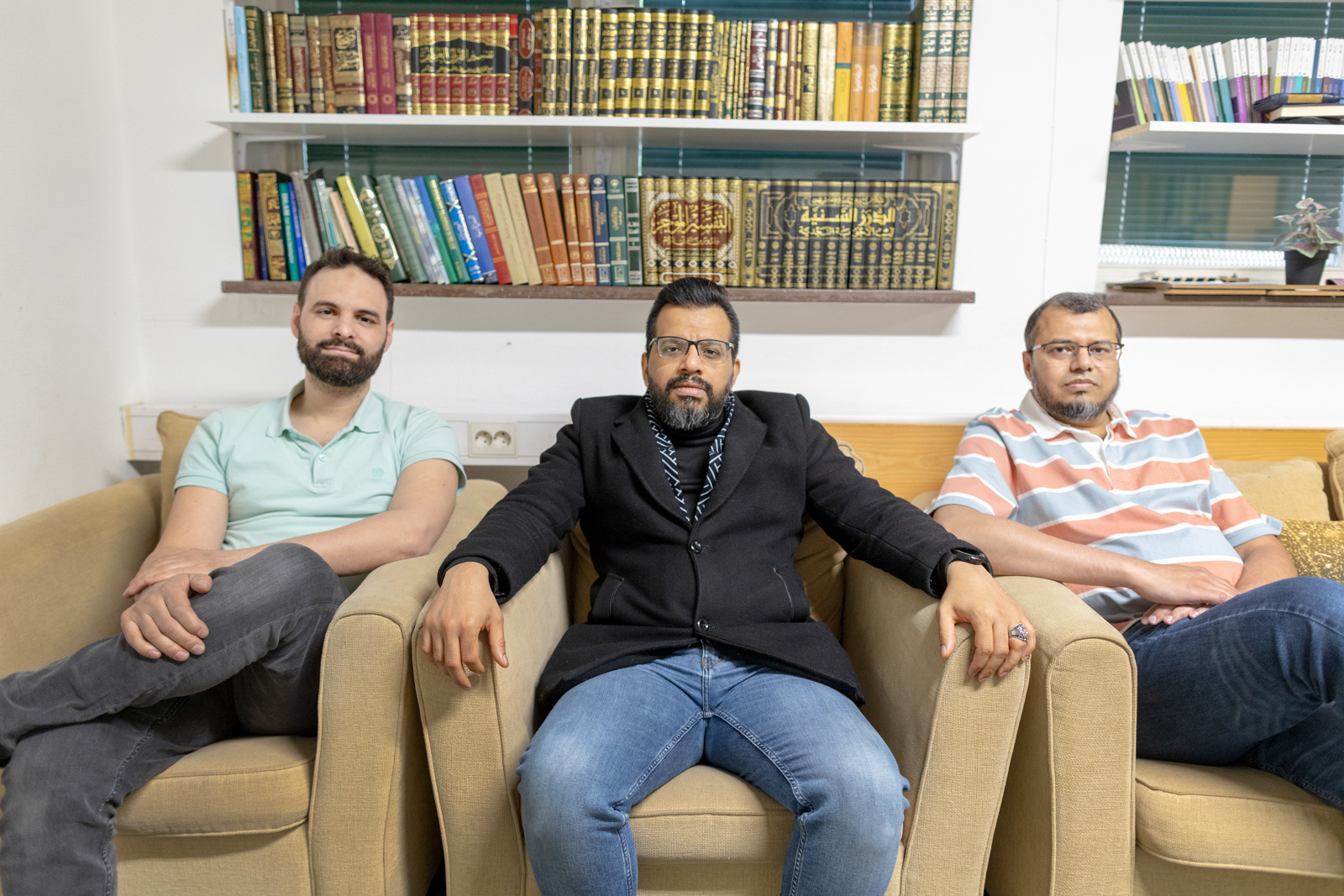
Afeef Asali, a quality engineer at the truck manufacturer Scania, has watched Södertälje’s Muslim community change from the inside. When he was growing up, the mosque was rarely full.
“You could say it started slowly by 2008,” he says. “It got a boost from the migration crisis in 2015. And from there it’s just gone up and up.”
The mosque he is talking about belongs to the Islamic Cultural Association of Södertälje, a city of roughly 100,000 people about 35 kilometres south of Stockholm. Over the past decade, its membership has grown from just over 100 families to 300.
The main driver, Asali says, is industrial recruitment, with companies like Scania and AstraZeneca bringing in Muslim employees who then put down roots.
This kind of growth — a Muslim community shaped by skilled work rather than asylum — is rarely part of the discussion around Islam in Sweden, where debate around integration of the country’s Muslim population has been intensifying.
Sweden Democrats leader Jimmie Åkesson declared in an SVT documentary earlier this year that a practising Muslim struggles to be Swedish.
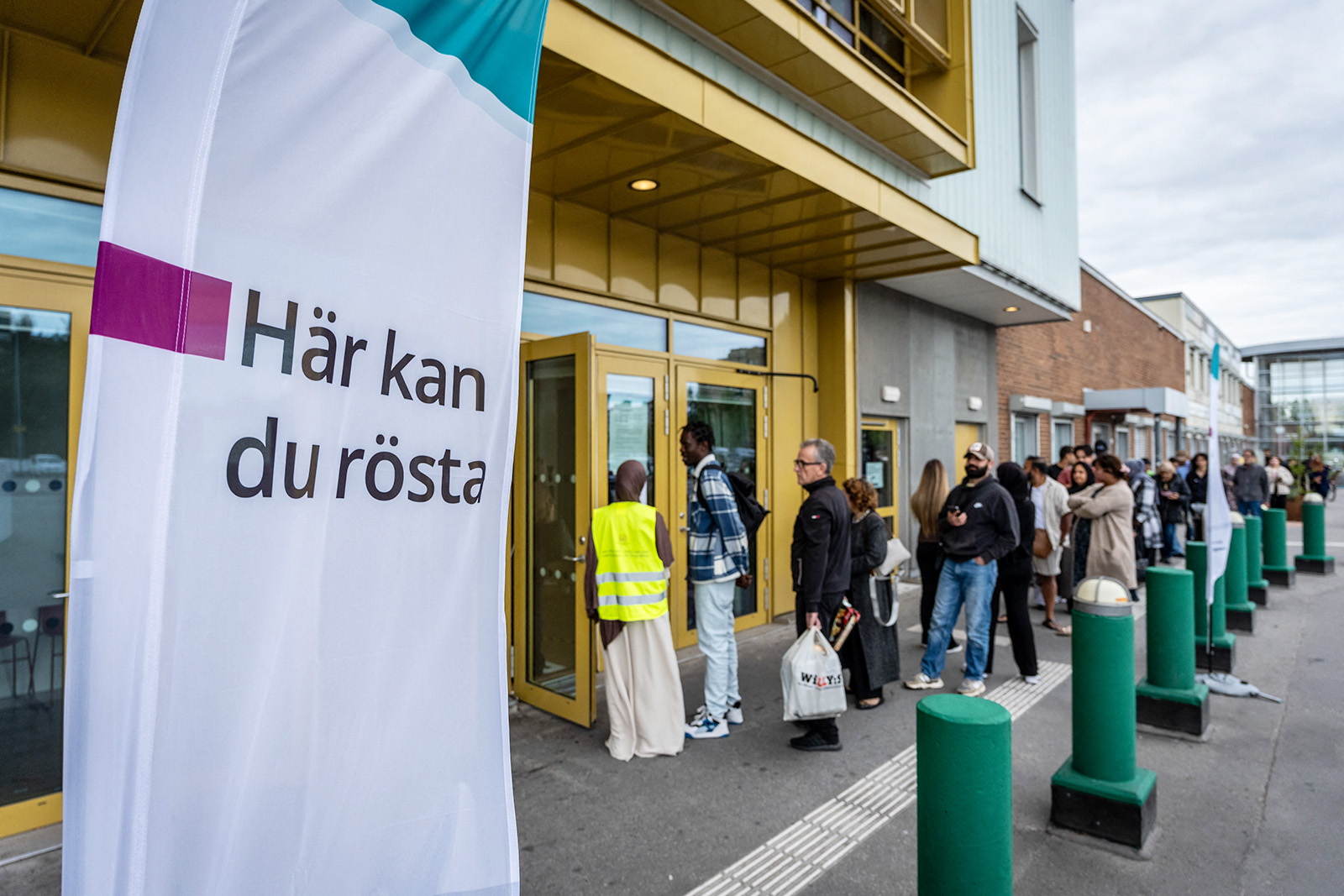
This is conspicuously not the case in Södertälje. Here, engineers and pharmacists clock out on Fridays and head to prayer. Children grow up speaking Swedish at school and Arabic at home. Families have put down roots within commuting distance of Stockholm, building a community around the rhythms of work, worship and ordinary life.
In the shadow of the churches
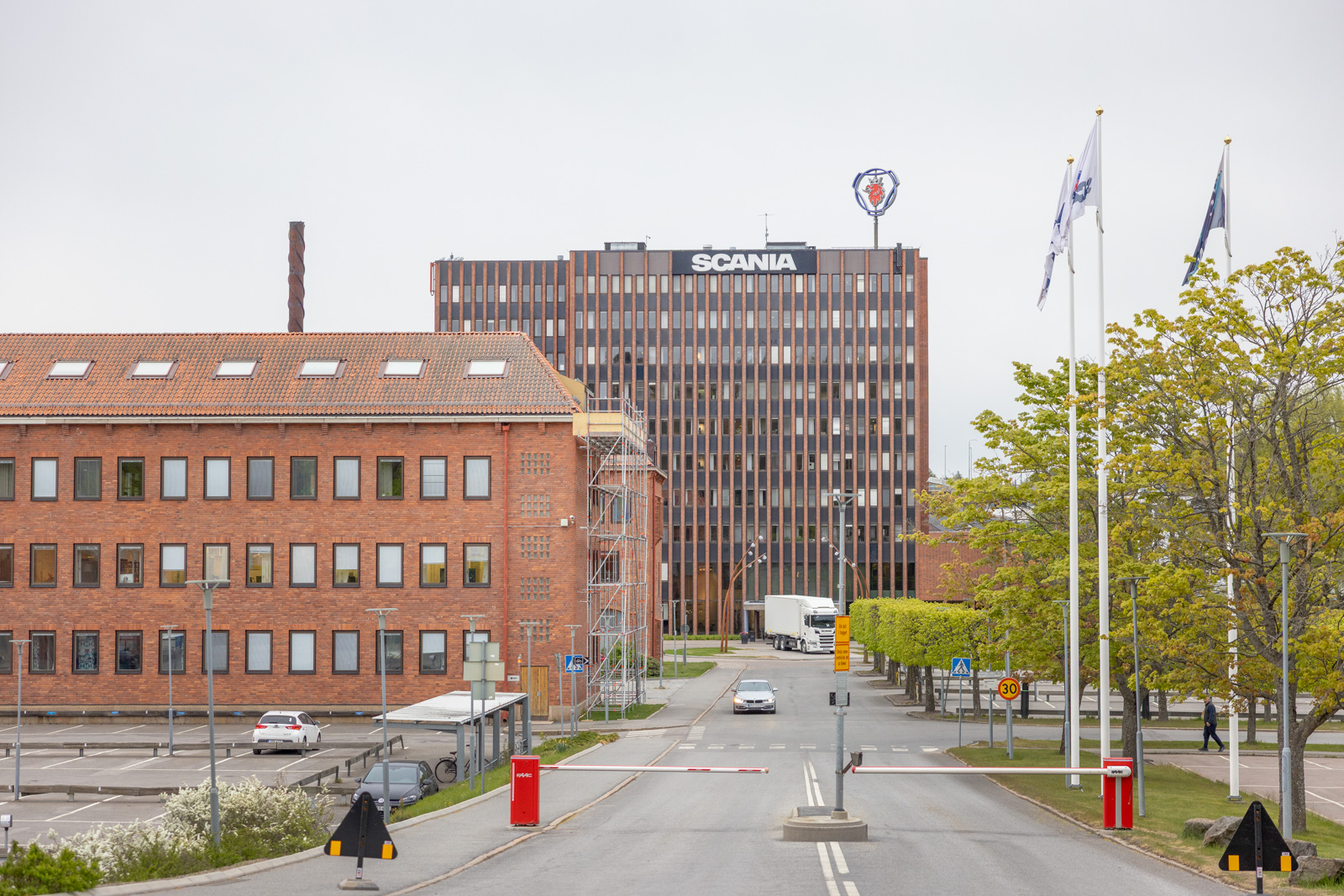
The change in Södertälje is best understood in the context of what was already there. The city has long been known as the unofficial Assyrian capital of Europe. In the early 1970s, Scania — one of Sweden’s largest industrial companies — recruited Assyrian workers from Turkey. This initial wave was followed over the decades by Armenian Christians, Copts and other Middle Eastern Christian communities, eventually growing to an estimated 30,000 people, or roughly a quarter of Södertälje’s population.
Today, Södertälje is home to an estimated 18,000 Syriac Orthodox Christians alone. It has a bishop whose jurisdiction covers all of Sweden and Scandinavia. Their churches, community television channels, football clubs Assyriska FF and Syrianska FC and civic associations are woven into the city’s identity.
Asali says that Muslims have been “in the shadow of that”.
The pattern is familiar across northern Europe: arrivals expected to return home were slower to build institutions and often prayed in back-room apartments, while Assyrian churches were already running their own TV stations.
“In the first years, people would come to Södertälje and it would take them two years to find out there was a mosque here,” says Asali.
That began in the past decade as the community grew and the mosque became easier to find.
A different kind of arrival
Mohammad Asim Feroze moved to Södertälje seven years ago for a job at Scania. He had previously lived in the UK for seven years, and he is clear about what drew him.
“When I moved to Södertälje, the first thing I saw was that we have a Muslim community here: not one mosque but two small mosques in Södertälje. And that was very positive.”
His account of the community emphasises its diversity and its integration through work.
“We are from different nationalities, and the good thing is that we share the same religion. We arrange iftars in the mosque from different countries, and we sit together.
“Muslims are not uneducated, not unintegrated. That is not the case.”
Sweden has no official statistics on its Muslim population and estimates vary widely, from around 200,000 people registered with Islamic congregations in 2019 to broader estimates of up to 800,000.
Public perception is that the number is far higher. A 2018 Ipsos survey found that Swedes estimated Muslims made up 23% of the population, when the actual figure was closer to 8%. A 2023 follow-up showed little change, reflecting a persistent gap between perception and reality.
Something in the air
When asked whether the growth has brought backlash, the men are careful but honest.
“In Södertälje and Sweden in general, the last four years have been more, I don’t know if hostile is the right word, but there’s more awareness among non-Muslims that Muslims are increasing,” Asali says.
“The question is, what are we going to do about it?”
Asim answers by describing a local Eid gathering that was held in a hired sports hall and covered by a regional newspaper. The article was shared on the paper’s Facebook page.
“It got so many hate comments. That’s when I realised: wow, there are a lot of things brewing that I didn’t see before.” He pauses. “I don’t know if that’s a fringe population, keyboard warriors. But it does say something about general sentiment.”
Daoud Omar Ali, the association’s head of operations, sees a broader pattern. Sweden is one of the world’s most secular societies. Religious literacy, he argues, is genuinely low, not only about Islam but across the board.
“When you don’t know about what the other is, people are most likely afraid. And this creates an image which is not correct about the Muslim community.”
People in Södertälje sometimes assume someone called Ibrahim with a Middle Eastern background is Muslim, when he might be Assyrian Christian. “The impact is even reaching the Christian community who came from the Middle East,” he says.
Research bears this out. A 2025 study in Cogent Social Sciences drawing on two decades of the Diversity Barometer survey found that negative attitudes towards Muslims in Sweden have remained persistently high and are structural rather than incidental, rooted in political and media framings that consistently position Islam as a social threat.
Asali wryly offers a different frame — Muslim communities in Sweden manage to maintain strong social bonds in one of the most individualised societies in the world.
“I actually see it as a good sign that we’re doing something right,” he says.
“They see the pictures of our Eid gatherings. When have you seen any other group of people gather like that? Except maybe at an AC/DC concert.”
Building for the next decade
The Södertälje Islamic association’s immediate priorities are concrete but unglamorous. They want better programming for children, more structured iftar events during Ramadan, and to make the mosque easier to find for newcomers looking to join a Muslim community.
Ali talks about the need for the community to become more transparent to its neighbours, not for the sake of political optics but because coexistence requires legibility.
“Showing who we are, not what the politicians say about us,” he says. “This is part of integration.”
He also talks about something more ambitious: a vision of Södertälje’s Muslim community that follows the Assyrian Christians’ path, forged a generation earlier — building civic infrastructure and becoming part of the fabric of the city, not merely resident in it.
The Assyrians got there by moving quickly, understanding they were staying and investing in institutions. The Muslims arrived later, expecting to leave but staying. The next step is building more permanent roots.
In Södertälje, that process is already under way. The mosque’s growth over the past decade is evidence of a community that is staying. What comes next — and how Swedish politics responds — remains to be seen.