
Challenging modest fashion’s plus-size abaya gap
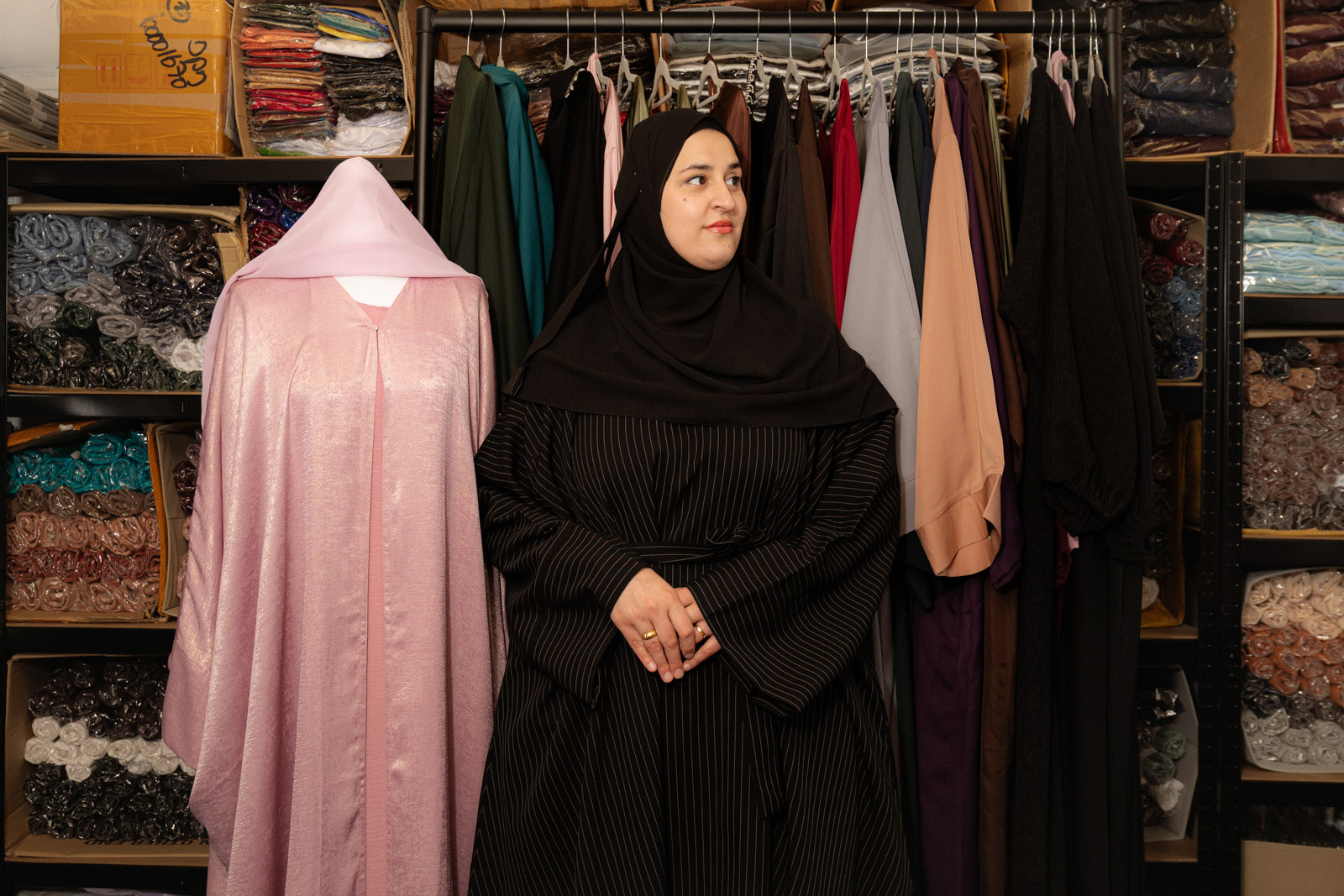
After years of having to cover up with a cardigan, Rawail Nadeem took the task of designing the perfect abaya into her own hands
In 2022, Rawail Nadeem, 30, was used to pulling a long cardigan over her abaya before leaving the house — even on hot summer days — just to feel properly covered.
Abayas are designed to be loose-fitting and modest, holding religious and cultural significance for many Muslim women. Though traditionally worn in parts of the Middle East, North Africa and the Horn of Africa, they have become a global staple of modest fashion for women far beyond those regions.
But Nadeem noticed that even styles being marketed as size-inclusive were still being designed with slimmer bodies in mind.
Abayas would fit Nadeem well from the bust, as a plus-size woman, but cling at the hips. “They should be loose and flowy, otherwise it defeats the whole purpose,” she says. “I’d be sweating but I had to follow religious guidance and cover myself.”
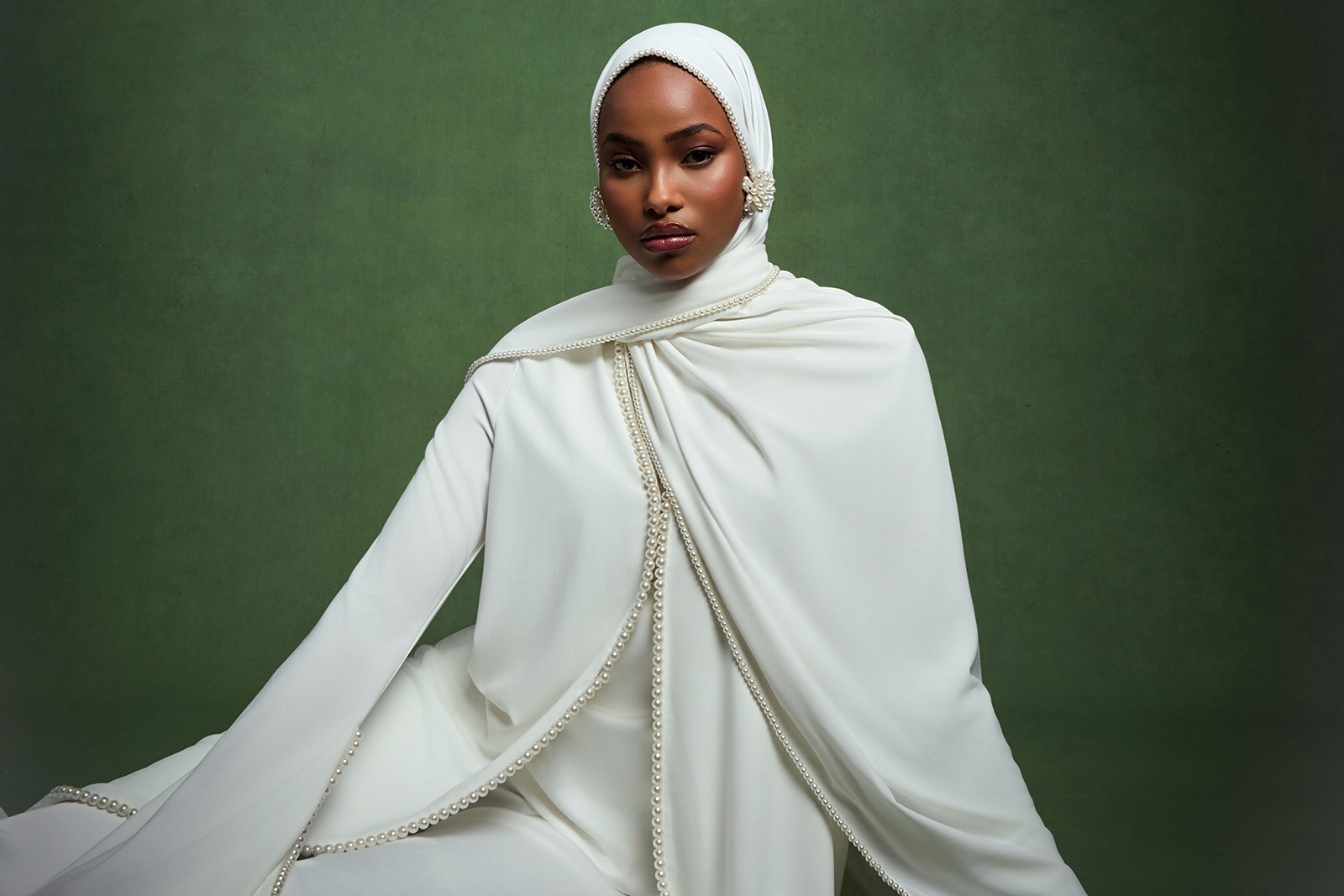
“I’d see other women who are slimmer go out in summer and they would look so beautiful. The breeze would just flow through their abayas, but that wasn’t possible for me,” says the Nottingham-based business owner.
In 2025, research by Bath Spa University found that there is a “persistent and growing demand” for modest fashion globally — particularly loose-fitting garments and headscarves for women, largely driven by Muslim consumers. The study also found that the internet has played a crucial role in helping shoppers express their preferences and desire for better modest fashion options.
But for many plus-size Muslim women, growth in the market has not necessarily meant greater choice. Nadeem was familiar with this problem, being size 26 herself. She recalls buying an abaya that was advertised as being suitable for up to a 7XL, only to find it fitted loosely at the bust, while clinging to her figure everywhere else.
That experience convinced her that the issue was much bigger than she had at first thought. “I realised I can’t be the only one going through this. There have to be other women out there,” she says.
By that point, Nadeem was already running a small business. She launched her brand Modestly in 2021 while at Nottingham Trent University studying health and social care, selling hijab gift boxes. Each box included a mirror and a dua — a prayer reminding the buyer of both inner and outer beauty.
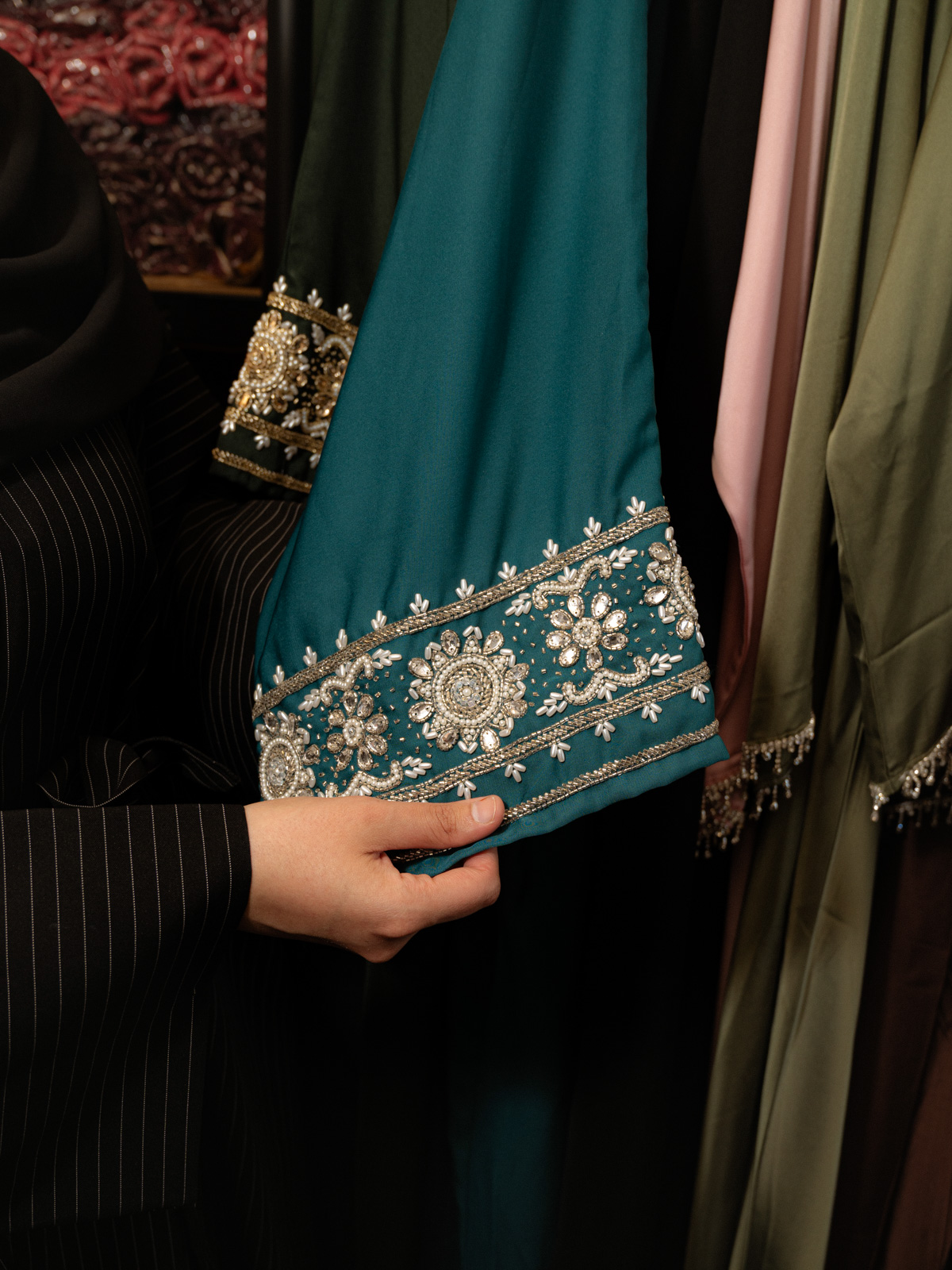
“It asked Allah: ‘Just as you made me beautiful from the outside, can you make me beautiful on the inside?’” she says.
After she graduated in 2022 and expanded her business to sell standard-sized abayas from sizes 8 to 18, Nadeem’s own struggle to find suitable abayas pushed the business in a new direction. Rather than simply scaling up from smaller sizes, she set out to design what she calls “true plus-sized abayas” — created from the outset with plus-size women in mind.
What followed was a year of research, during which Nadeem studied what other brands were offering, bought from them to try sizing for herself and tested ideas on family members ranging from sizes 20 to 30.
When she approached suppliers in Pakistan — where she would get her own abayas tailor-made — with measurements for women up to size 30, she says she was “ridiculed”.
“They were like: ‘That’s too unrealistic. There can’t be women that size. Surely, that can’t be right, that is a large number.’ I went through a bunch of tailors and they didn’t really take me seriously. They just said there wasn’t a market. But I kept going. I knew there was.”
While mainstream brands now offer more size-inclusive options, Nadeem says modest fashion still has a long way to go.
“Western fashion has caught up with including plus-size women. I can go to any online shop and I can type in ‘plus-size modest dress’ and get that,” she says. “But when it comes to abayas, there isn’t much choice. There needs to be more variety.”
After multiple attempts at getting the design right, one tailor in Pakistan finally understood Nadeem’s vision — an abaya loose from the top, including the arms, and down to the hips.
“Brands will sometimes say ‘plus-size friendly’,” says Nadeem. “But just because you increase an abaya by two to three inches from the bust, it doesn’t mean it can suddenly fit a plus-size woman.
“It was important for me to design for women who are plus-size from the beginning — we’re talking template stage — to make sure that the abayas are loose.”
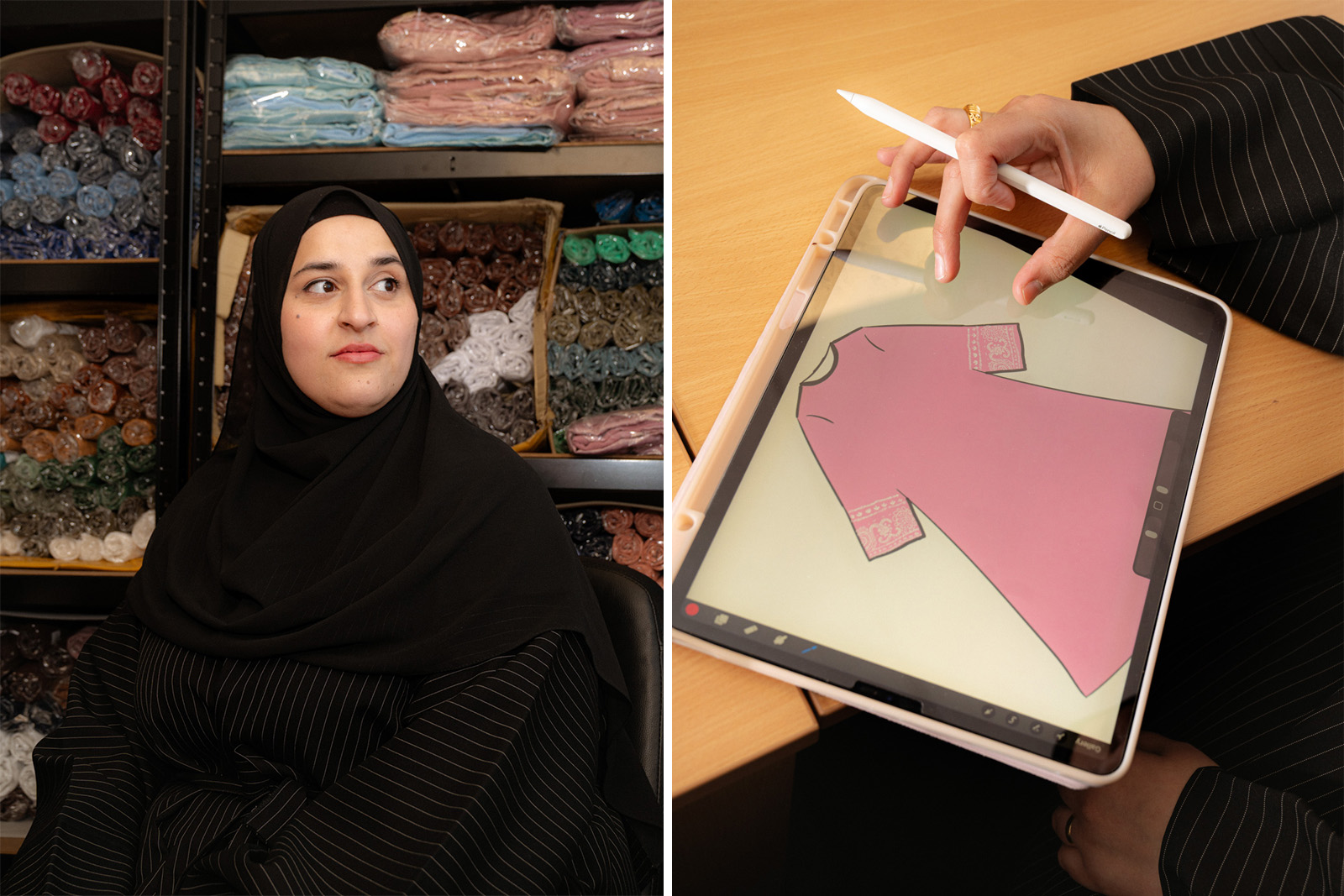
That template became the foundation of Modestly’s range, which launched in January 2023.
Nadeem says the response was immediate. After she shared a sneak-peek of her collection in October 2025, messages began flooding in from women who told her that her vision was long overdue. “A lot of the feedback was like: ‘Oh, my God, we needed this,’” she says.
Since then, customers from across the UK, Europe, the US and Australia have placed abaya orders. Nadeem’s business is run entirely online, with orders placed through her website and TikTok shop. From a small office in Nottingham, where she lives, she packs parcels, creates content and manages the day-to-day administration.
Family support has been crucial. While relatives help with childcare, Nadeem uses the time to pack orders and film promotional social media content for Modestly.
The brand’s abayas range from £30 to £63, depending on style. Nadeem says that since introducing and focusing on her plus-size range in 2023, annual revenue increased by more than 50% in 2025.
She says the most meaningful part has been receiving feedback from women who say they finally feel included in modest fashion.
Related content
“It’s not just a business. I never started this to benefit from the gap in the market. I started it to solve a problem,” she says.
Just days before Nadeem and I speak, one customer in France reached out to tell her that she had been close to not attending a wedding she had been invited to because she couldn’t find anything modest yet dressy enough in her size. After ordering and trying on a three-piece satin abaya set from Modestly, she told Nadeem she had cried when she tried it on.
“I think a lot of sisters end up in tears because they never expect an abaya to fit them loosely,” says Nadeem.
Another customer recently told Nadeem that the abaya she had purchased had given her the confidence to go out again. That message resonated personally, as Nadeem knows how easily confidence can be worn down by shopping experiences that make larger women feel unwelcome.
“It involves sharing personal measurements, finding a specialised tailor who can make abayas of larger sizes, sourcing suitable fabrics and, for many women, it can feel quite exposing or discouraging,” she says.
“Some shop owners and staff look at you like, ‘We don’t have anything for your size.’ They don’t say it out loud but their eyes say it. A lot of my customers are online and I know why — they hate going to shops. It’s because of those judgmental eyes.I know that struggle.
“I’m making a difference in their lives,” Nadeem adds. “I’m giving them back their confidence, making them feel included and making them feel good about themselves.”