
Spain’s festival of Christian conquest leaves many Muslim residents feeling excluded
In Alcoy, the Moros y Cristianos festival remains central to the city’s identity — but many locals feel excluded from it

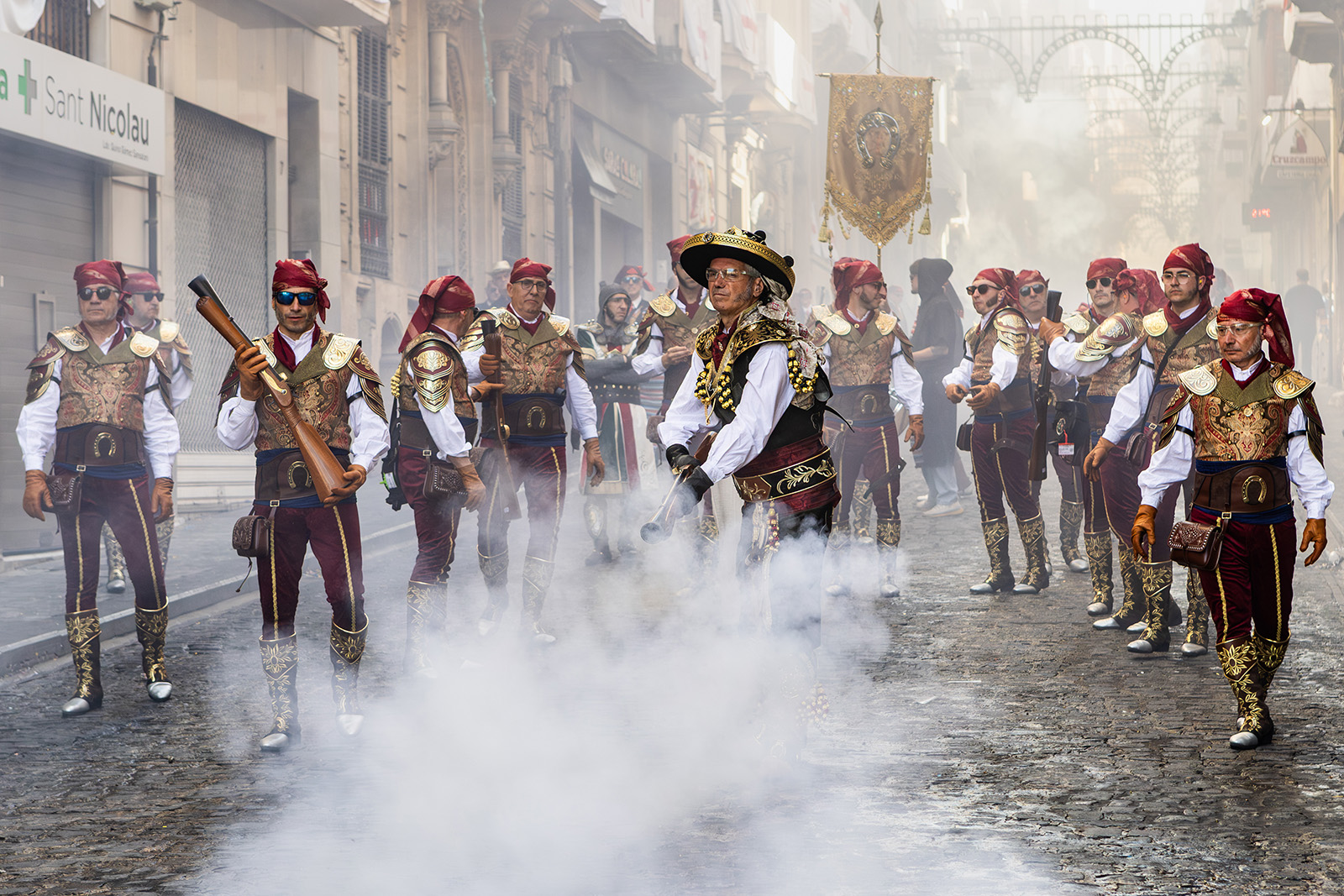
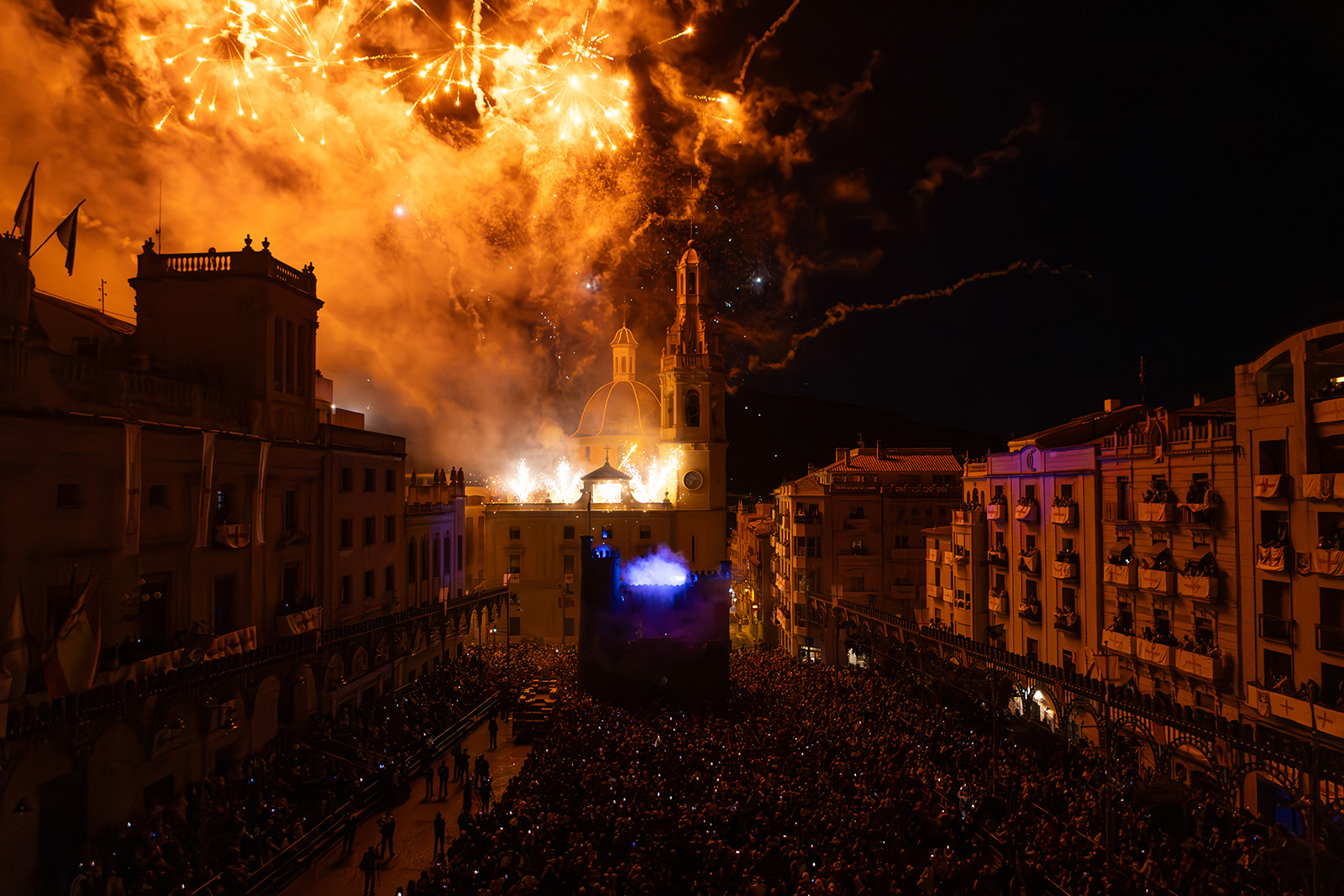
Dressed in flamboyant medieval costumes, soldiers blast their blunderbusses, sending clouds of smoke into the air as bystanders clutch their ears.
The deafening roar marks the final day of Moros y Cristianos, a centuries-old festival in Alcoy, south-east Spain, that reenacts the Reconquista, the Christian conquest of Muslim-ruled Iberia.

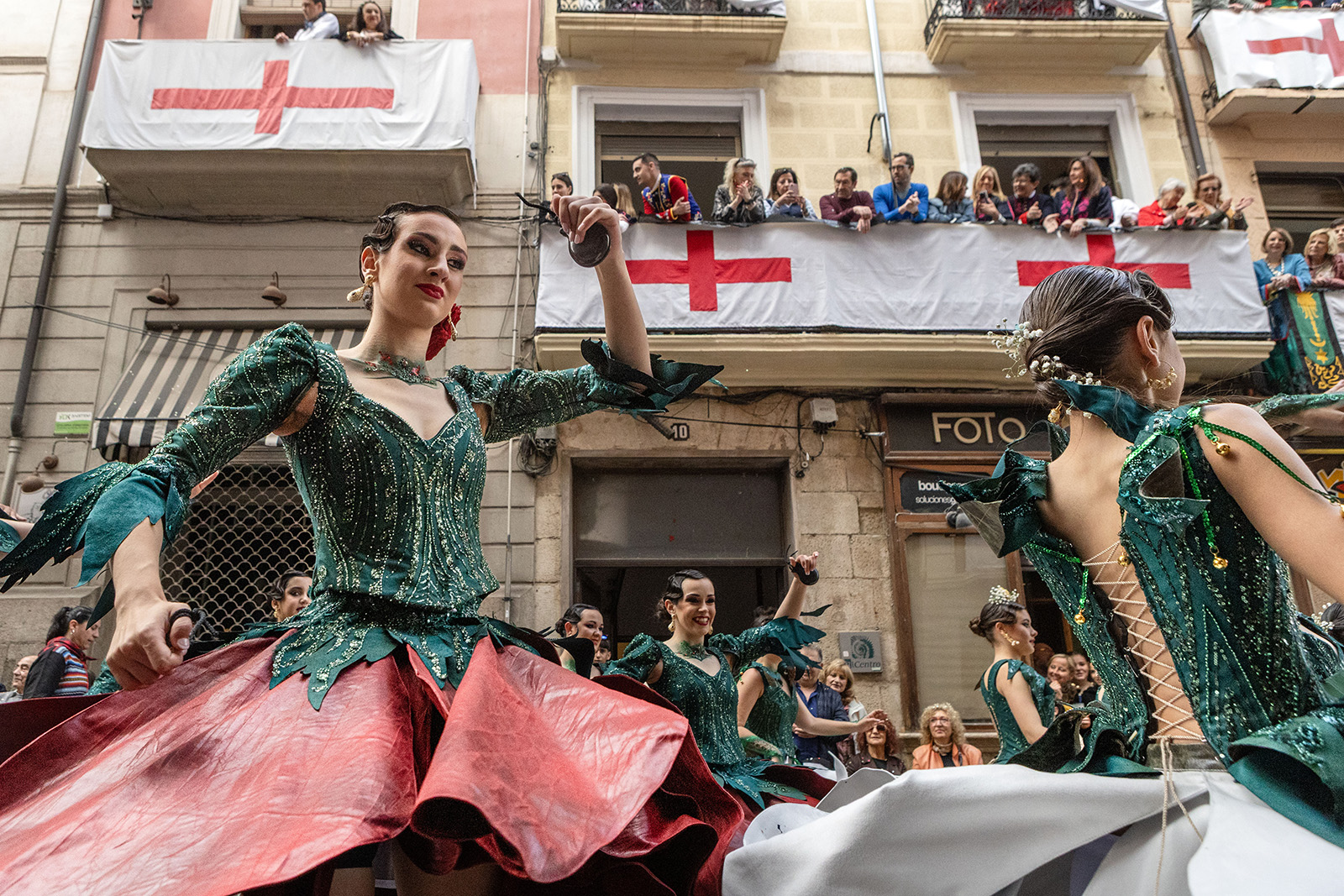
For three days, residents stage mock battles between Christian and Muslim armies, spending thousands on elaborate costumes to take part in what remains the city’s defining annual event.
Today, around 12% of Alcoy’s 62,000 residents were born outside Spain, with Moroccans the largest group. Yet Muslims are largely absent from the festival itself.
The pageant is organised through filàs, long-established social clubs that stage the performances. While they do not formally exclude Muslims, membership is limited, often passed down through families, and subject to long waiting lists.
In practice, that structure has meant that Muslim residents — now a significant part of the city — are largely left out of the festival. The question is not only whether they are welcome, but whether they are able to take part at all.
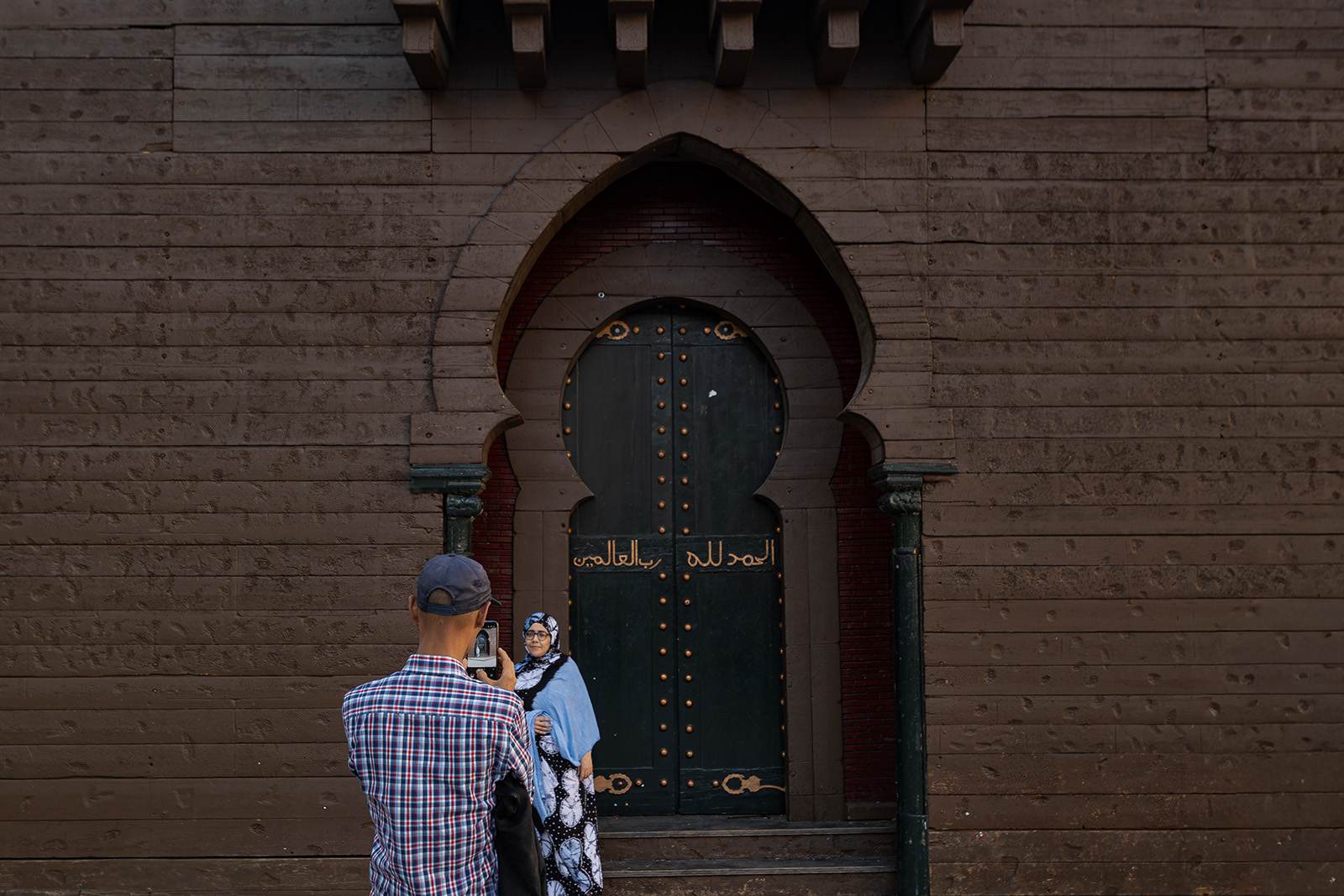
Among Alcoy’s Muslim residents, reactions to the festival vary. Fatima Toutouh, 18, said her community is not invited to take part.
“It does not mean anything to us, even though it is about what happened to Muslims and Christians and it shaped our history,” she said.
Others, like Rau Maissae, 23, who moved from Morocco three years ago, would like to join in.
“I think it is fun and it is a big part of the community. I would quite like to be part of this,” Maissae said. “For me this is something that anyone can join in and it does not have to be about religion.”
Some describe a more ambivalent position.
“I don’t have any problem with the festival. But others are using it to celebrate a conflict between Christians and Muslims,” said Hassana Bichiri, 48. “It has been misused by some groups for racist ends.”
These views point to a central tension: a festival built around the defeat of Muslims remains central to the city’s identity, even as Muslims make up a growing and established part of the community.
The festival’s historical framing has also taken on renewed political significance.
Spain’s far-right Vox party has repeatedly drawn on the imagery of the Reconquista in its messaging, presenting it as a symbol of national identity in opposition to immigration, including in campaign materials invoking Christian conquest and medieval battles.
In Alcoy, organisers insist the festival itself is not political. But the symbolism it draws on has become part of a wider national conversation.
Javier Ortega Smith — a former Vox spokesperson recently expelled from the party for WhatsApp messages critical of its leadership — attended this year’s festival alongside other politicians, including Diana Morant, Spain’s Socialist Party science minister. Locals said his presence was not unusual in a festival that regularly attracts figures from across the political spectrum.
Francisco García, president of the San Jorge Association, which organises the event, said all residents are welcome to take part.
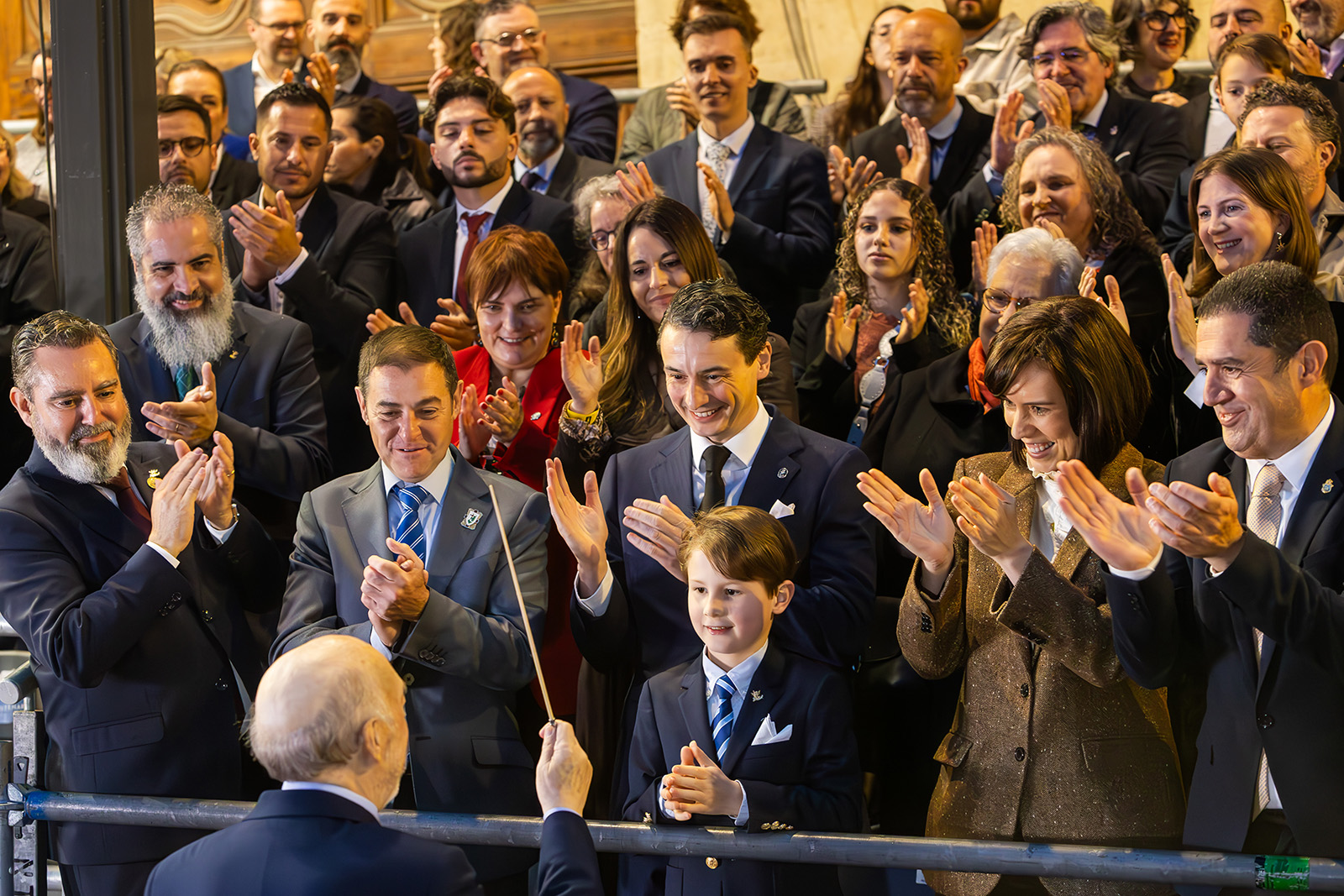
“This is not a religious festival. It simply commemorates an event in our past,” he said. “If Muslim people from Alcoy want to be part of it, they are welcome.”
However, in practice, who takes part is shaped by the long-standing system of local filàs.
Participant Jorge Baños does not see why this might be seen as excluding.
“Everyone can take part, but local people are traditionally involved,” he said. “Muslim people do not want to join. They keep themselves to themselves.”
But that view is contested. Some Muslim residents say they would like to take part but face barriers to joining the groups that organise the festival.
For others, the issue is not only participation, but how Muslims are represented within the festival itself.
Some participants portraying Muslim characters wear blackface-style makeup — a practice that has drawn criticism.
“I see the blackface custom as something ugly as it makes people of colour seem like something bad and it can be exploited by some in this day and age,” said Bichiri, who has lived in Spain for nearly 30 years.
Others defend the practice as historical re-enactment.
“Unless people take offence, there is no problem with this,” said a spokesman for the Spanish Union of Islamic Communities.
Organisers similarly reject accusations of racism, saying the costumes are intended as respectful representations.
Related content

Other elements of the festival have been adapted. A statue of Saint George killing the Moors at a local church is now covered with flowers during the celebrations.
“This is not because we have had complaints. We do it so as not to offend Muslims,” said Baños.
Jorge Linares, a historian of the festival, said its current form dates largely to the 19th century and emphasised that it reflects the past rather than the present.
“This is just a festival that recreates an event in our past but it is not about Muslim or Christian culture today,” he said.
But in a city where Muslims now make up a significant and established part of the population, that distinction is increasingly difficult to sustain. For many, the festival does not feel like a neutral reflection of history but a version of the city that excludes them.