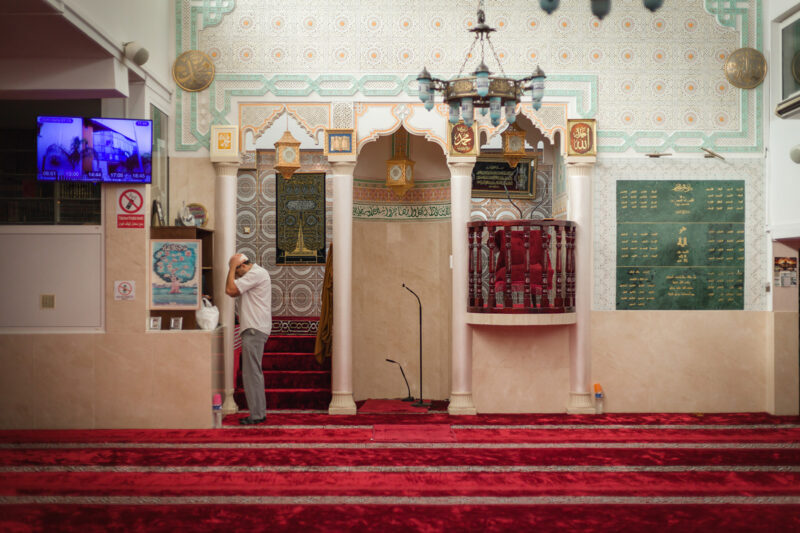


‘Lots of people are trying to build Muslim cemeteries. Only we have succeeded’
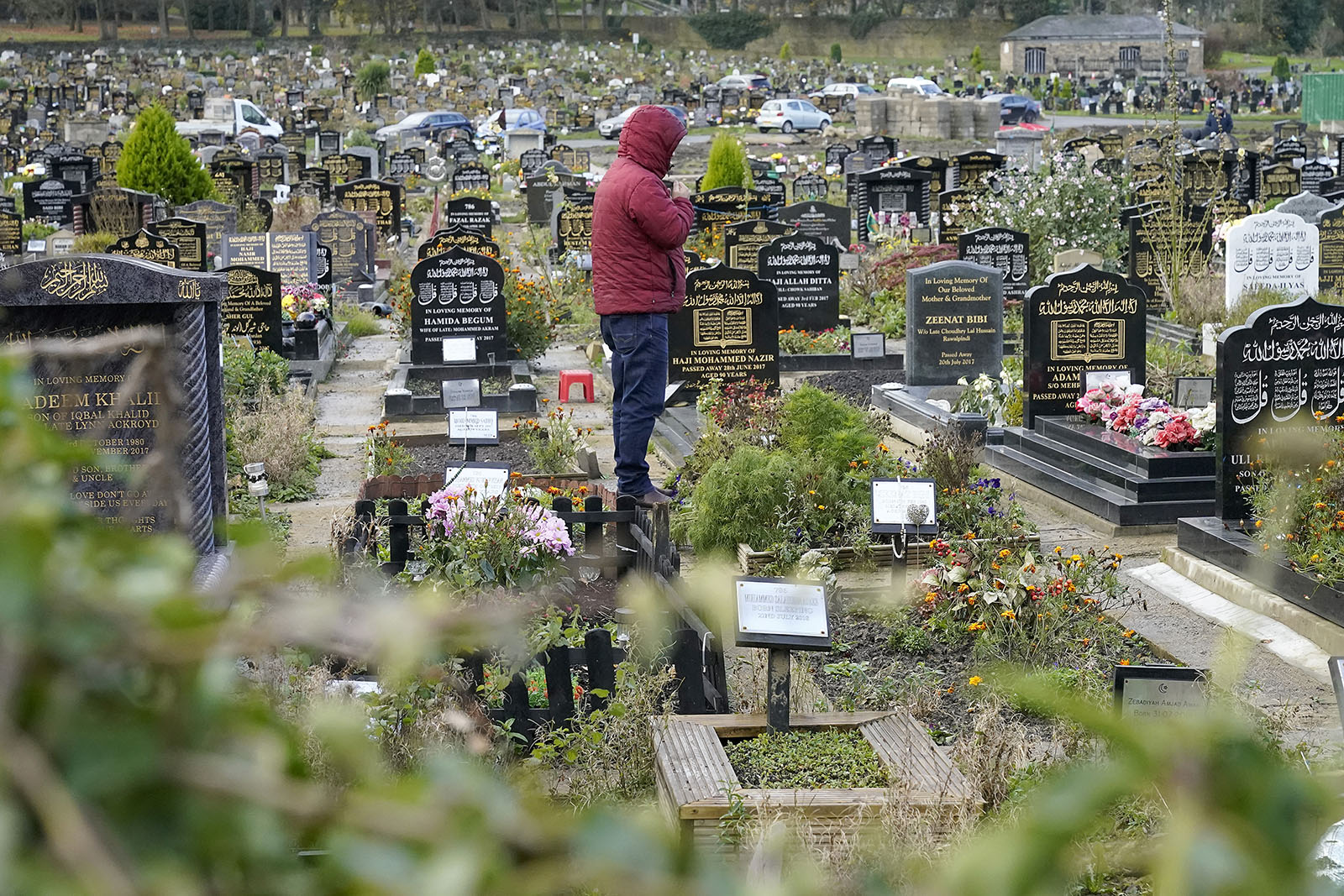
Muslims are at the sharp end of the UK’s burial crisis but building new cemeteries has proved impossible — until now

On a rainy December day, the last willows and oaks were planted around Bedford Islamic Cemetery as contractors unloaded burial chambers.
It will still take some weeks before the cemetery is ready for its first funerals, but already 800 people have bought plots for themselves and their loved ones.
Squeezed between farmland and Bedford’s existing cemetery on the city’s outskirts, the modest field, crisscrossed with neat sandy footpaths and bordered by a wooden fence, does not draw attention. By national standards, however, it is a rarity.
“I was at the annual conference of the National Burial Council,” said Parvez Akhtar, one of the cemetery committee members, referring to the body that represents Muslim burial societies across the UK. “We met people from lots of different towns who had been trying to open a Muslim cemetery. Some have been trying for years. But we were the only ones there who actually succeeded. Everyone else was running into problems with councils or the residents.”
Shortage of burial space is an issue across the UK and is not unique to Muslim communities. The problem has been well known since at least 2013, when a BBC survey found that half of the UK’s local authorities were expecting to run out of space by 2033. Muslim communities, however, are at the sharp end of the crisis.
Related content
Muslims began arriving in Britain in large numbers in the 1960s, most as fit and young people, meaning that the community’s need for burial space was relatively low. However, as that generation ages, the demand for Muslim burial space is rapidly exceeding the provision by local authority cemeteries. Another factor is the requirement within Islam for the dead to be buried, not cremated.
“The majority of cemeteries outside London, which are run by local authorities, have only a small portion demarcated for use by the Muslim community,” said Mohamed Omer, chair of the National Burial Council. “The space there is already running out.”
But UK legislation around burial is “odd” and archaic, said Julie Rugg, director of the Cemetery Research Group and a senior research fellow at the University of York. “No one has statutory responsibility to provide burial,” she explained. “Many cemeteries are owned by local authorities but they are not obliged to provide burial space.” This means that councils receive no ringfenced government funding for cemetery provision.
The obvious solution to the grave shortage, sought by Muslim communities across England, is to open new burial grounds where people can be buried in accordance with Islamic law. But despite several attempts to do so over the decades, few have succeeded.
The high cost of land and strict planning laws are among the obstacles. But even attempts to build Muslim cemeteries by investors with deep pockets have run into problems.
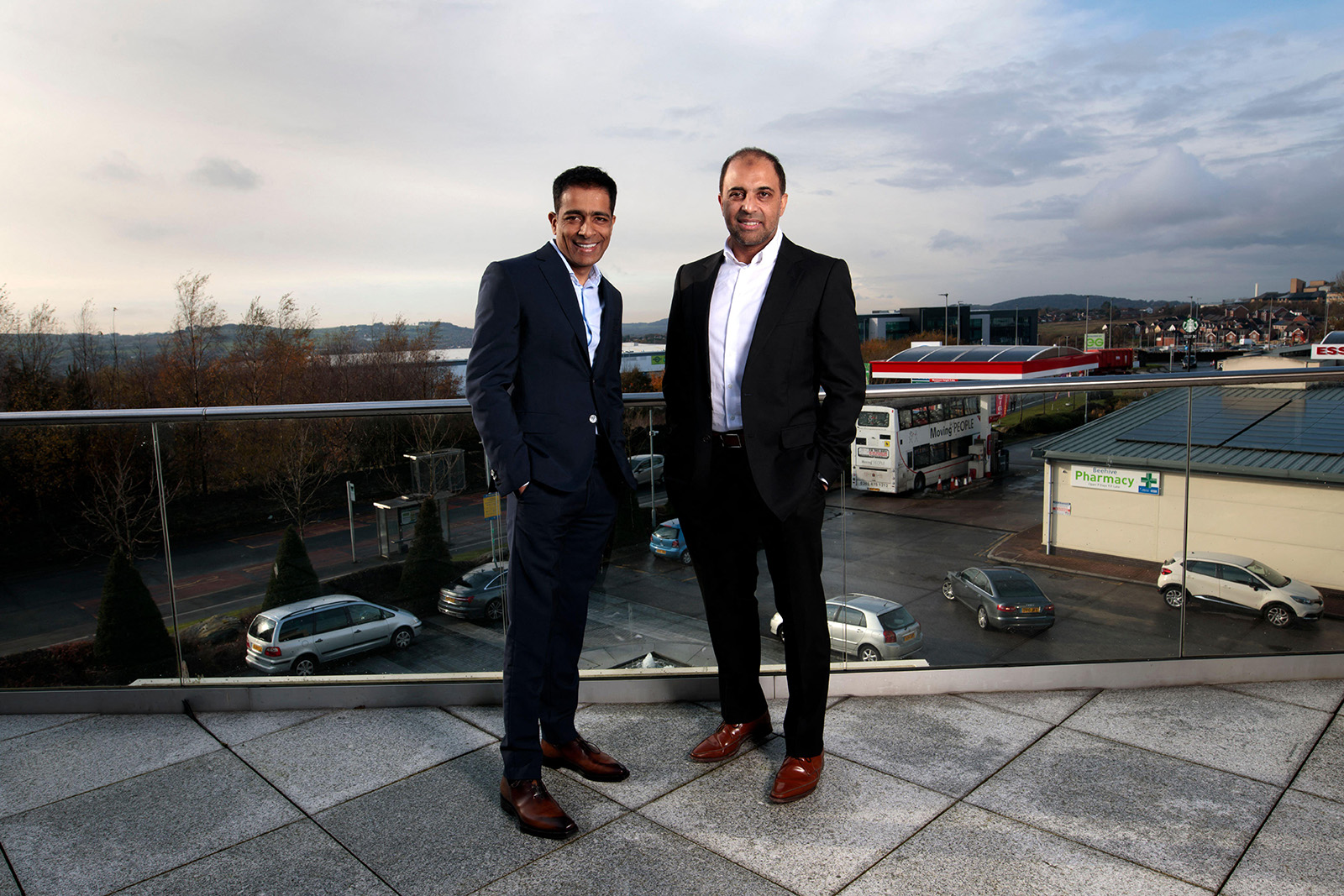
In 2021, the billionaire Blackburn brothers and Asda owners, Mohsin and Zuber Issa, bought an 84,000-acre plot in the Lancashire village of Oswaldtwistle through the Issa Foundation, the charity arm of their company, EG Group, hoping to build a cemetery with a capacity of 32,000. The plans met with fierce opposition from locals. In October 2025, a proposal for a more modest, 12,000-grave cemetery was submitted, but it too was withdrawn after receiving more than 1,400 complaints.
“It has whipped up tensions in the local community,” said Noordad Aziz, a councillor in Hyndburn, the village’s local authority.
Though he agrees that there were issues with the original application submitted in 2021, including potential effects on trees and groundwater, he says most of the opposition to the newer proposal was rooted in some residents’ reluctance to allow a cemetery catering to the Muslim community.
“The rhetoric being painted by those opposing the cemetery is very Islamophobic, in my opinion,” Aziz said.
Since speaking in favour of the burial ground in public meetings and in the local press, Aziz has faced abuse on social media telling him that “Muslims should not be allowed on our councils” and that he should leave the UK.
Last year, the local Labour MP, Sarah Smith, held a meeting with Oswaldtwistle residents to hear their concerns. “Most of what the residents said is that Muslims are not from around here,” Aziz recalled. “They asked why we can’t send the bodies back to Pakistan.”
Building a new cemetery is not easy for anyone, said Rugg.
“Land is expensive,” she said. “For a cemetery to be viable, we’re talking about 20 to 30 acres. Land that would be suitable for a cemetery, in a location that people can get to, not in a green belt and with appropriate soil — usually, that is land that is also very good for housing development, which really pushes the price up.”
While investors such as the Issa brothers can afford to purchase large swathes of land and pursue the years-long process of securing planning permission, small grassroots initiatives struggle to meet the challenge.
The small Muslim community of Plymouth, which makes up little more than 1% of the city’s population, has been trying to establish a Muslim cemetery in the south-west of England since 2023.
“We have about 10,000 Muslims in Plymouth and most come from refugee backgrounds. Most are working minimum wage jobs,” said Salim Mahadik, director of the charity Gardens of Mercy. “The cost of a burial here, including funeral directors and the charge for a burial site, is £5,000. Every time someone dies, we have to do a community fundraiser — which is why we decided to try and establish our own cemetery, which would work on a charitable basis.”
Following years of fundraising, appeals for donations and bake sales, the community managed to put together £130,000 to buy 10 acres of former farmland atop a hill in Cornwall.
Mahdik thought the land would be “ideal”: it is accessible but not in a greenbelt and seemingly remote enough not to bother neighbours.
However, as soon as the public consultation started, Mahdik realised that the plan was in trouble.
“They just wouldn’t have us there,” he said.
Related content
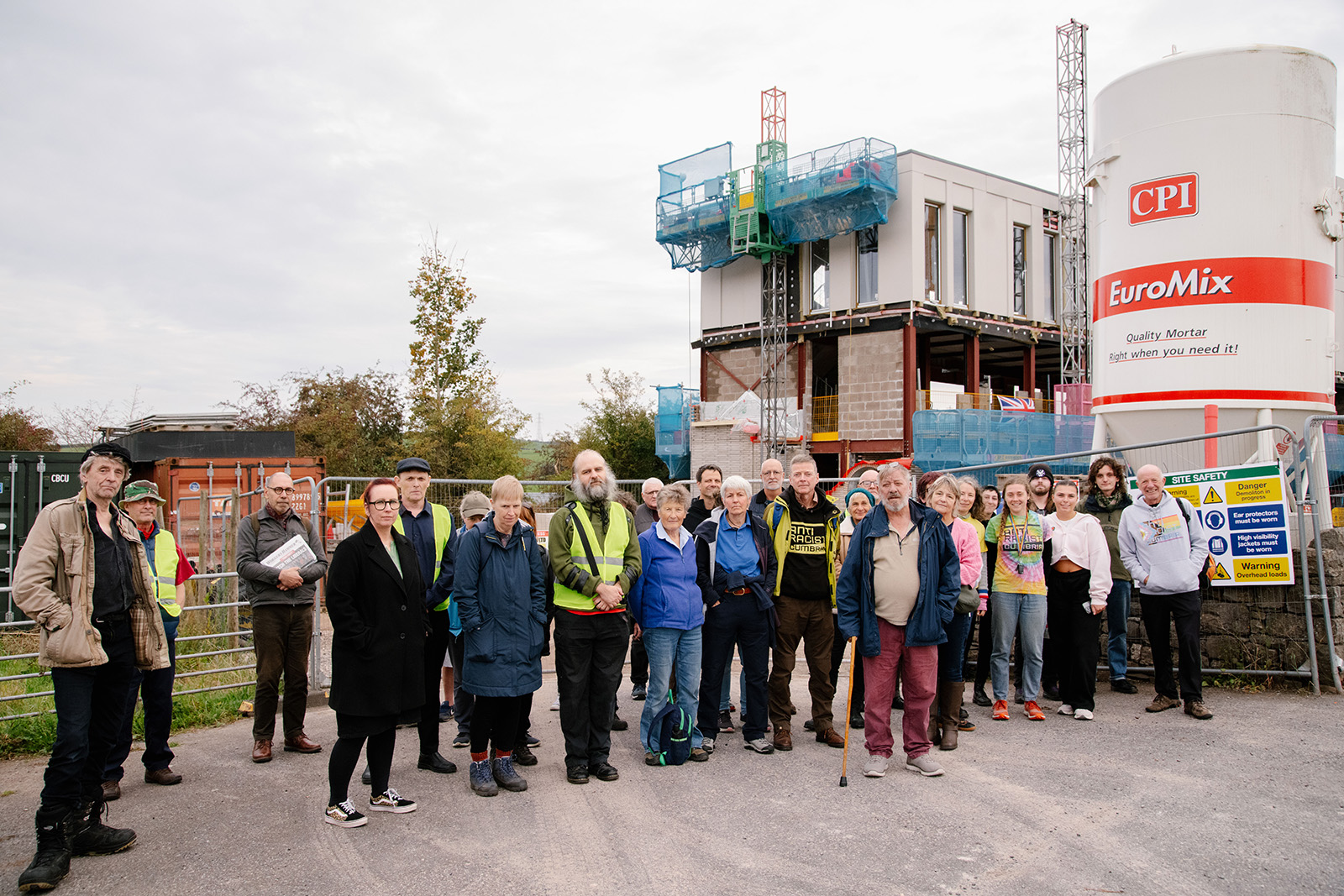
The planning proposal received 345 public comments from the local community, the vast majority objecting to the project. They cited fears about the contamination of groundwater and traffic to the site, and claimed that a Muslim cemetery would be out of character with the Christian heritage of the area and that it was not needed due to the relatively small local Muslim population.
Objections to Muslim cemeteries across the UK often mirror the language that is used to resist the building of new mosques, particularly in campaigns stoked by rightwing activists such as Ukip’s Nick Tenconi. Concerns that a new cemetery might act as a gateway to the building of a mosque — even though Islam prohibits mosques being built on burial grounds — were cited as an objection to both Gardens of Mercy and the Issa brothers’ project in Oswaldtwistle. The landowner who sold the Bedford plot to the cemetery committee included a clause in the sale contract prohibiting a place of worship being built there.
Overwhelmed by the opposition to its plans, Gardens of Mercy withdrew its application last year. It is now approaching existing private cemeteries to ask if they would consider reserving some of their land for Muslim burials, while looking for a buyer for the field.
“Hopefully we will be able to get back what we paid for it,” said Mahdik.
All the same, the community’s success in Bedford proves that new Muslim cemeteries can be viable. Key to that, said Akhtar, was support — and funding — from the local council.
“I think Muslims in nearly every town where they tried to buy land and build a cemetery have run into problems. Locals just don’t want them anywhere near,” he said. “It’s a problem we thankfully did not encounter but I am not surprised it is happening. There is a narrative of division building up.”
Although the initial process of securing planning permission was lengthy and expensive, following its receipt of planning approval, the council donated £1m to the cemetery project.
“I went to see the mayor, who had recently been elected,” recalled Akhtar. “The council saw that our cemetery will ease the pressure on the public burial ground and were happy to split the costs with us regarding this provision.
“This partnership had support across the board — Labour, Lib Dems, Conservatives, independents, Greens, they all voted for the scheme, so there was no space for anyone to jump on the anti-Muslim bandwagon.”