HSBC to review ‘halal’ fund’s $38m investment in Palantir shares after Hyphen exposé
Nest was also due to meet with HSBC this week to discuss the fund’s investment in the controversial US spy-tech company

HSBC is to review the investment held by its sharia-compliant Islamic equity fund in Palantir after Hyphen revealed it had bought $38 million worth of shares in the spy-tech firm earlier in 2026.
Meanwhile, senior specialists from the UK’s largest workplace pension provider, Nest — whose sharia fund is invested in HSBC’s Islamic Global Equity Index Fund — have had “initial discussions” with the bank this week to press them on the issue, Hyphen understands.
Related content
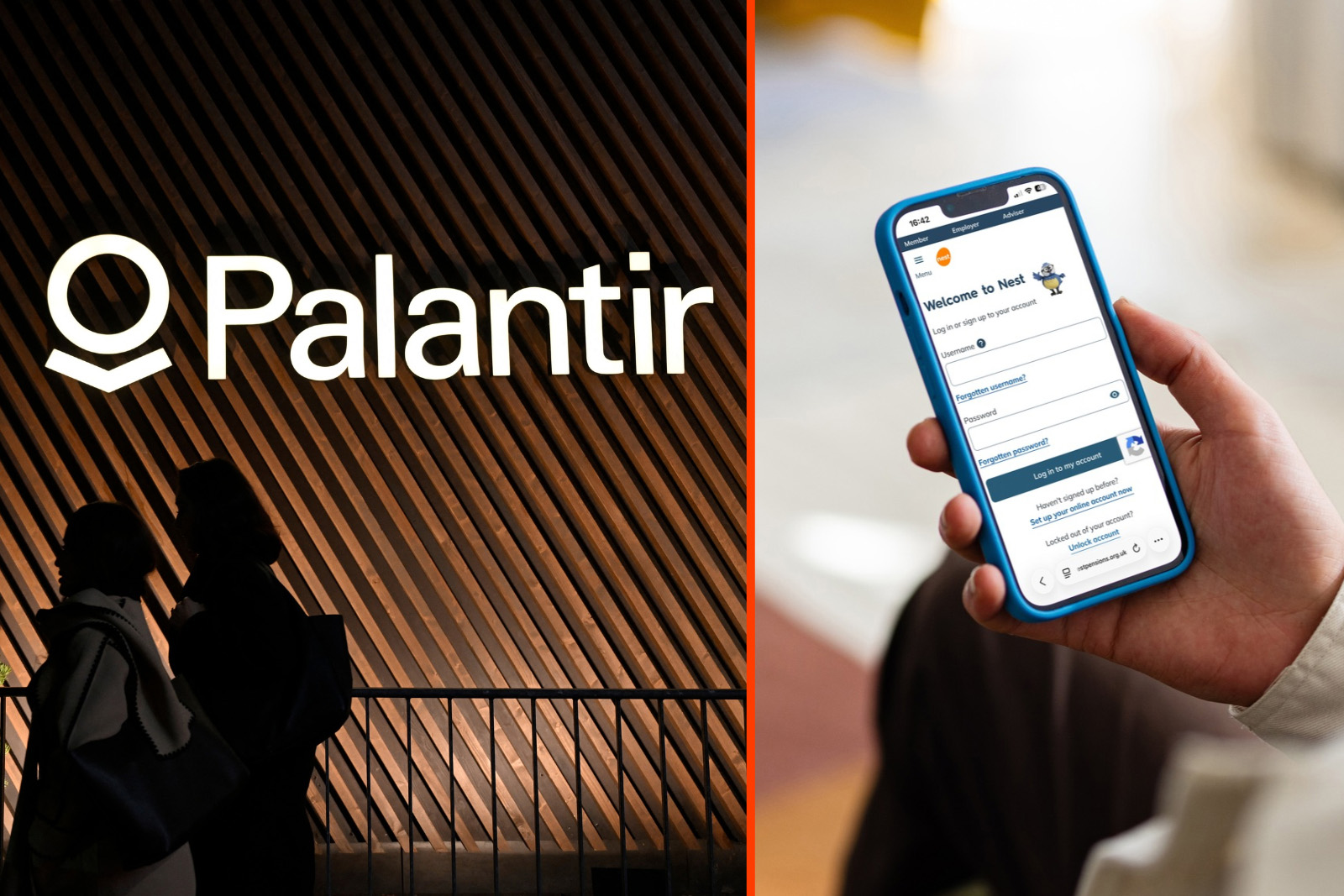
Hyphen revealed on 13 October that HSBC’s Islamic Global Equity Index Fund had purchased $38,338,000 (about £29.7 million) worth of shares in Palantir in the first half of 2026. Most sharia-compliant UK workplace pension schemes, including Nest, are invested in HSBC’s fund. The revelation it had bought shares in a firm that signed a strategic partnership with Israel’s Ministry of Defense in January 2024 — to provide it with “advanced technologies in support of war-related missions” — sparked a fierce backlash in Britain.
In response to our reporting, the Islamic Finance Guru website launched a campaign calling on Muslim retirement-savers to write to their pension provider and HSBC to “demand divestment from Palantir, weapons and defence companies”.
One of the most senior and influential Islamic finance scholars, Mufti Taqi Usmani, chair of the sharia board of the Bahrain-based Accounting and Auditing Organization for Islamic Financial Institutions (Aaoifi) — the main standard setter for Islamic finance organisations globally — also faced fresh calls to update the body’s sharia screening methodology while appearing at a major Islamic finance summit last week.
A HSBC spokesperson has now said: “We understand how important it is that funds like this reflect the values of those who invest in them.
“We take any concerns from our clients seriously and will review this matter carefully, in partnership with independent expert advisors, to assess whether the approach still meets investors’ expectations.”
They added: “We commit to conducting this review swiftly and communicating any necessary actions to our customers.”
The backlash followed a 2025 investigation by Hyphen that found six Islamic investment funds, including HSBC’s, held shares worth more than $1bn in firms whose technology had reportedly helped Israel’s war effort in Gaza — meaning British Muslims had likely been unknowingly profiting from the conflict.
Alongside Nest, the FT also reported on Tuesday that the People’s Pension, which has more than seven million UK members and runs a sharia fund, had raised concerns with HSBC over Palantir’s inclusion in the fund.
Nest Sharia Fund, which had 33,139 users as of July 2025, had invested 70% of the fund’s money into HSBC’s fund, its latest accounts up to 31 March 2025 show.
Palantir sells software to customers, including governments, police forces and militaries, to help them sort through large datasets — including systems that help soldiers to identify targets for military strikes, as part of what it describes as an “Al-powered kill chain”. Responding to a heckler’s claim that Palantir’s “technology kills Palestinians” during an event in 2025, the company’s co-founder and chief executive Alex Karp replied: “Mostly terrorists, that’s true.”
Businesses can be sharia-compliant if no more than 5% of their total income comes from sources deemed impermissible, with profits from haram sources donated to charity. But those standards focus on business activities involving alcohol, gambling, weapons and payment of interest.
Firms engaged in business activity Muslims may be ethically opposed to — such as partnering with an Israeli government ministry responsible for “building the strength of the Israel Defense Forces” — but whose primary business activity, such as advanced technology, falls outside of the above categories, can also sometimes be deemed sharia-compliant.
Related content

Usmani was pressed on this while speaking at the AlBaraka Islamic finance summit in London last week, when he was interviewed by Dr Najib Al Aswad, chief executive and chief advisory at the Islamic Finance Capacity and Advisory Bureau.
Referring to our reporting, Aswad told the event: “I’ve recently read the news of an Islamic fund, one of the major Islamic funds today, investing in a company that is providing technology to the Israeli army. From a sharia standpoint, of course, when we are buying something like a technology, it is sharia neutral. But as Muslims, is it sharia compliant for us to invest in a company that is providing technology to an army that is killing our brothers and sisters, and in fact, any human being?”
Usmani said that it “depends on the circumstances”, adding that: “There may be circumstances in which a sale would be halal, but when you are 100% sure that the person who is buying this will use it in a haram way to harm others, in that case it would be haram.”
The HSBC fund is “passively managed”, meaning it closely mirrors the investments of an Islamic “parent index” — a ready-made group of stocks screened for sharia compliance by third party providers — in a process known as “tracking”. It started tracking a new parent index, the S&P Global 1200 Shariah Select Index, in March.