

The Ramadan student survival guide

Observing the holy month can be challenging when living away from home or commuting to classes. Here are our tips on how to make the most of this special time

For many Muslim students, Ramadan lands right in the middle of term time. Early mornings, long lectures, deadlines and commuting to classes can make it harder to balance fasting, prayer and spiritual focus. For first years, especially, it can feel daunting to navigate the holy month away from home and without familiar routines.
To find out what really helps, we spoke to Muslim students across the UK — from freshers observing their first Ramadan on campus to those travelling to university from their family homes. Here’s our practical guide to navigating Ramadan while keeping your grades up.
Create a structure where uni life lacks it
One of the biggest struggles for students, particularly first years, is the independent nature of university life compared to school. With lectures spread across the week, it’s easy for days to blur together during Ramadan. For students with fewer contact hours, intentionally scheduling study, rest and worship can make the month feel manageable, rather than overwhelming.
Related content
Hameedah Salami, who is in her first year of a psychology degree course at the University of Southampton, says she’s been preparing in advance and plans to build structure as the holy month goes on.
“I’m going to make a to-do list every day and write my reflections in the evening on what I can do to improve the next day,” she says. “I have so much free time, so I don’t want to lose my pace throughout the day.”
Make the most of the early-morning starts
Some students find themselves quite productive after suhoor and fajr. Zaynah Ahmed, a second-year journalism student at City St George’s, University of London, says she often uses that early window to work for an hour before going back to sleep. “I’m up at that time, so I might as well do some studying,” she says.
Zarin Khan, a final-year chemical engineering student at the University of Birmingham, shares similar thoughts. “If I feel energised, I’ll use that time to study. But if I’m really tired, I’ll pray and then take a nap,” she says.
Prepare food — especially if you’re away from home
Preparing and eating nutritious meals is one of the biggest adjustments for students living away from home for the first time. Planning ahead can help to remove a lot of stress when energy is low.
Salami admits that this is something she still struggles with. “At home, I didn’t really prep at all — I’d just come down and the food is done,” she says. “Before I go to bed, I’ll make sure there’s something in the fridge that I can just put in the microwave.”
For commuters, Khan recommends packing something light in your bag. “Dates, water, maybe a sandwich — just in case you’re breaking your fast on campus or while commuting,” she says.
Break big assignments into smaller, consistent chunks
Ramadan doesn’t mean stopping your academic life, but it does mean working differently. Short, focused study sessions can prove highly effective when they’re performed consistently.
Khan says she tries to frontload her work before Ramadan begins and then maintain it in small bursts.
“During Ramadan, I can do half-hour slots of study every day,” she says. “So I don’t feel as stressed and I can pray taraweeh in peace, fast peacefully and spend time with the Qur’an.”
Engage with Muslim student communities on campus
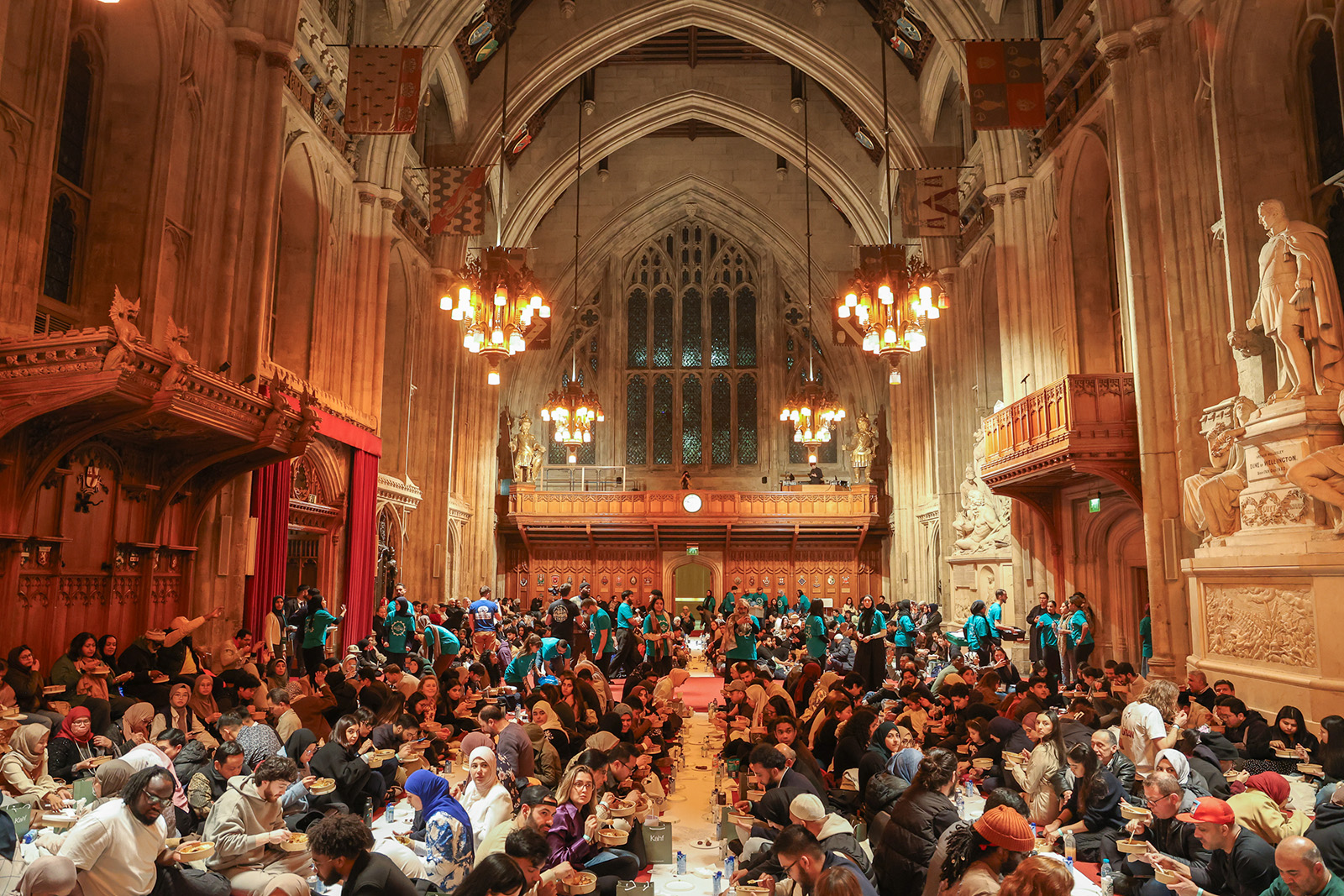
Community makes Ramadan easier. Whether through daily iftars, praying taraweeh on campus, or just providing the opportunity to be around people who understand fasting, Islamic and other cultural societies can provide a lifeline to Muslim students.
“Every night there is an iftar that’s served for brothers and sisters,” says Salami of her university. “People from outside the uni come as well, so it’s kind of a community thing.”
Khan described Islamic society events in Birmingham as “really wholesome, like a family”, adding that they bring together students living both at home and away. Attending these gatherings, even occasionally, can help lessen feelings of isolation.
Related content

Give yourself a break
Ramadan isn’t experienced the same way throughout the month. Tiredness, low motivation and missed plans are all part of the process. Understanding that energy levels fluctuate can help you avoid guilt and placing unrealistic expectations on yourself.
“The first two weeks will feel brutal, but by the third week you’ll feel much lighter,” says Khan. “Be patient with yourself. You’re not going to get everything right straight away. You’re going to be tired, but that’s OK and you’ll come back stronger.”
Make commuting work for you
For students coming to university from their family homes, travelling while fasting can be one of the most draining parts of Ramadan. Ahmed says that small adjustments help her, such as keeping her bag light and using the time spent commuting intentionally.
“If I want to read the Qur’an, I can do that on my phone instead of listening to music,” she says. “If my bag isn’t too heavy, I’ll also carry a book so I can read.”
Ahmed also believes that small changes can make long days much easier. “Make sure that your bag isn’t too heavy, because on a normal day, that really drags you down,” she says. “If it is, for whatever reason, maybe invest in a locker on campus.”
Redefine your social life
University social life often revolves around food — coffee dates, lunches and dinners — which can mean students have to rethink how they socialise during Ramadan.
“I feel like you aren’t as likely to go out of your way to make plans with people,” says Ahmed. “They’re happy to just sit in the library with you rather than go out and get a matcha.”
She also stresses the importance of checking in on others — inviting someone to iftar or spending time together on campus can make a huge difference. “If you have friends who are international students, definitely make them feel welcome,” she says. “People don’t need to be lonely — especially in Ramadan.”