

Mosaic Rooms reopens as an artistic space for the Arab diaspora
After closing for a year for refurbishment, the west London venue is relaunching with works from artists Dima Srouji and Bouchra Khalili
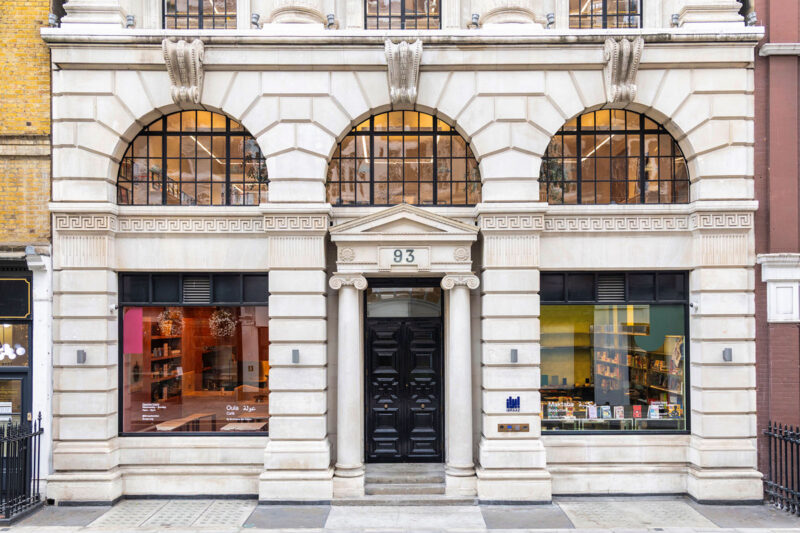
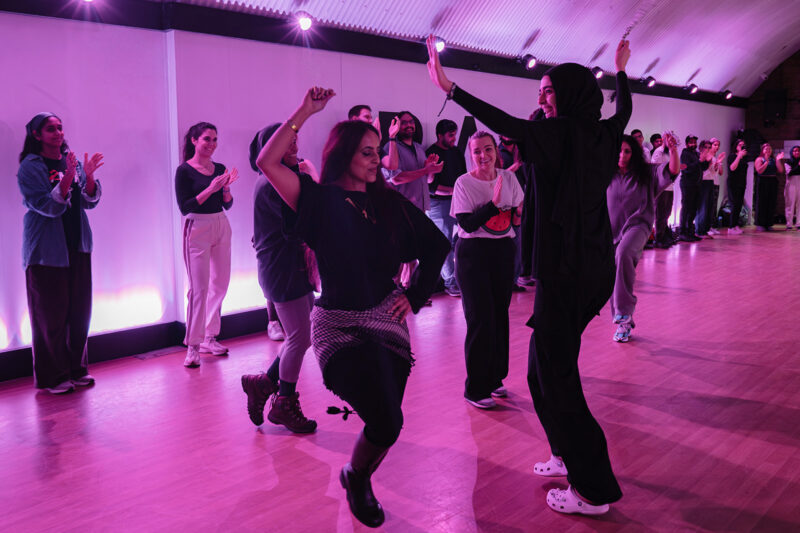
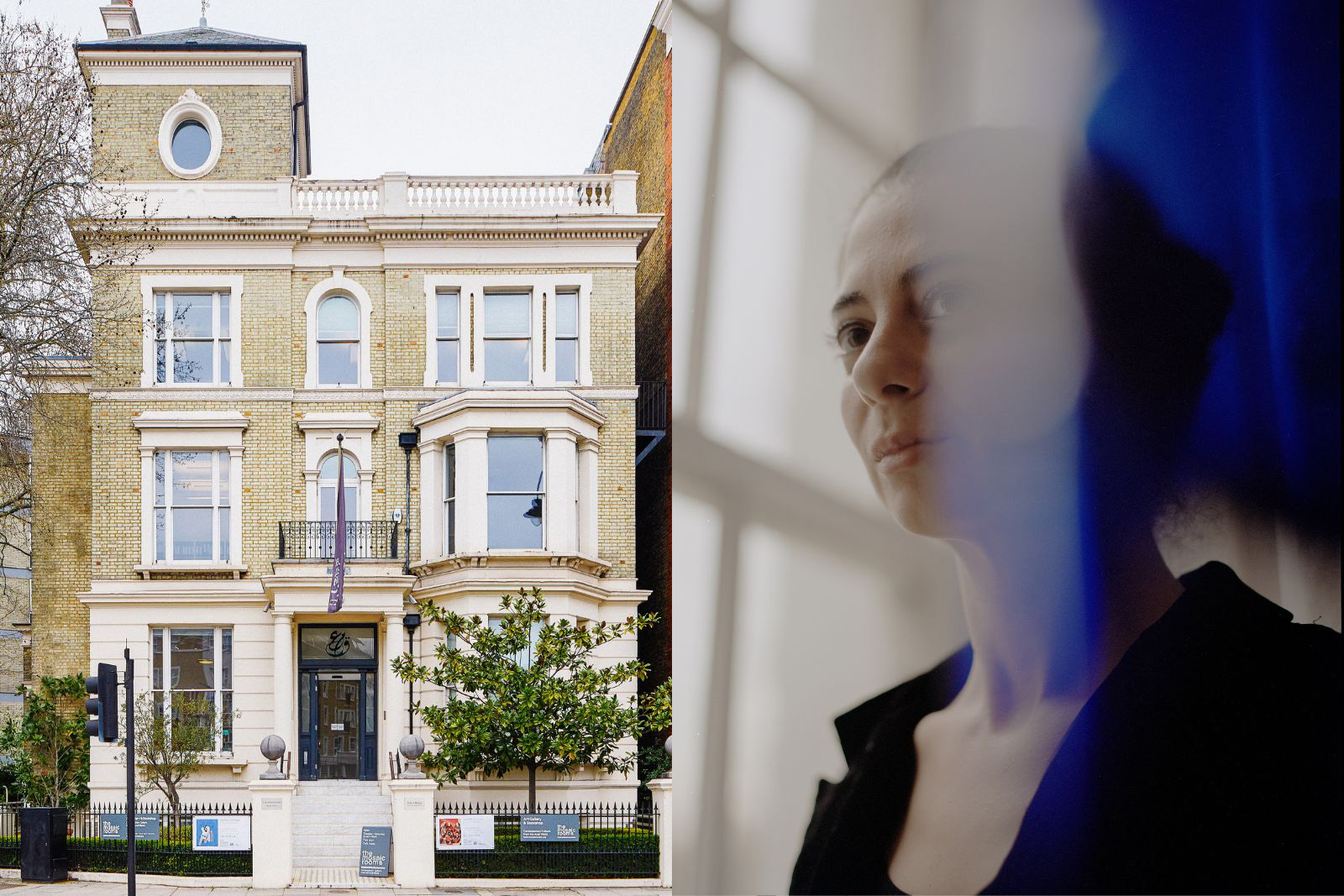
Nestled along west London’s hectic Cromwell Road is an unassuming house that has been a home to the city’s artistic community from the Arab diaspora for the past 17 years. The brick-fronted Italianate building has held formative exhibitions from Egyptian visual artist Mahmoud Khaled to Iraqi painter Hayv Kahraman and Moroccan multimedia artists Fatima Mazmouz and Meriem Bennani. Named the Mosaic Rooms, it has also held workshops on poetry and protest chants.
Over the past year, its doors have been closed while the structure undergoes a major refurbishment. On 17 February the Mosaic Rooms reopens with a new permanent installation from Palestinian artist and educator Dima Srouji and the debut UK solo exhibition from French-Moroccan artist Bouchra Khalili.
“Mosaic Rooms is an indispensable public institution that has created a different narrative for the Arab world through art and culture,” director Pip Day says. “It’s an organisation that was founded in the aftermath of 9/11 and the huge rise in Islamophobia that followed.
“Today, with the war on Gaza, it’s just as necessary as ever to have this space to gather with likeminded people and showcase art that might not safely be allowed in other spaces.”
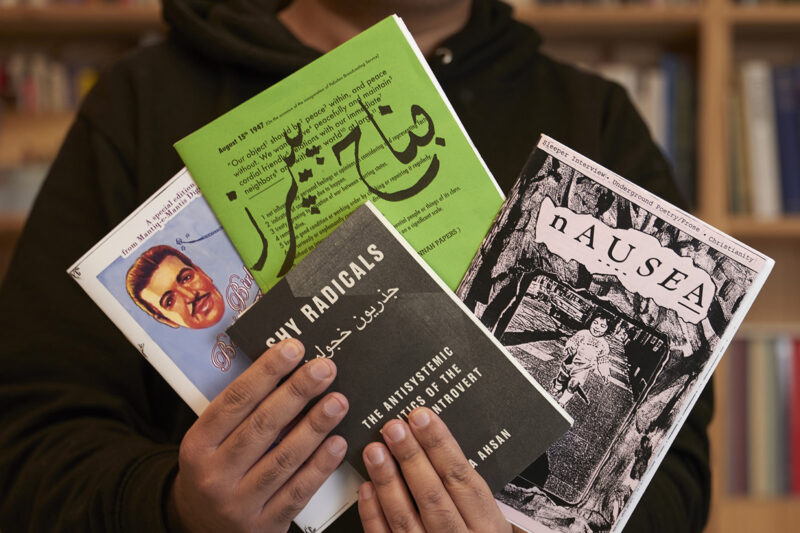
Originally founded as a London arm of the Palestinian arts organisation the Al-Qattan Foundation, the Mosaic Rooms’ redevelopment has found new space within its structure. Visitors will now walk in via a peaceful landscaped garden before reaching a new library with books on the Arab world for both adults and children. There are now two galleries, a room for public talks and screenings and a broadcasting space for radio and podcasts.
“Palestine remains our compass and we’re not shifting focus in working with artists from the Arab region and beyond to find ways to use critical and cultural practice as a form of resistance,” Day says. “The works we will be featuring by Dima Srouji and Bouchra Khalili when we open are key examples of that.”
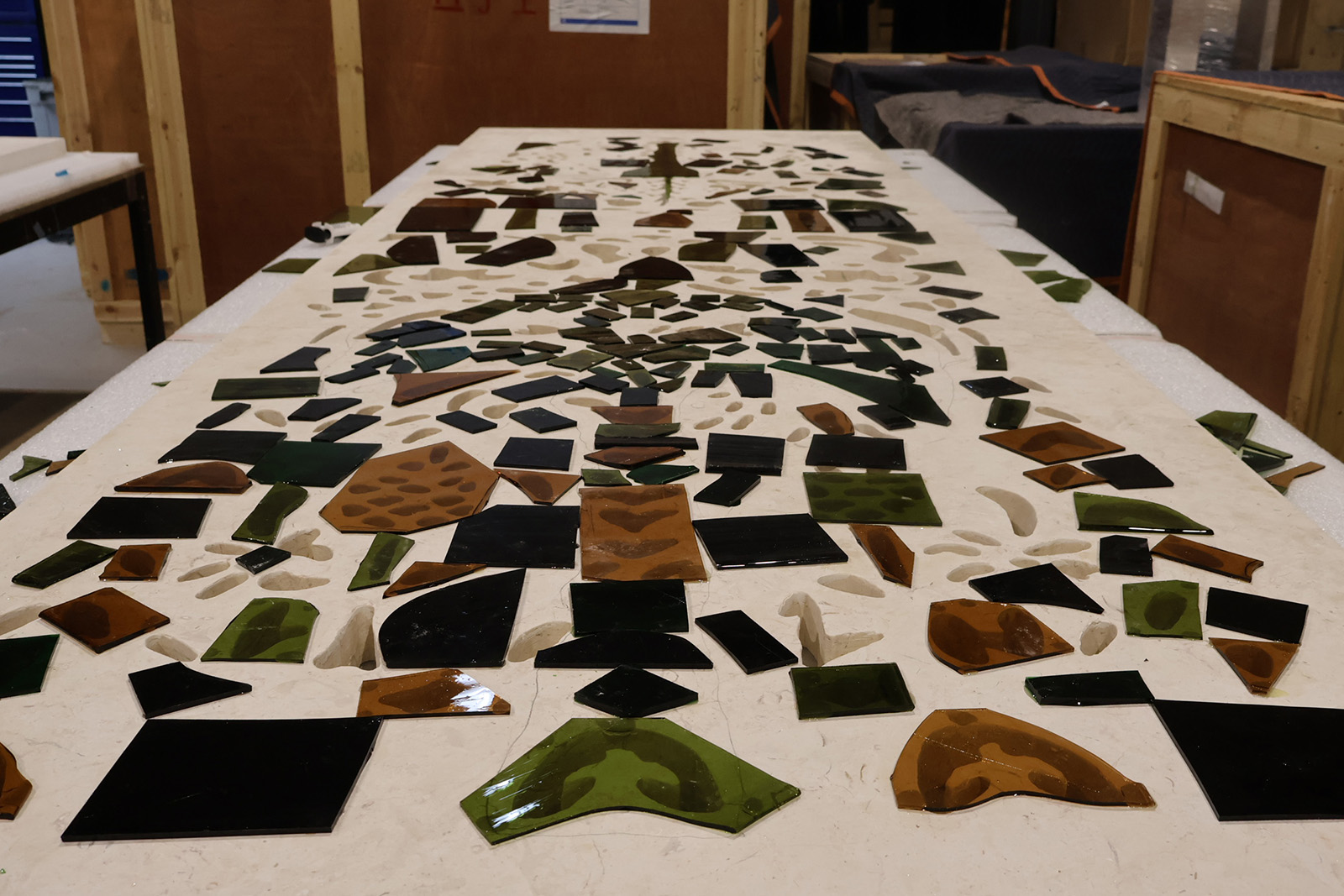
Upon entering the building, visitors will be greeted by four imposing, hand-blown stained glass windows created by Srouji. Carved from Jerusalem stone with motifs of native flora from Palestine, Four Moons from Home is more than just intricate artwork.
“I think of the windows as portals to Palestine or portals to home,” Srouji says. “They’re inspired by the history of stained glass windows, or qamariya, which originated in Yemen, Palestine and the Middle East region. They are a symbol of optimism and hope in a world where moments of pleasure can feel so rare.”
Srouji first became fascinated by the history of these qamariya windows a decade ago when she began holding glass-blowing workshops in Palestine. After moving to London in 2021, she started visiting Mosaic Rooms as a space to meet fellow artists as well as discuss the works on display with her students at the nearby Royal College of Art.
“The work is a memory of the seasons I remember in Palestine, featuring those colours and plant forms, while the stone itself is from Jerusalem since it has this beautiful red vein to it that makes it look like human skin,” she says. “It’s bringing a piece of home to London and giving some beauty to others who feel far from where they belong.”

For Day, the permanence of the windows are just as important as their initial impact. “Dima’s work is a recovery of culture during a cultural genocide,” she says. “These windows will be here forever, embedded in our building.”
The debut solo UK exhibition by Khalili, Circles and Storytellers will run until 14 June. Featuring two films from 2023 and 2024, the exhibition tells the story of the Mouvement des Travailleurs Arabes, an activist group of undocumented Maghrebi workers who used theatre as a means of resistance.
“Bouchra’s work has mined a lesser-known history to give us examples today of how we can defeat rising fascism,” Day says. “The Arab workers’ movement did everything from organising strikes for immigrant rights to even putting forward their own candidate for president of France. Showing this work is a way of looking to the past to find useful strategies for today, as well as allowing people to realise they’re not in a bubble. We have always used art and resistance hand in hand.”
That intersection of culture and social justice is central to the Mosaic Rooms’ purpose. Operating within the London Borough of Kensington and Chelsea, which has one of the highest rates of inequality in the country, the Mosaic Rooms has a dedicated team who will be working with some of the neighbourhood’s low-income and refugee families, while a new long-term project on prison literature aims to connect experiences between protestors and activists who have been incarcerated.
“We want to bridge different diasporic communities and make sure we don’t work in a top-down way but rather with our neighbours,” Day says. “Ultimately, we are a building that belongs to London and we are an example of how discussing and engaging with art isn’t just a luxury but it’s an act of survival.”
Mosaic Rooms reopens on 17 February.