

Something to chew on: the new generation of UK paan makers
With elaborate recipes and healthier takes, this traditional South Asian treat is finding a 21st-century audience

Along Green Street in the east London borough of Newham, a handful of small shops specialise in paan, one of South Asia’s most popular street snack traditions.
The earliest records of paan chewing date back to the 1300s. It has remained a popular practice in South Asian nations such as Bangladesh, India and Pakistan, and is also enjoyed in Myanmar, Cambodia, Vietnam and the Philippines.
These small parcels, made from a betel leaf and typically filled with areca nut — a mild stimulant also known as supari — spices, dried fruits, sugar-coated seeds and sometimes tobacco, are traditionally chewed as a pick-me-up or an after-dinner palate cleanser.
The NHS and Cancer Research UK have identified smokeless tobacco, including paan, as a contributor to oral cancer. Areca nut is also classed as a group 1 carcinogen by the International Agency for Research on Cancer. A study published in The Lancet in November 2024 found that in 2022, 30% of oral cancer cases across the world were attributable to the use of smokeless tobacco, areca nut or both.
Nonetheless, paan appears to be booming in Newham. I visited in late 2025, calling into half a dozen shops. Most were run by middle-aged South Asian men and the majority of customers appeared to be from the same demographic.
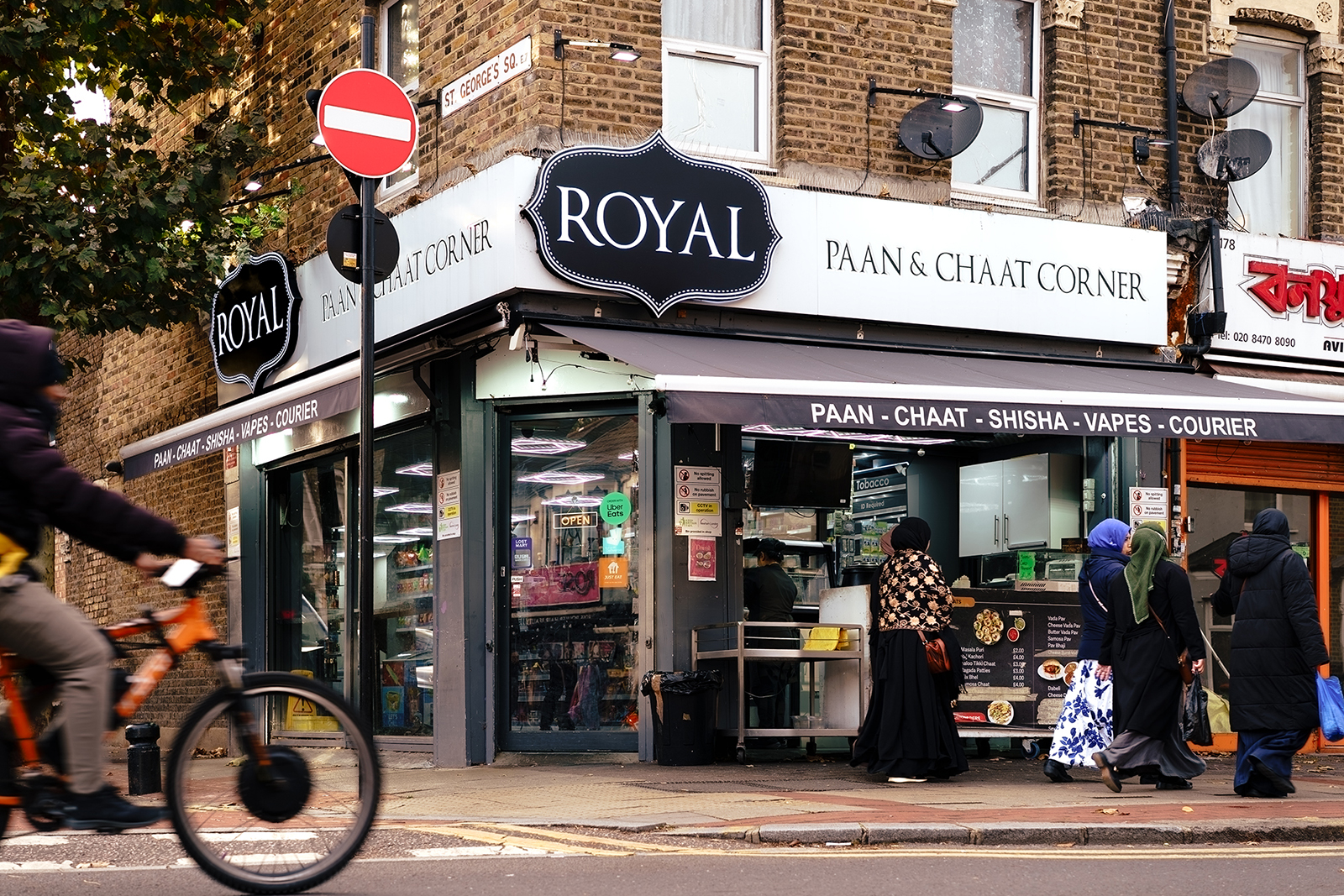
I stopped by Royal Paan and Chaat Corner, a hybrid shop that is part convenience store and part street food stall. Inside, next to the newsagent, a counter was lined with dozens of jars containing colourful candied seeds, jellies and nuts.
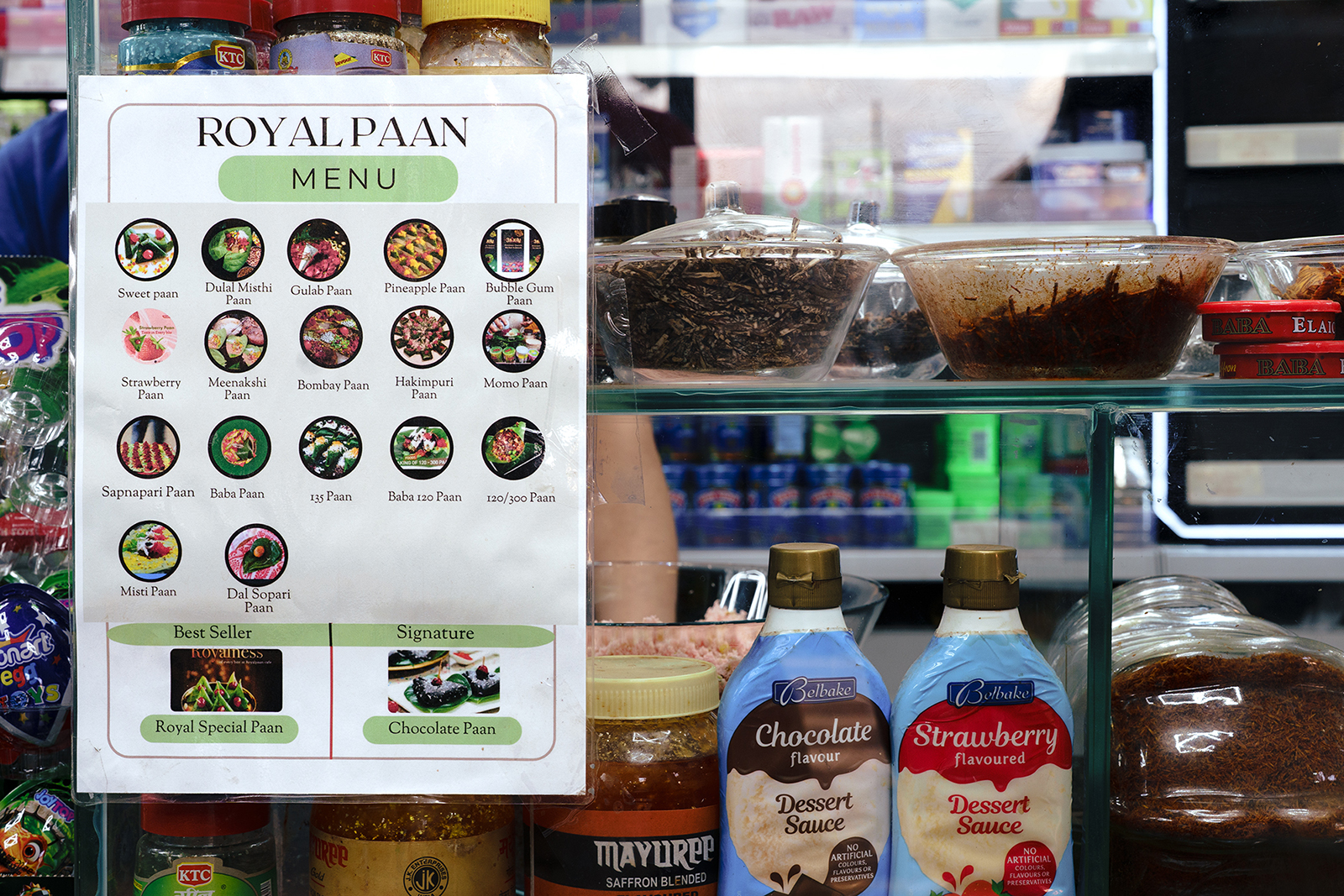
Faizal Khan is the chief paan maker, having learned the craft from his father in Gujarat, India, where he grew up. The shop opened a little over a year ago and its paan has attracted a loyal customer base. The menu offers an array of flavours including sweet paan, tutti frutti, rose and chocolate.
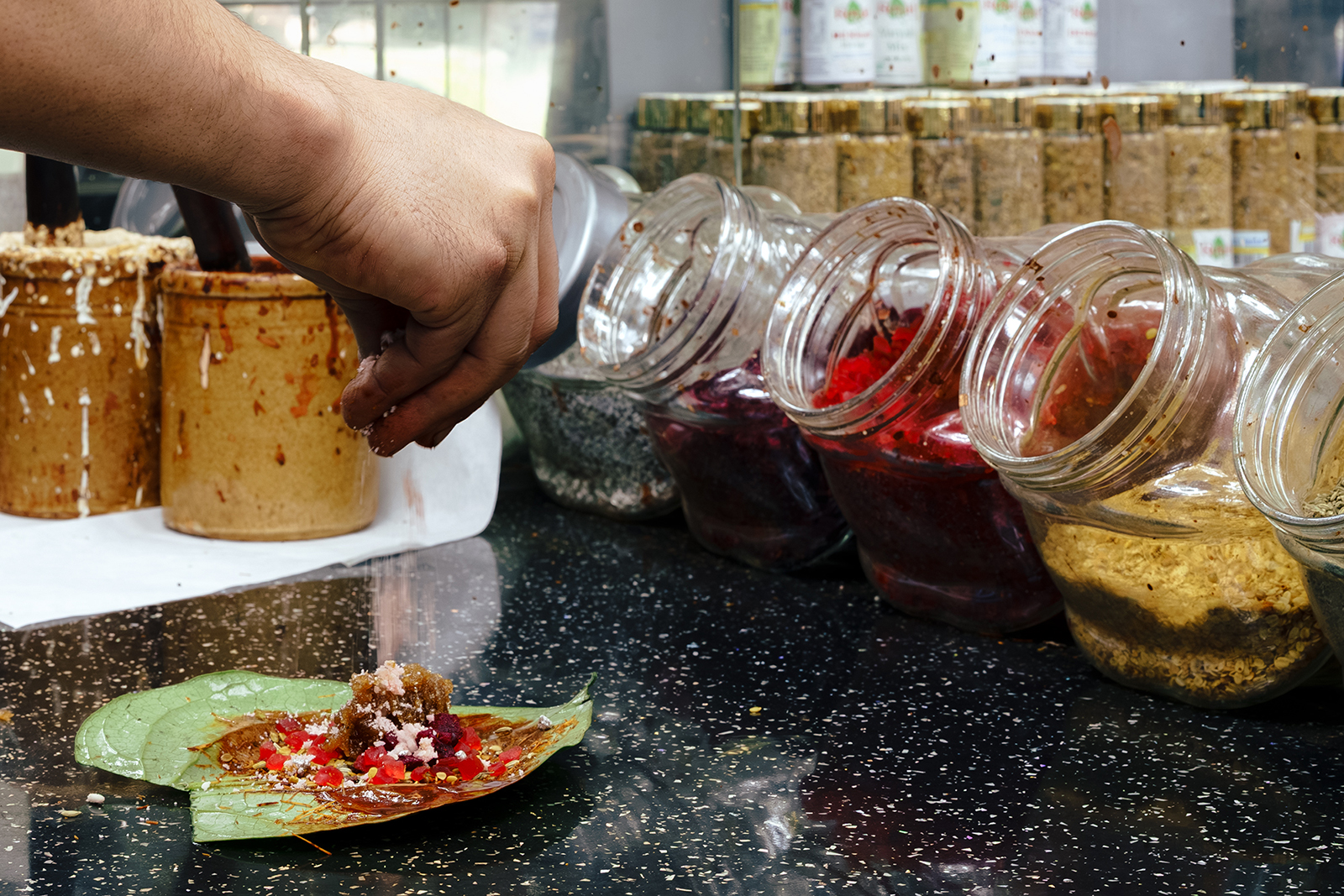
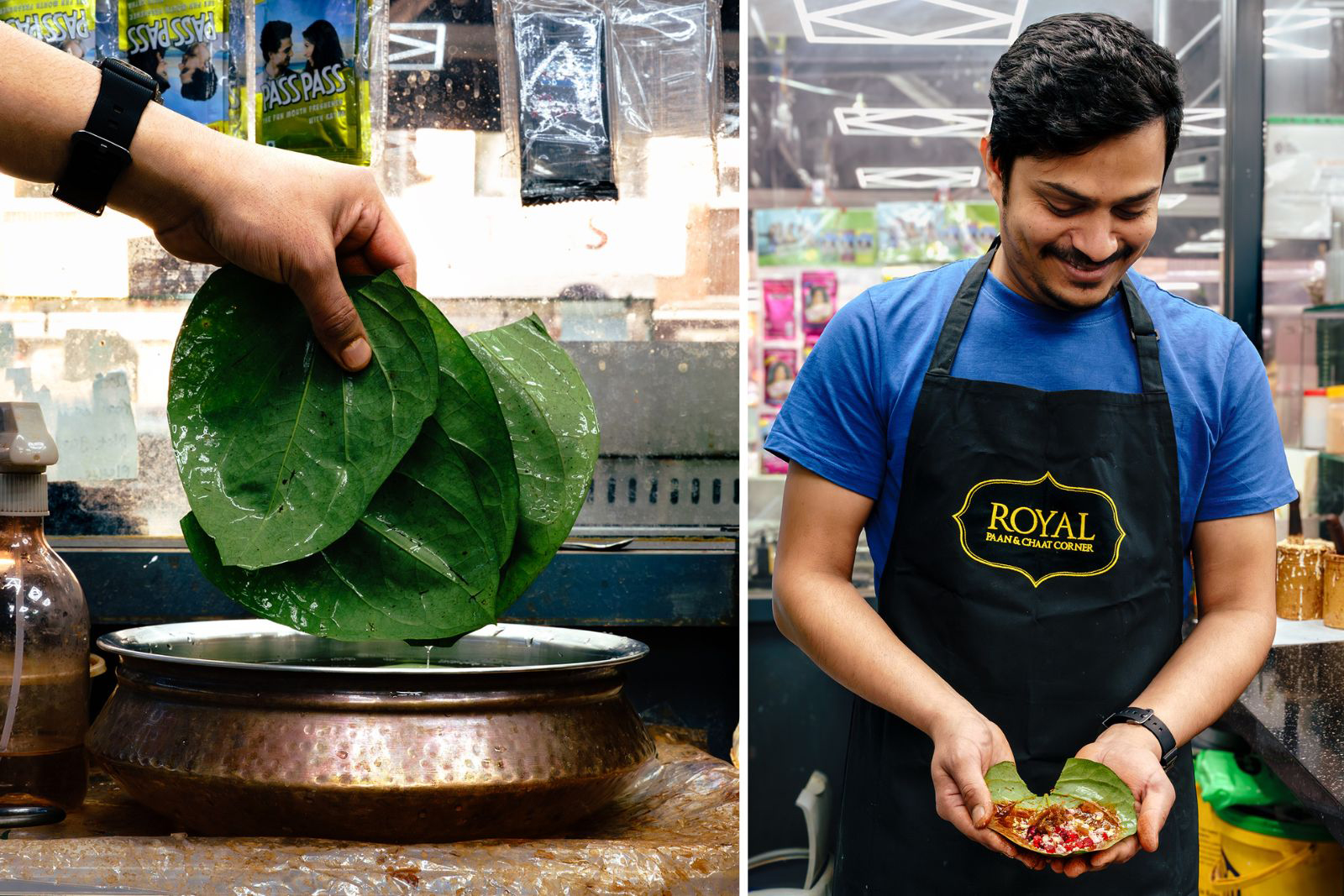
Demonstrating how paan is prepared, Khan took a large green betel leaf and laid it flat on his palm. He began by applying two pastes. The first was chuna, dazzling white and made from slaked lime, which adds a subtle tang and enhances the flavour of the other ingredients. The second was kattha, rich brown and derived from the stem or bark of the betel plant.
Khan makes his kattha in house and believes its quality is the defining factor of paan. “The better the paste, the better the taste,” he said proudly.
He refused to share the recipe, explaining that it is closely guarded. He was willing to say that it takes 24 hours to prepare and contains more than 10 secret ingredients.
The rest of the toppings are customised to order. For a sweet rose paan, Khan adds gulkand, a sticky, sugary preserve made from rose petals. Then comes an assortment of fennel and coriander seeds in a silver sugar coating, dried dates, tutti frutti jellies and pieces of date. He finishes by wrapping them all up in a small triangle. Each paan costs £1.50.
“Most of our customers are regulars. If you come here at 7pm, we are full,” said the shop’s owner, Shaista, adding that patrons range from people in their mid-20s to pensioners, though paan is most popular among middle-aged Indian, Bengali and Pakistani men.
The counter has become so popular that it has also started offering paan on Uber Eats for local customers.
Among paan’s younger fans is London-based TikToker Tariqokay, who racked up more than 200,000 views on a video of himself trying paan for the first time in Ilford, east London. He described the taste as “pure chaos”.
“Bits of cardamom pop up and uppercut me in the pancreas and pieces of clove, saffron coconut masala and some kind of syrup begin to put my oesophagus in a chokehold. Then this kind of jam consistency turns this thing into some kind of toothpaste,” he said.
“Texture-wise, it’s soft, crunchy, chilli, wet. It was like my tongue was doing push-ups while on a treadmill. I felt violated in the first 30 seconds, but then the paan’s magic started working — my breath was fresh, my mind was clear. it made me realise paan isn’t just a food, it’s an experience.”
Ammaarah Munshi, 29, is the co-owner of The Paan Company in Dewsbury, West Yorkshire, which she founded in June 2020 with her mother. The idea came to them after Munshi’s mother saw TikTok videos of people eating paan in India. With a family gathering approaching, they decided to make a platter to take with them.
“Everyone just seemed to love it,” said Munshi, who also works full time in children’s mental health services. “From there, I made an Instagram and put a post out. We took a few orders, and it just hit off.
“We noticed there was a gap in the market, because there aren’t many online businesses doing paan for events. That’s where all the ideas came from.”
Soon, Munshi started getting requests to cater for Eid gatherings, weddings and other events. “That’s when it massively grew. As soon as we took one wedding order, we got more inquiries,” she said, adding that the majority of the company’s clients are of Indian Gujarati and Bengali heritage.
Five years on, The Paan Company has partnered with Mumtaz, one of the largest Indian restaurants in Leeds. It also collaborates with the event catering company My Lahore.
Munshi does most of her business around Eid and wedding season. Between May and September, she takes three to four orders a week, and a two-hour wedding stall costs around £800.
Most of Munshi’s paan are soft and sweet. Unlike some traditional makers, she does not include tobacco in any of her products. She will, however, include supari for customers who ask for it.
While most of Munshi’s paan can be chewed and swallowed, traditional varieties containing tobacco or supari are chewed for a while and then spat out. The combination of supari and kattha paste creates a reddish-brown pigment that can stain teeth and areas where it is spat.
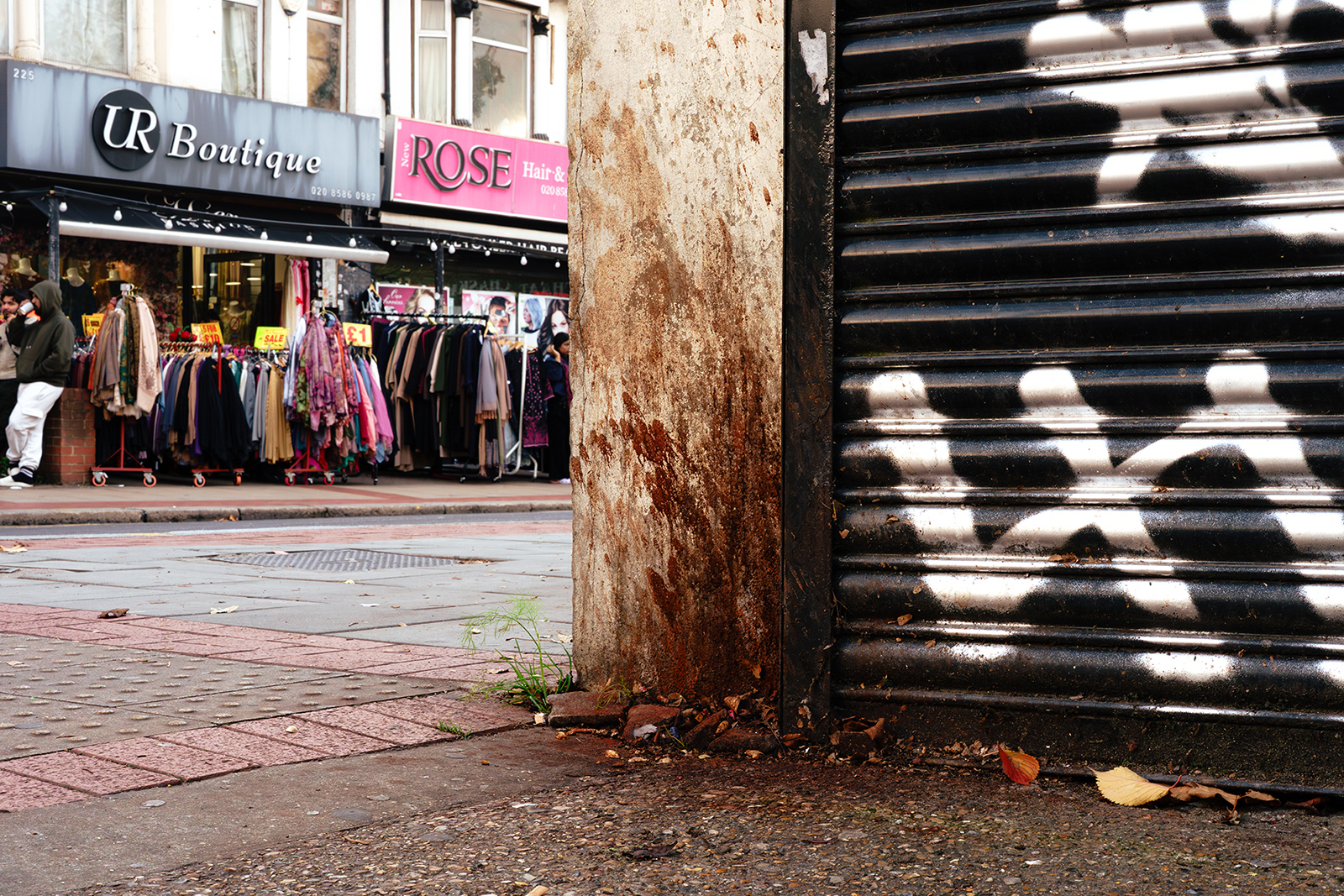
In recent years, some councils have announced crackdowns on paan spitting, citing costs in the tens of thousands of pounds for cleaning streets and public spaces. In Brent, for example, anyone caught spitting paan faces a £100 fixed-penalty fine.
Among The Paan Company’s most popular flavours are chocolate and Lotus Biscoff, the latter of which features betel leaves coated in caramel spread both inside and out. The company also makes paan balls coated with coconut and stuffed with a variety of nuts and seeds.
Munshi described her paan as milder than traditional varieties, using only a light sprinkling of kattha powder and a soft betel leaf that has a subtle flavour. She said Bengali customers often request stronger leaves, which are bitter and darker in colour, plus more kattha and supari.
For Munshi, The Paan Company is a way to modernise a longstanding tradition and bring it to a more health-conscious younger generation.
“At events, it’s popular with everyone,” she said. “Elders, youngsters, men and women. Even kids, they may not have the leaf but they’ll ask for the mixture. People often tell me it reminds them of back home. It’s a nostalgic feeling for them.”