

Meet the teenager building award-winning robots at home
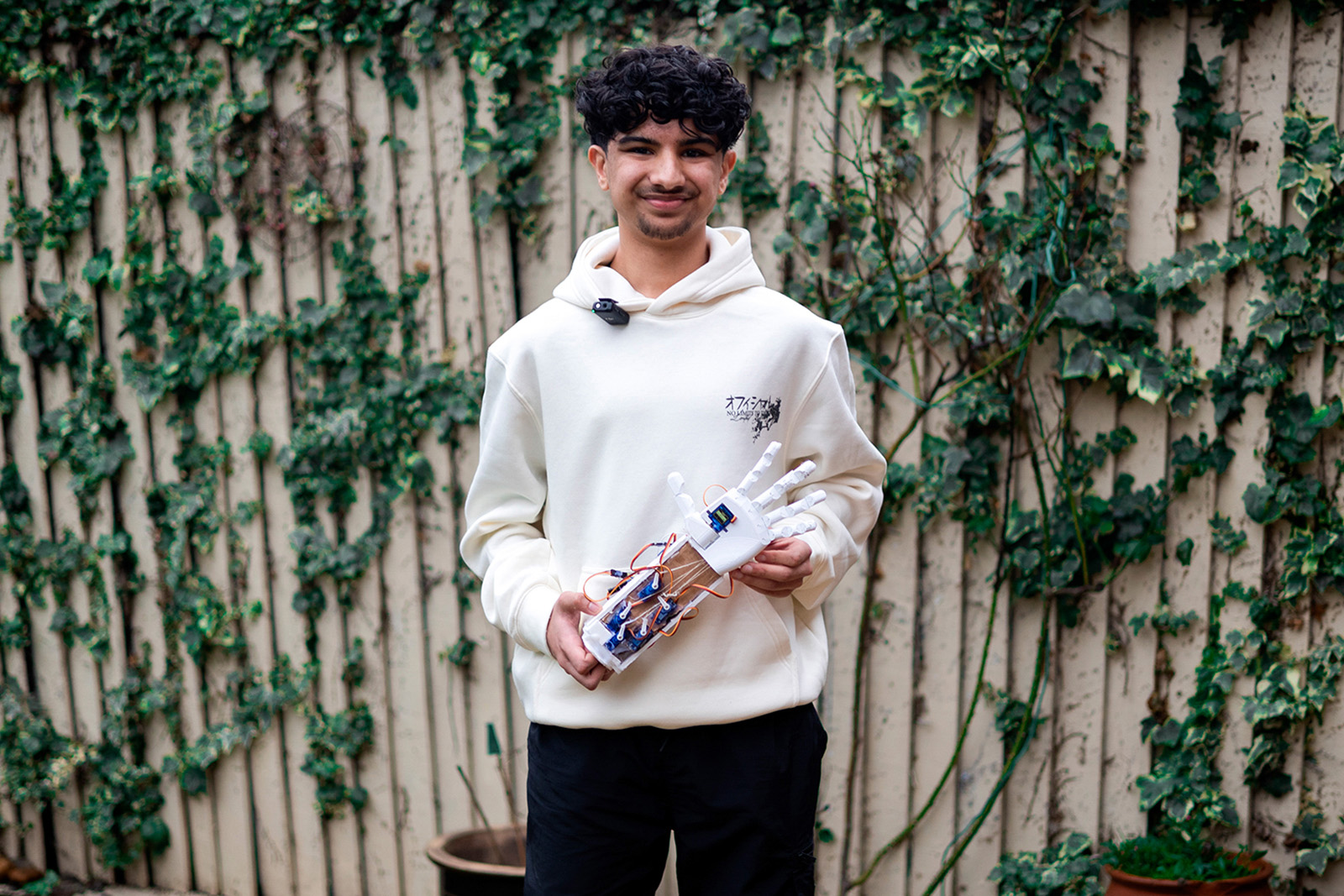
Self-taught inventor Suleymaan Khan, 17, is inspiring students around the world with his DIY creations

Suleymaan Khan was just six years old when his parents began to notice he wasn’t like their other children.
“He wasn’t interested in cartoons,” Suleymaan’s mother, Nimra says over the dinner table of their family home in Birmingham. “His favourite pastime was watching YouTube and creating things. A piece of paper, newspaper, Cellotape and scissors were his best friends.”
One of the first things Nimra remembers Suleymaan making was a vending machine from cardboard and tape. “It actually worked,” she says. “You deposited a coin, and it released a small bag of Skittles.”
Now 17, Suleymaan has found online fame as a self-taught robot creator. Awards, spare wires and relics of past projects sit all around the house. Reflecting on his journey, he says, “It’s cool to see where I started… Back then it was just a passion, but now it’s everything I do.”
“His favourite superhero was Spider-Man,” says Suleymaan’s father, Yasir, leafing through a photograph album and pointing to a snapshot of a four-year-old Suleymaan wearing a strange contraption on his wrist. “He made this out of cardboard; it was designed to shoot party poppers to mimic a web.”
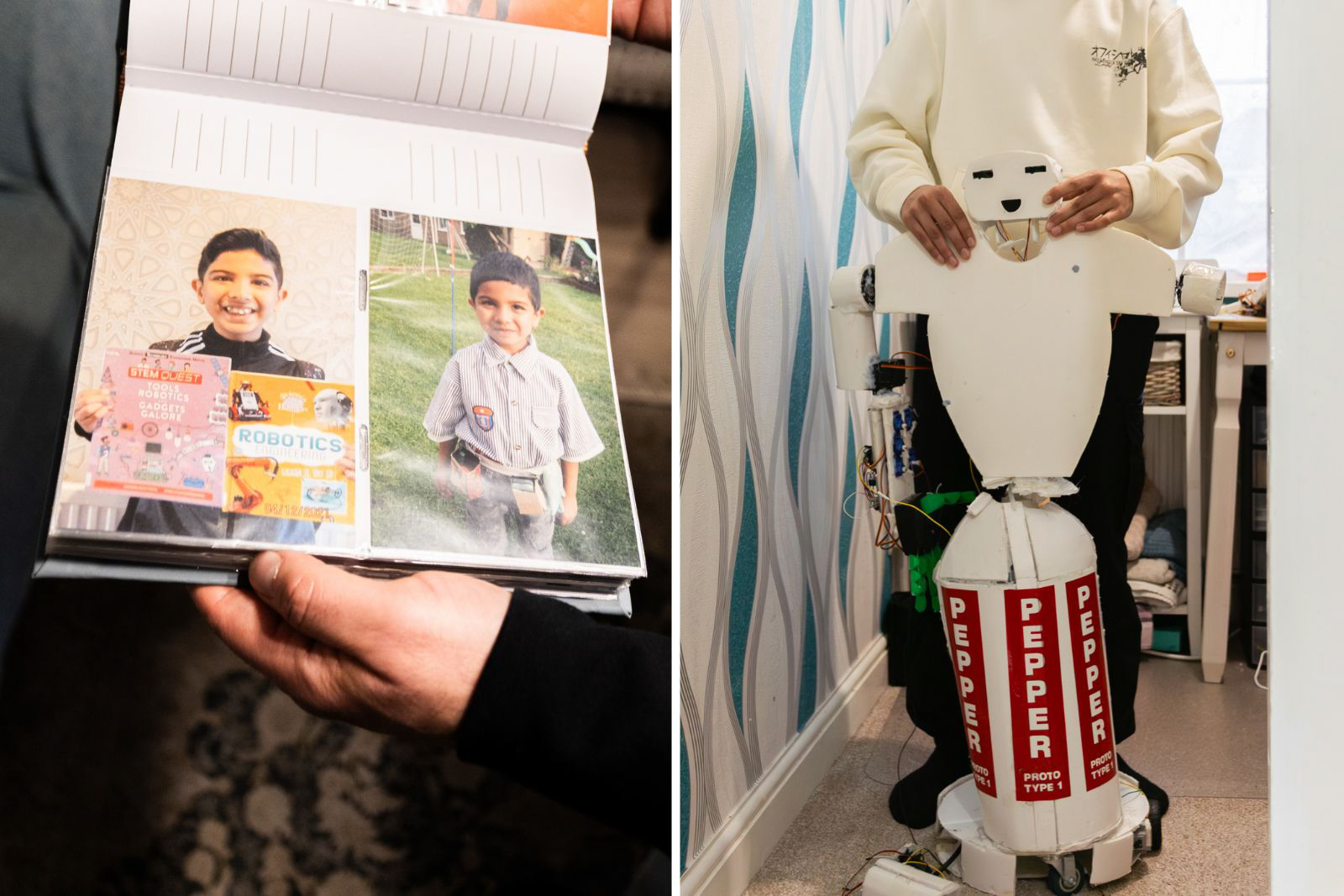
By the age of 10, Suleymaan had moved on from cardboard and tape to coding, teaching himself C++ and Python by watching YouTube videos.
“When you have a passion for something and you really enjoy it, any video you watch you’ll always learn something,” explains Suleymaan. “Every time I watch something I come away with something new, which is how I expand my knowledge.”
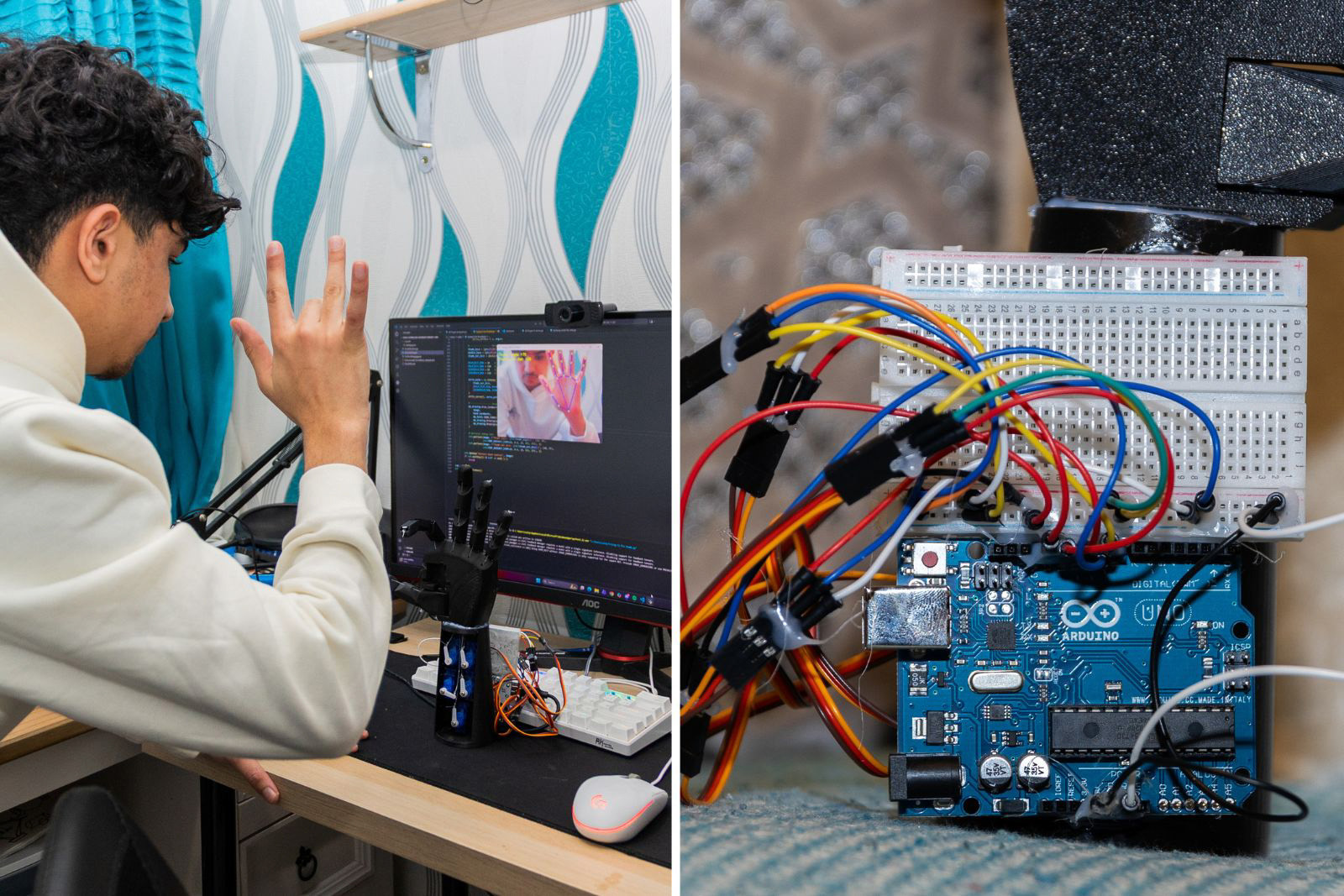
Over the past seven years, Suleymaan has built everything from remote-controlled paper planes to his most recent innovation: a fully articulated, gesture-controlled robotic hand powered by camera recognition using code he wrote himself. He has secured an apprenticeship at a local robotics company, but still works on his own creations in his spare time.
With more than 400,000 likes and 20,000 followers on YouTube and TikTok, robotics students from around the world are now turning to him for advice.
“Five minutes before you came, some students in Dubai emailed me asking me about a university assignment,” he says. ”They were having problems with their robot and their teacher didn’t know how to fix it.”
Of course, Sulemaan had the answers. In fact, teaching others has become as important to him as his own builds.
“I like helping people and it’s something I want to focus on,” he says.
The robotic hand alone has attracted 2.6 million views on TikTok and hundreds of people have asked him how to recreate it. Not bad for something he says cost just £30 to build from common household materials including foamboard, card and hot glue.
“I’ve had so many people asking me how to make it, so I’m working on putting step-by-step kits together now,” Suleymaan says.
Before that, though, came Pepper, his first humanoid butler robot. She was made when Suleymaan was just 12 years old, and is now missing an arm and cannot stand up any more. But, as he explains, the process of making her taught him how to create complex and fully functional machines on a tight budget.
“[Specialist materials] were a lot of money to me when I was young, so I’d take things apart and reuse them,” he says, pointing out Pepper’s servomotors, which were salvaged from a previous robotic build.
Based on Lego Mindstorm — a programmable robot kit — and held together with cardboard and dental floss, Pepper could move around and perform tasks such as picking up and carrying objects in her arms. She also featured motion sensors in her eyes to prevent collisions.
The project ended up winning Suleymaan the 2023 Network Rail national innovation award at the Big Bang Fair — one of the UK’s top science and engineering competitions for people aged 11-18. It also set him on an increasingly ambitious path.
His next big undertaking is designing and building another humanoid robot, this time making use of artificial intelligence to allow for speech recognition, as well as object recognition and home mapping. He hopes that, one day, his inventions may be used to help elderly people and even has his sights set on advancing medical science.
“Prosthetics are expensive for what they are and I’d like to get into making them one day,” he says.