

Azhar Usman is shaping how Muslims are seen on stage and screen
From the writers’ rooms of the award-winning shows Ramy and Mo to his own standup appearances, the comedian speaks about life and faith inside Hollywood

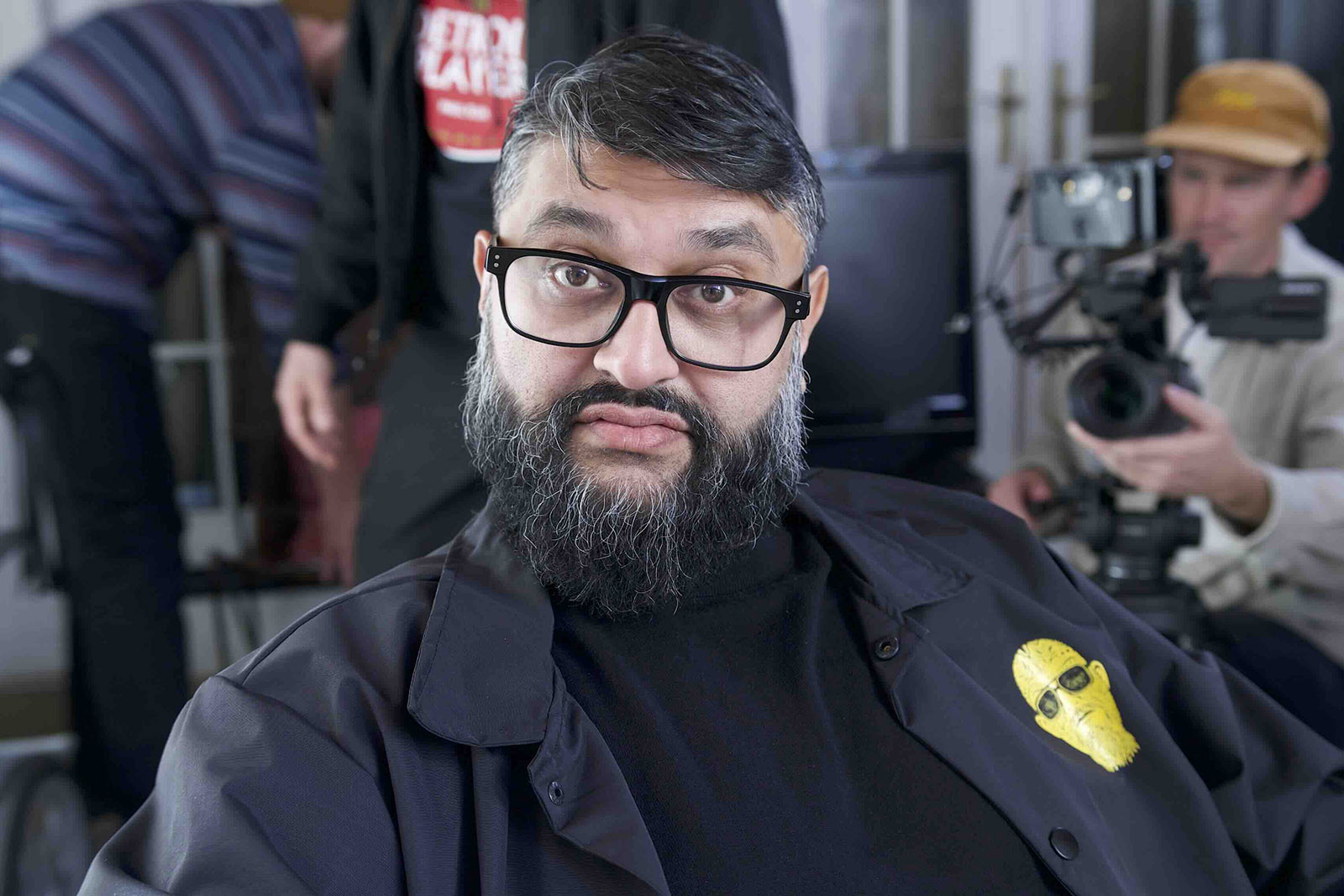
If there is a Muslim character with spiritual depth and nuance on screen, Azhar Usman was likely in the writers’ room. As a producer, writer and comedy consultant, he has become Hollywood’s secret weapon for authenticity, working on acclaimed shows including Ms. Marvel, Mo, and the Golden Globe-winning Ramy.
Now, Usman, 49, is putting himself front and centre. As he gears up to join a 20-city UK tour in December with other Muslim comedians to raise funds for Gaza with the international relief charity Human Appeal, he has also released a new standup comedy film on YouTube. The Islamic States of America is Usman’s first solo project in nearly a decade — a deeply personal reflection of his faith, fears and insecurities while trying to make sense of the US in 2025.
Related content

“Hollywood and entertainment is illusion-making. What I’m trying to present is something where I can stand up very honestly and say, ‘I know that the game requires me to have a magic trick’,” Usman says during a video call from his parents’ home in Florida. “But my magic trick is there is no magic trick. I’m literally just here as a slave of God interested in speaking about timeless universal truth.”
Usman’s journey from Chicago-born son of Indian immigrants to Hollywood insider is one of American contradictions. In early 2001, he started performing standup at open mics while working as an independent attorney. Then the post-9/11 climate infused his work with a new urgency, leading him to close his legal practice in 2004 and join the comedy circuit full time.
That year Usman co-created Allah Made Me Funny with Preacher Moss, later joined by Azeem Muhammad and then Mo Amer, with whom he would work again as a writer on the award-winning series Mo. The acclaimed comedy troupe toured the US and internationally, aiming to dismantle stereotypes about Islam. CNN named him “America’s Funniest Muslim” and, in 2009, Georgetown University named him one of the 500 Most Influential Muslims in the World. He spent the next decade opening for Dave Chappelle, who described him “a comedian from the future”.
But it was Usman’s pivot to television that really amplified his influence. After writing for Hasan Minhaj’s White House Correspondents’ Dinner speech in 2017, he found his niche, translating the messy, spiritual reality of Muslim life for the screen. While working on Hulu’s Ramy, he brought what its star Ramy Youssef describes as essential homework to the show, contributing thousands of hours of study with Islamic scholars.
“I bring three things to writers’ rooms. Islam for sure, comedic punch, and then this life experience thing,” he says.
When we speak, Usman has just returned from taking his mother to chemotherapy. Meanwhile, his father is also battling cancer. This confrontation with mortality permeates The Islamic States of America. “When you are young, life feels long,” a father figure tells him in one of the film’s vignettes. “But when you are old like me, life feels short.”
“We are creating descriptions of living Muslims, not a prescription on how to be a Muslim. I’m the guy outside Noah’s ark, trying to get you to come inside,” he says. “Everyone’s talking about Islam but nobody’s talking about the teachings of this religion.”
Drawing on a Sufi-informed philosophy that prioritises “love and service”, Usman approaches the writers’ room not to preach religious dogma but to inject emotional truth into characters often flattened by stereotypes.
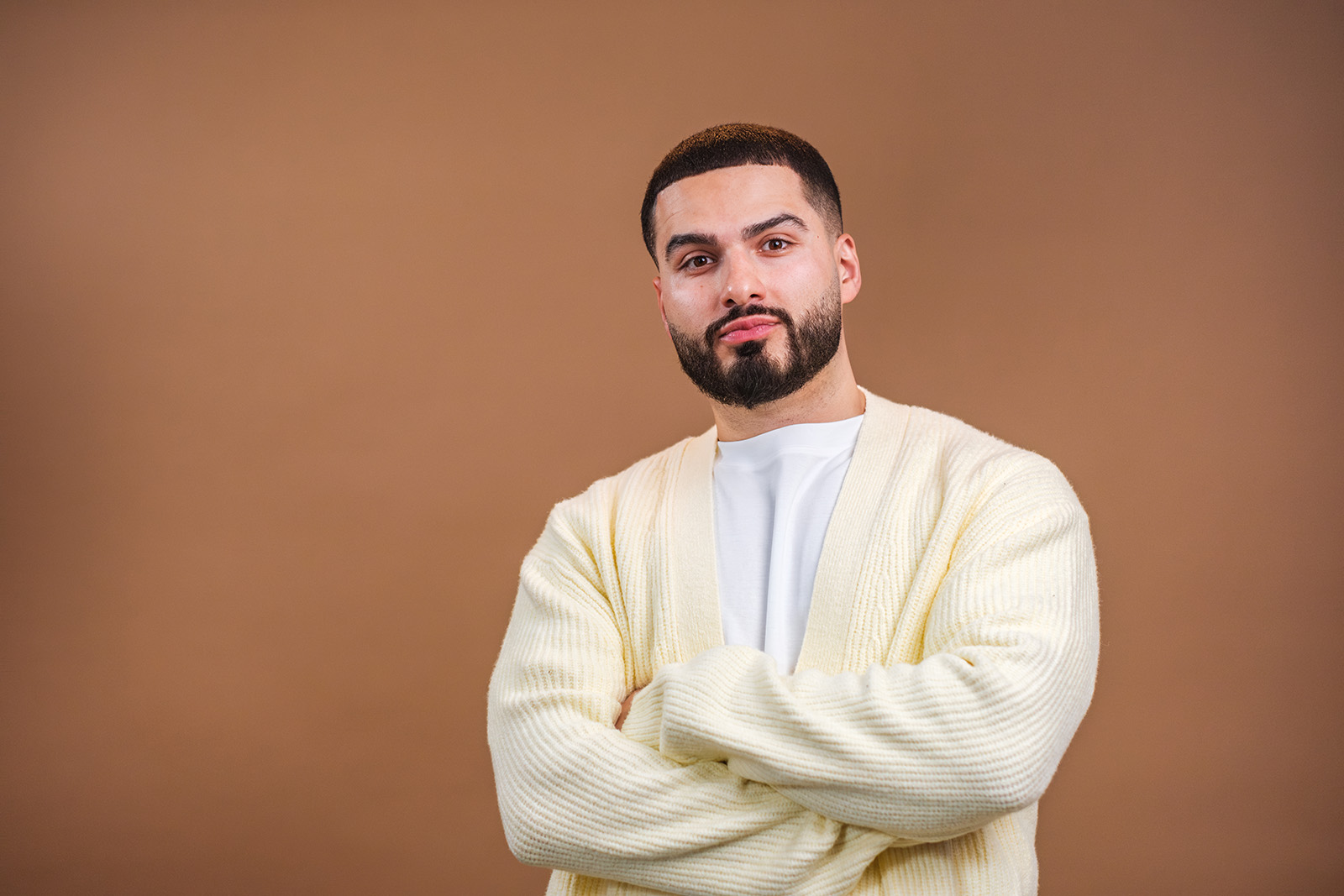
In all of his work, Usman aims to centre this spiritual substance, viewing himself less as an entertainer and more as a vessel. “I’m literally just here as a slave of God and a lover of the Messenger, peace and blessings upon him. At best a conduit,” he says.
Usman is grateful that he has been able to work with production companies that have allowed him to share such stories.
“What God gave us working on both Ramy and Mo was the fact that the studio involved was A24. A24 has so much juice because they won so many Oscars,” he says, referring to the studio’s success with movies such as Everything Everywhere All at Once and The Whale. “So we were able to push the line sometimes and push the Overton window in ways that we probably couldn’t if we didn’t have that backing.”
That desire for unfiltered honesty drove Usman’s decision to bypass streaming giants for The Islamic States of America. “Hollywood offers artists two things: capital and distribution,” he says. “If I can finance independently and reach YouTube’s 2 billion potential viewers, what’s the reason for traditional channels where I’d have to self-censor for an ultimately restricted platform?”
The result is superb comedy that functions more like an artistic intervention. “If this film irritates, disorients or angers you, good. It’s begun to do its work,” he says.
For all the intellectual rigour and political critique, however, the project remains deeply devotional. It is only later, checking my Qur’an app, that the specific runtime of the film reveals itself as a hidden signature: exactly 47 minutes. The 47th chapter of the Qur’an is Muhammad.
The Islamic States of America is available to watch on YouTube now.