

It’s crystal clear that our water companies aren’t working — let’s change that in 2026
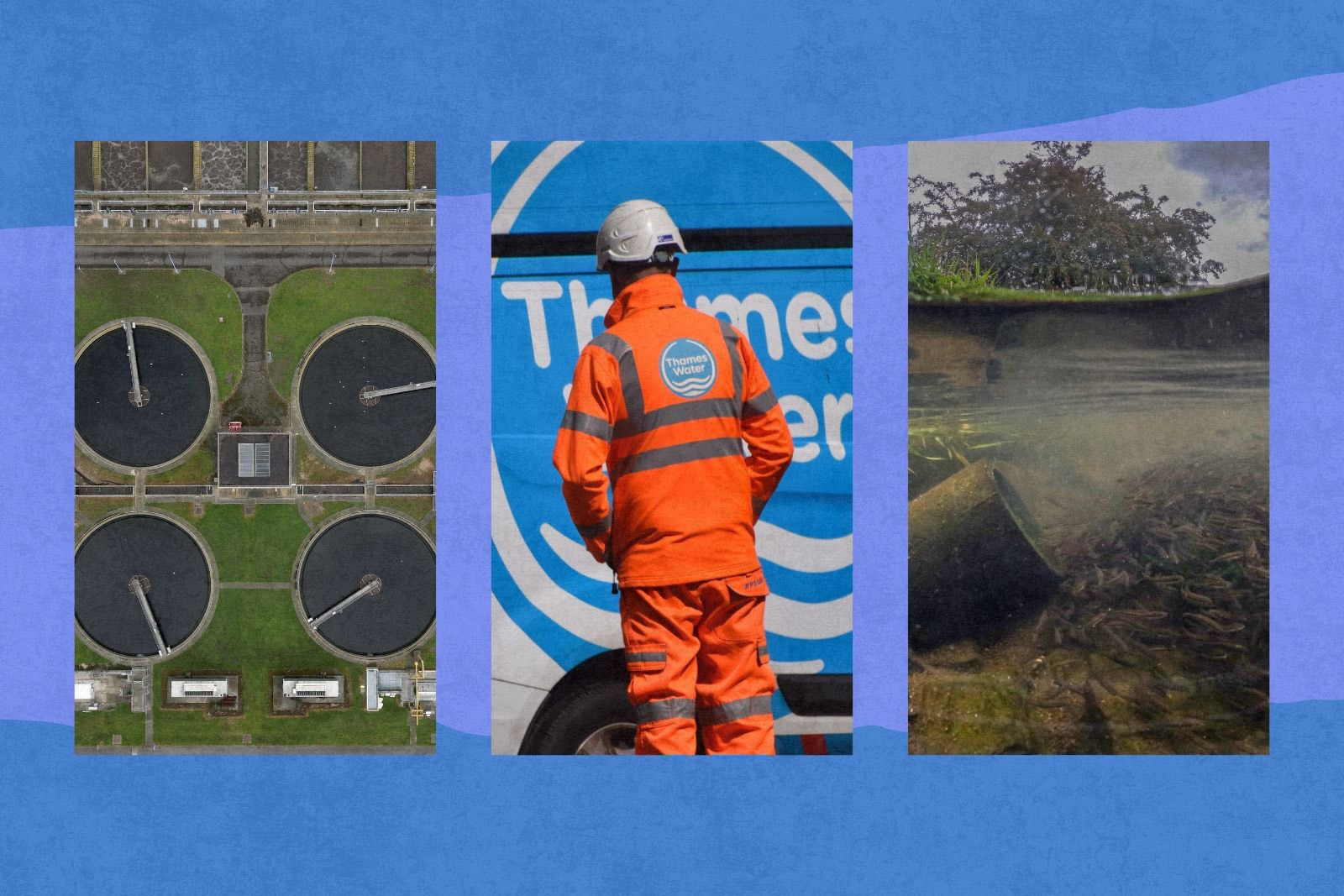
Crumbling infrastructure and massive debts are costing us all dearly. It’s time the government made a new year’s resolution to fix it

In December 1989, then Prime Minister Margaret Thatcher gave her mates in the City an early Christmas present. In her bargain-basement sale of our regional water authorities to the private sector, all existing debts were wiped clean, cash was stuffed into the stockings of the new firms and the Treasury was left with almost nothing in return.
It was a massive festive giveaway from taxpayers to shareholders — and, of course, we had no say in the matter.
Privatisation wasn’t popular then and it isn’t popular now. Voters were so wary that the plan was not even included in the Conservative Party’s 1987 pre-election manifesto. We were, however, assured that private ownership would mean greater efficiency, lower bills and better value.
So what is the verdict, four decades on?

Debt has ballooned to more than £60 billion across the 10 regional companies responsible for supplying water in England and Wales. According to a University of Greenwich study, between privatisation in 1989 and 2023, money invested by shareholders in the 10 largest water companies shrunk by £5.5 billion when adjusted for inflation. Our rivers and seas are full of sewage. And, yet, our bills have rocketed by more than 40% in real terms since 1989 according to the National Audit Office.
For a small minority, the water industry has been the gift that keeps on giving. Since privatisation, shareholders have extracted an eyewatering £85 billion. Many live nowhere near our shores. Wessex Water is owned by a Malaysian company. Northumbrian Water by a Hong Kong firm. London’s Thames Water by a patchwork of investors stretching from the UAE to China and Australia.
The obvious answer is to take back control of this vital public utility. Public appetite for that is strong. But Murky Water, a new book by academics Sukhdev Johal, Karel Williams, Julie Froud, Luca Calafati and Colin Haslam, argues that alone won’t magic away the mess created by decades of neglect.
The water industry is what’s known as “asset heavy”. Asset-light businesses such as Uber or Deliveroo, which outsource the ownership and maintenance of vehicles to uncontracted workers, don’t need much physical property at all. Companies such as airlines, manufacturers of goods and public utilities, however, are required to own and invest in much more.
A complex system of reservoirs, water purification plants, pumping stations, pipes and wastewater infrastructure costs a lot to operate and maintain. But decades of underinvestment by private companies who care more about short-term profit than sustainable infrastructure mean British households can expect a significant increase in bills — with or without public control of the industry.
The current water system is crumbling and in deep financial trouble. By 2023, the UK’s water authorities had run up combined debts of £60.3 billon. Servicing that debt consumed more than a quarter of sales revenue. The result was not only the near-collapse of Thames Water and Southern Water but an industry of “zombie” companies unable to borrow to fund large new infrastructure projects.
Unable to resolve the funding gap, companies turned to what the authors of Murky Water call “projectification”. In essence, investors fund costly steel and concrete projects for sewage treatment and reservoirs through financing structures known as special purpose vehicles, which function like a temporary mini-company for one specific job. Like the Thames Tideway, these projects will pass their costs to consumers for up to 125 years as surcharges on water bills.
It is not uncommon for the costs of such large-scale infrastructure projects to spiral. Financiers are guaranteed a return as the costs are passed on to consumers, regardless of whether a project is completed to budget or not. Meanwhile, taxpayers will foot the bill if anything goes wrong.
Then we have the climate crisis. We are braced for wetter winters and drier summers by the end of the century. Adapting to this will require more costly infrastructure projects.
In short, bills are set to steeply rise over the next decade. In December 2024, the water regulator Ofwat announced an average increase in charges of 36% above inflation over the next five years.
Removing extractive shareholders from the equation and replacing a regulatory body that allowed this whole mess to be made is an important first step, but paying the debts accumulated by water companies and funding vital infrastructure will still require large amounts of money.
Murky Water argues that this means going further and dismantling the regressive system of water bills itself. In 2023, the poorest 20% of households paid on average £200 to £220 per person for water, while the richest 20% paid £157 to £164. This is because the fixed charge on the water bill is high and many people on low incomes live alone and have no one to share the costs with, for example single people surviving on the state pension. In other words, those with the least already shoulder the heaviest burden.
The consequences are stark. Research published this year by the University of York found that in 2022/23 15.6% of households in England and Wales were living in water poverty — defined as spending more than 3% of equivalised net disposable income after housing costs on water. For Black British households the figure was 27.2%, and for Asian households 26.8%.
Without reforming this system, the situation will deteriorate rapidly. By 2029/30, overall water poverty is projected to rise to 22.8%. For Black households it will reach 33.6%, and for Asian households 35.5%. Meanwhile, the richest 10% of households spend 1% or less of their disposable income on water.
Real change must therefore begin with changing how we pay our water bills. The authors of Murky Water make a powerful case for water justice: a flat-rate or progressive charging system linked to household income, in which those who can afford to pay more do so, and those who cannot are protected.
The funding challenge is immense. Realistically, by the end of the 2030s, twice as much revenue will need to be raised from households for water management. A progressive charging system could close that gap while cutting bills for around 70% of households. The richest 30% would pay more but relative to their incomes, the increase would be modest.
Related content

Such a policy would almost certainly provoke outrage from a political and media class dominated by the wealthy. Yet, for the majority of the country, already battered by inflation, rent rises and soaring energy costs, it would mean lower bills and a water system that could actually work. Progressive charging is hardly radical. Income tax operates on this principle while council tax, for all its flaws, is based on property value.
Whatever the solution, it’s clear that for too long politicians have failed to engage with the complex, interrelated problems of our public utilities or to address the crisis that systemic underinvestment has created for our infrastructure. Fixing this disaster will require both honesty about the scale of the problem and radical action to address it.
Here’s a radical new year’s resolution our government could make: instead of sticking to the same short-termist political settlement that has stunted our potential for decades, deliver the change you promised and start making this country — and its industries — work for the interests of us all.