

Upcycled Sajada reclaims the prayer mat
Sustainability, creativity and conversation are at the core of this innovative community workshop

In every Muslim household, there’s at least one corner quietly claimed by a collection of prayer mats. In my house, we’re at 12 and counting — twice the amount of people living there. An auntie has just come back from Hajj? Here’s a prayer mat. It’s Eid? Add another to the pile. Before long, a modest stack can become a looming tower.
They make thoughtful gifts and are a must-have in any Muslim home, but behind them lies an industry driven by mass production, synthetic fibres, and a sense of disconnect from the cultural and artisanal traditions they once carried.
So how can we make prayer mat production more sustainable? It’s an ambitious question that Indonesian designer Tika Pratiwi Sufyan, 29, set out to answer three years ago during her masters in design management at University of the Arts London.
Related content
What she found was a system built far from home: most prayer mats sold in the UK are manufactured overseas, in countries such as Turkey, Egypt and Saudi Arabia.
“I quickly realised production is expensive and involves a lot of steps, so I started thinking about how to simplify that on a smaller scale and reuse materials,” Sufyan said.
She began experimenting with small-scale production, which quickly grew into Upcycled Sajada, a hands-on workshop where young Muslims design and stitch prayer mats from reclaimed fabrics. But it’s about more than getting creative. The workshops are designed to slow people down and help them reconnect with mindful, sustainable living — something Sufyan explains is something deeply rooted in Islamic tradition.
“The western concept of sustainability is new, but it’s been there all along in our faith. We just don’t label it in that way,” she said. “The Prophet encouraged us not to waste, whether it be using water to do wudu, or overeating. He also mended his own sandals.”
That philosophy is a core part of the project. As I walked into a recent Sunday workshop, held in a studio space near Liverpool Street station in east London, I was greeted by a projected PowerPoint slide of Quranic verse. It read: “Do not waste. Surely He does not like the wasteful (7:31).”
“Starting the workshop with a Qur’an verse really helped set the tone for the afternoon,” said Anika Begum, 26, who was attending the event for the second time.
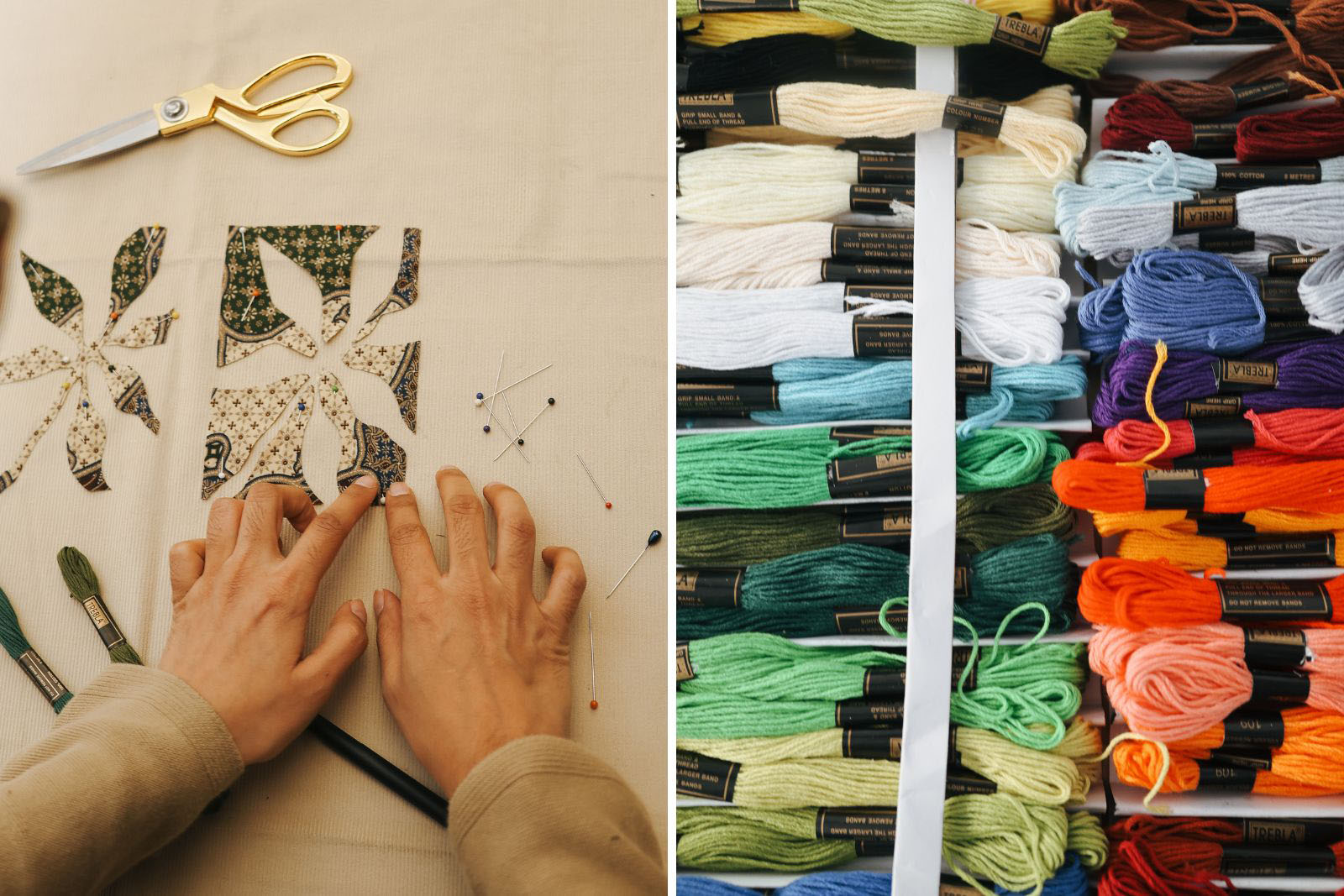
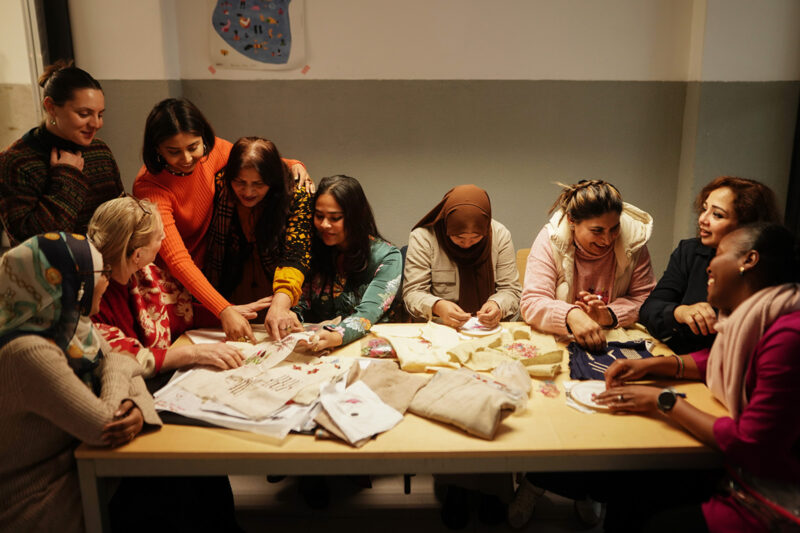
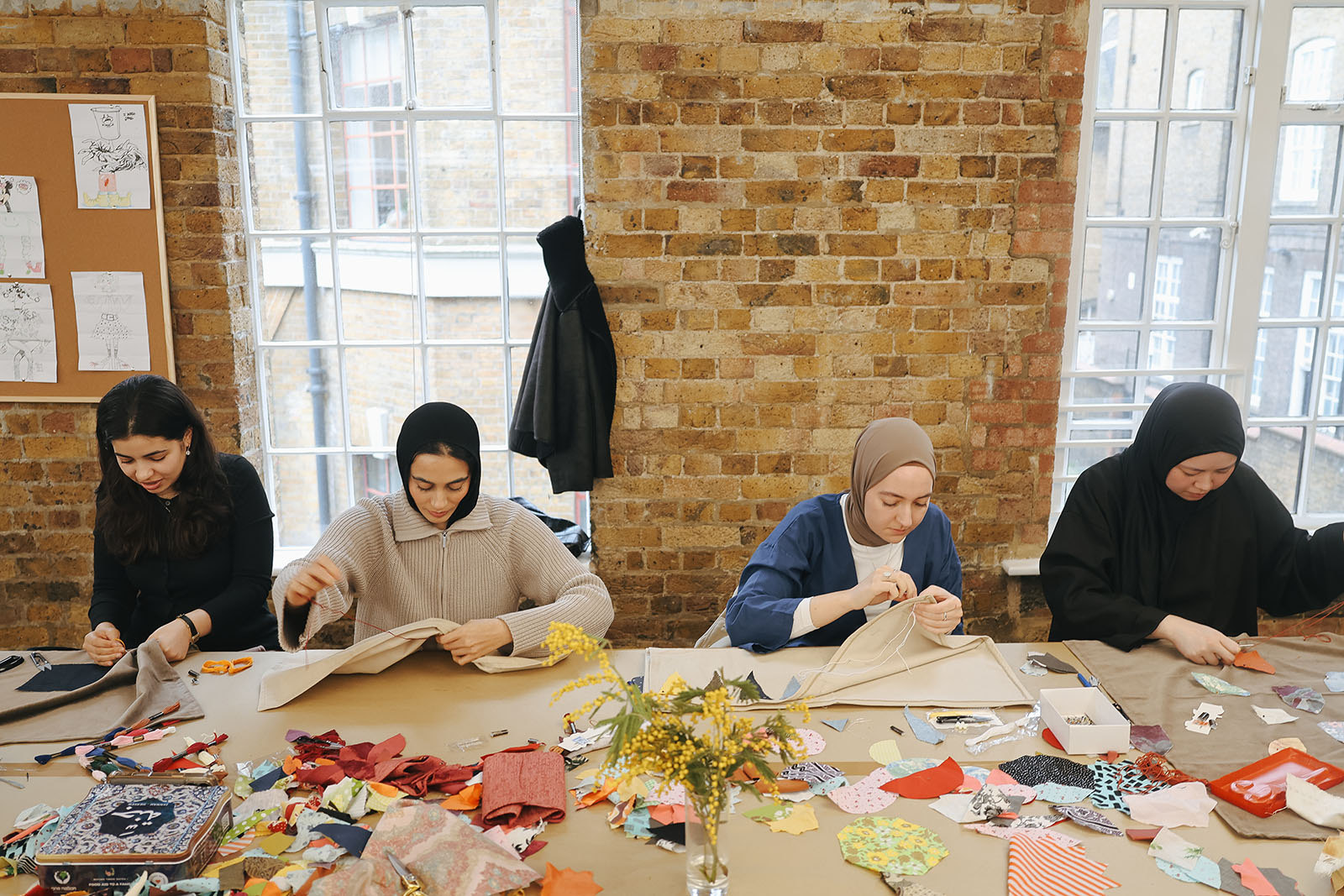
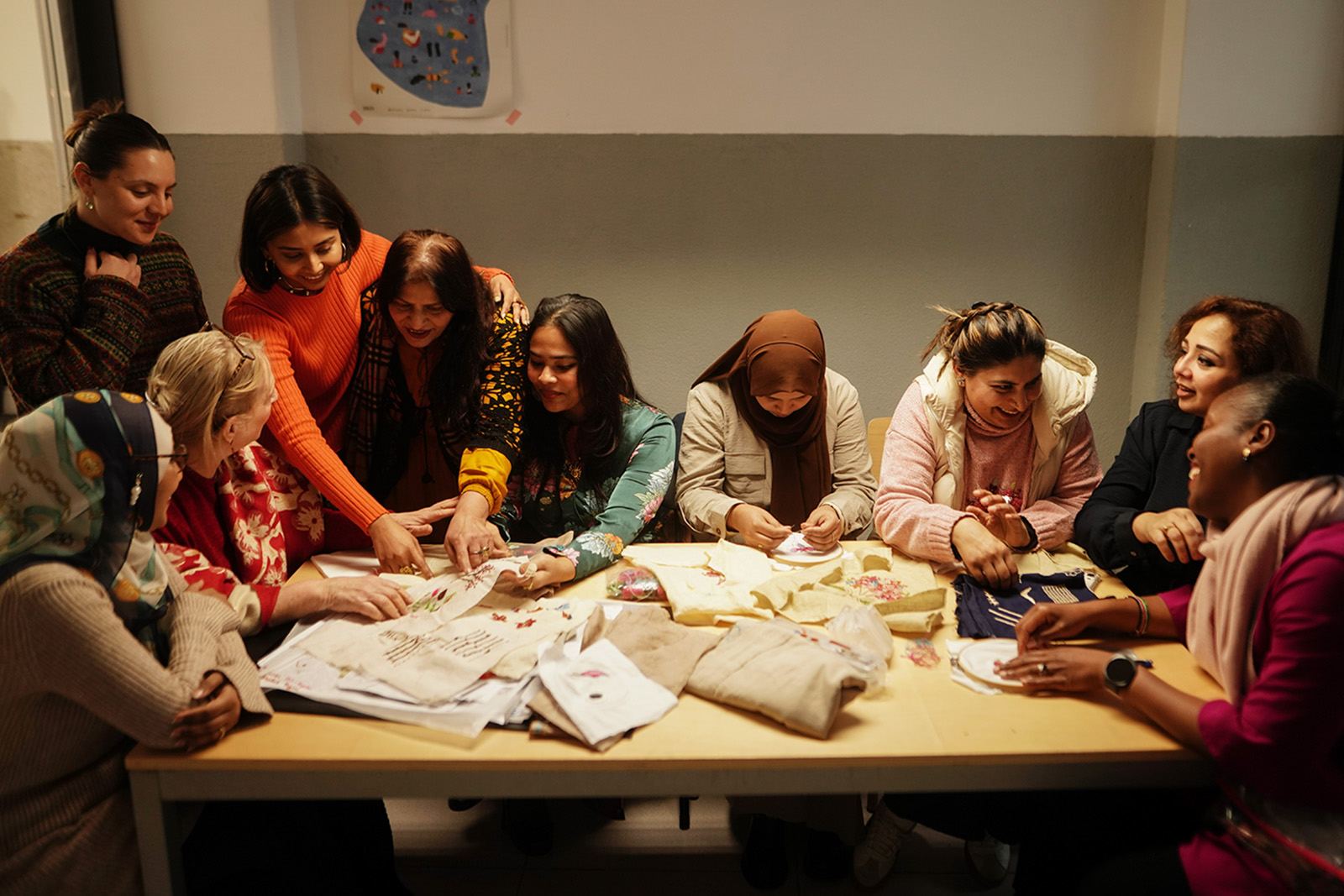
The session I attended took in the final days of Ramadan, a time during which reflection and intention are central. A group of women sat around tables. In front of our seats were a prayer mat, needles and a stitch cutter. In the centre fabrics of different sizes, colours and patterns spilled across the table — bright yellow prints, soft neutrals and paisley patterns.
The prayer mats were sourced from the Forest Recycling Project, while the other materials had been donated by friends and family or reclaimed from fabric stores and Sufyan’s own wardrobe.
In three years Upcycled Sajada has been running, participants have taken home 130 prayer mats from nine workshop sessions, one of which was held in Sufyan’s home country of Indonesia. Before developing the workshops, Sufyan consulted scholars there to ensure all designs align with Islamic principles.
The guidance was clear — no human or animal forms and no symbols that could distract from prayer. Instead, simple designs and geometric shapes are encouraged, drawing from Islamic artistic traditions seen in places like the Dome of the Rock and the Kaaba.
“Prayer mats shouldn’t be distracting,” she said. “When you have too many elements, you lose the value of what it’s meant to do.”
Since launching her project in 2023, Sufyan has collaborated with community groups including Sustainably Muslim, the Ramadan Space, and Root25, all of which are aligned with her mission to help younger Muslims to connect their faith to everyday life. The session I took part in was co-hosted with the Asra Club, a London-based walking and running group that brings Muslim women together.
One attendee, Rohema Begum, 37, was stitching together yellow fabric to form a flower — each petal a slightly different shade. The workshop, she said, was a welcome change of pace from her job as a business analyst.
“In society, everything is so consumerist, from food to our clothes,” she said. “This is a reminder to think more sustainably — and about how we, as Muslims, impact the environment.”
For Sufyan, those conversations are the whole point. When I told her about the way the women were chatting around the table, she smiled. “That’s beautiful. I want people to think more about waste in all aspects of life,” she said.