

Sharing samosas with non-Muslim friends is not an act of ‘domination’
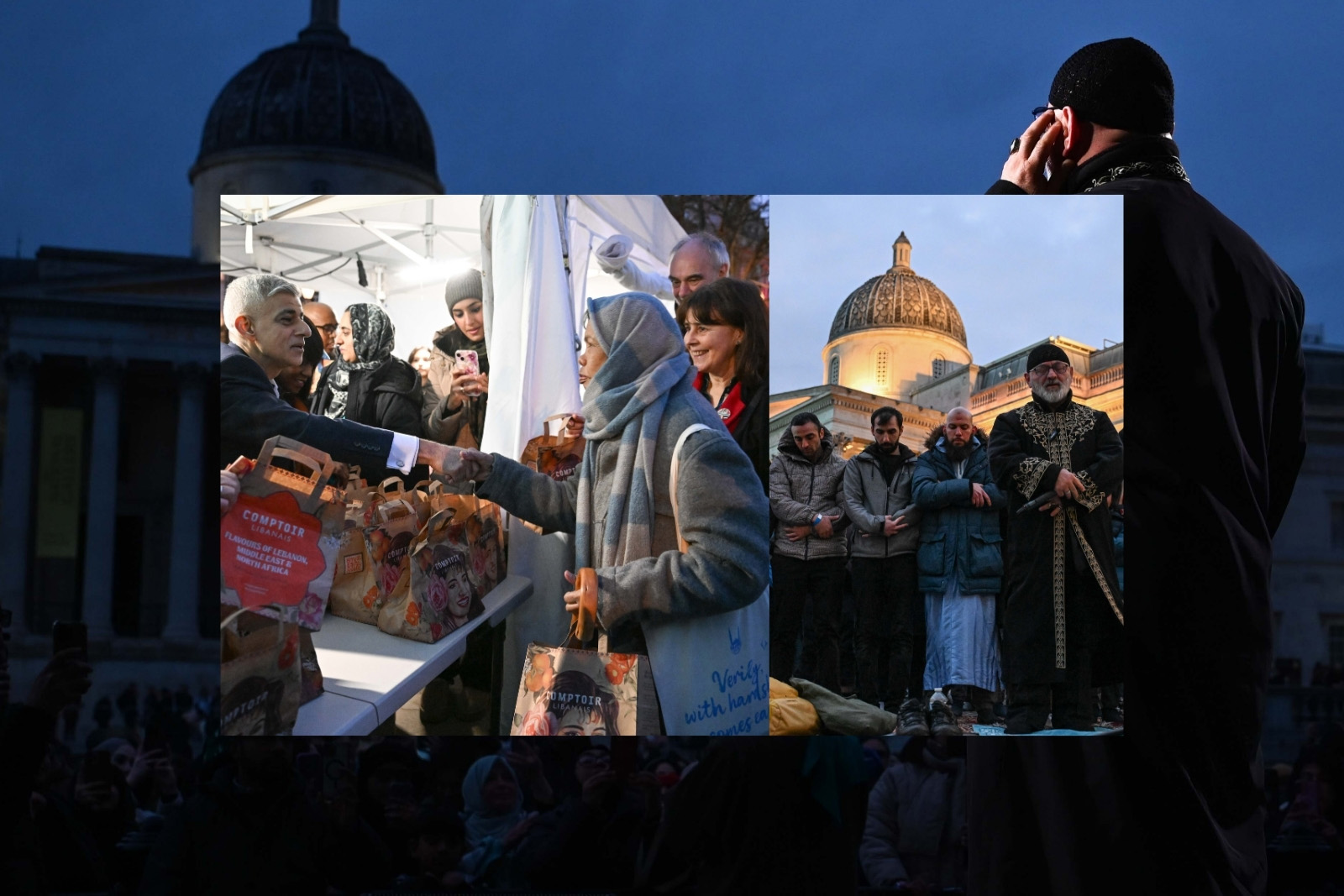
Shadow justice secretary Nick Timothy’s remarks about a public iftar in Trafalgar Square are divisive and have nothing to do with real British values

Nick Timothy, the shadow justice secretary, was furious last week. “Straight from the Islamist playbook, an act of domination,” he declared.
Nigel Farage soon joined in. “We are not going to surrender,” he said, adopting the tone of a wartime leader addressing a nation under siege, as though the spirit of Winston Churchill had been hastily repurposed for a very different battlefield.
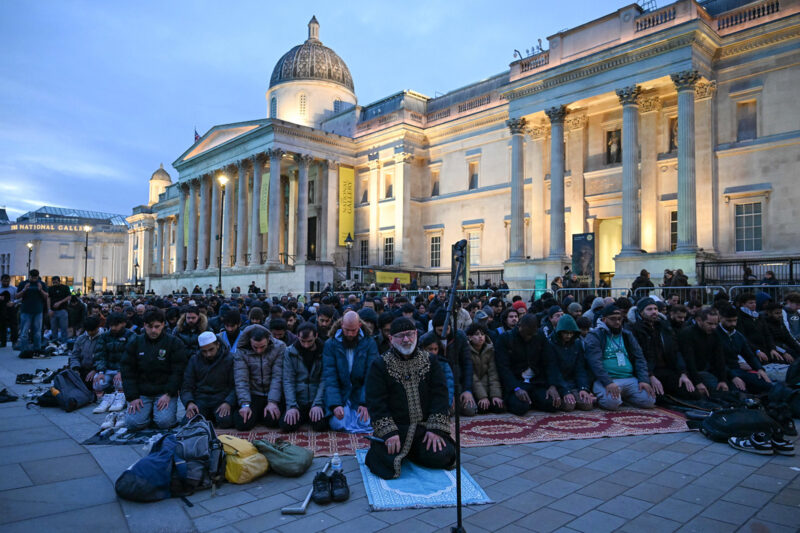
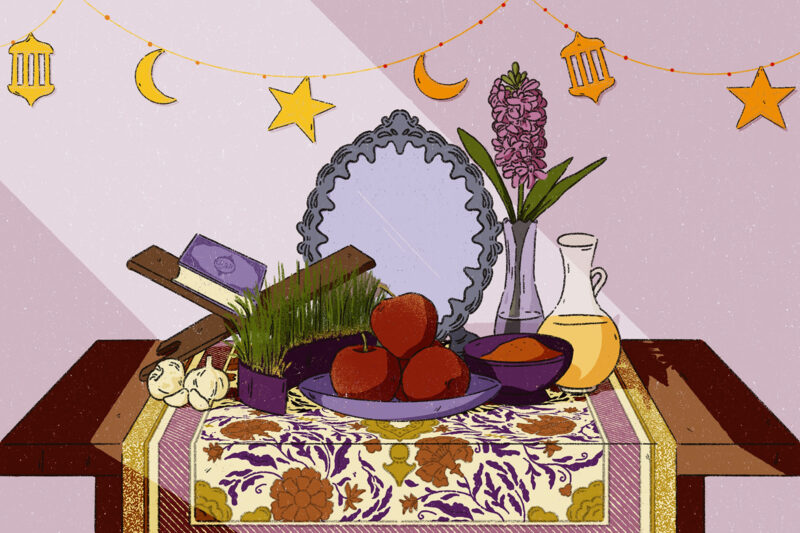
But what had provoked such outrage? Muslims breaking their fast at an Open Iftar organised by the Ramadan Tent Project in Trafalgar Square. Hardly the Blitz.
Plates of samosas and sunset prayers had sent sections of our political and media class into meltdown. Timothy’s comments drew praise from the UK Islamophobe-in-chief Tommy Robinson, who noted that such rhetoric would once have been unacceptable in mainstream politics. Yet Timothy remains on the Conservative frontbench, backed by the party leader, Kemi Badenoch.
Related content
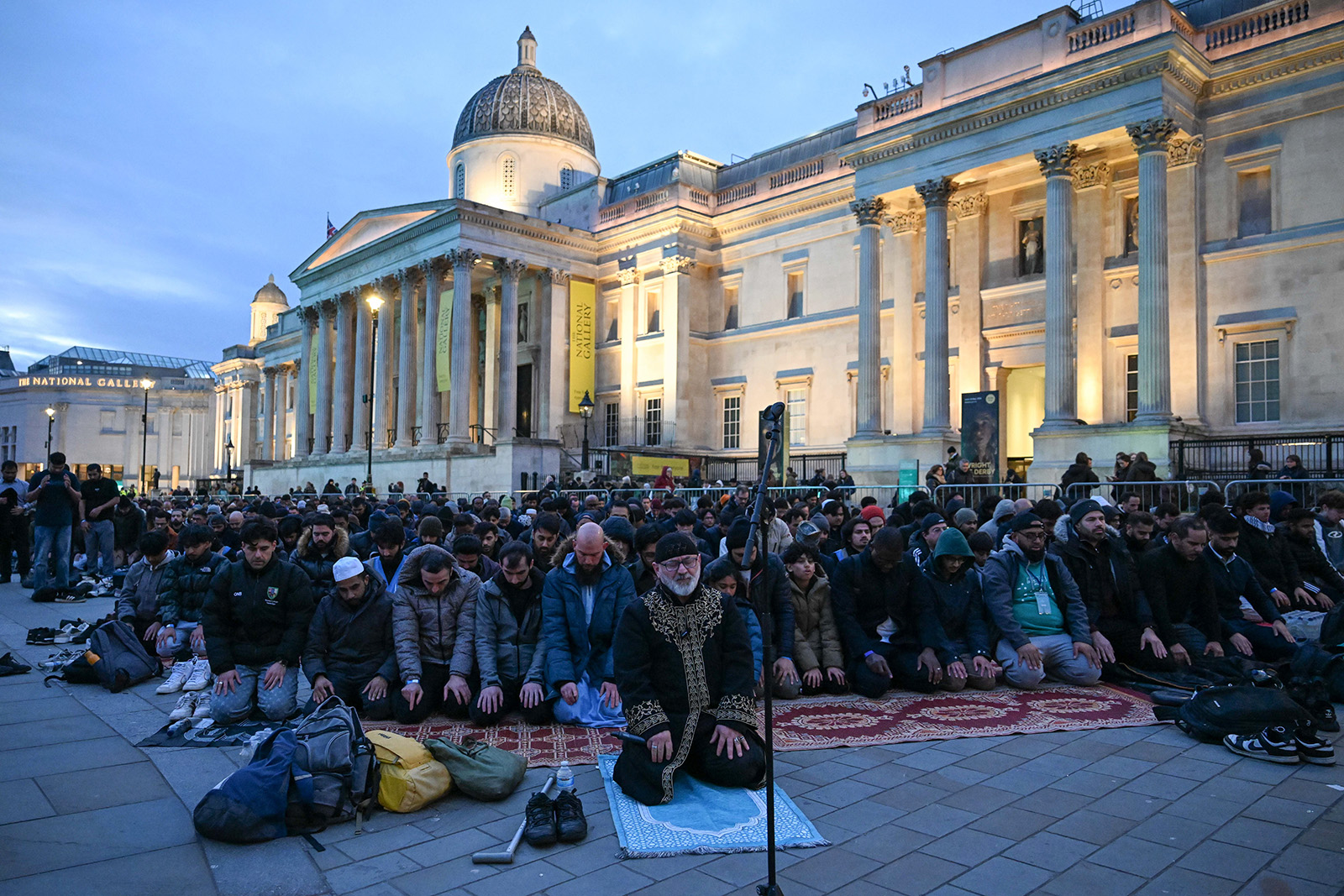
Trafalgar Square has long hosted religious and cultural celebrations of all kinds. Sikhs, Jews, Hindus and Christians have all marked their respective festivals there without controversy. The Open Iftar has now taken place in the square six times, each year passing peacefully and drawing Londoners from all backgrounds.
The initiative was launched in 2013 as a way to offer international students, often far from their families, a sense of community. It has since grown significantly. Open Iftars can now attract around 3,000 people, both Muslim and non-Muslim.
We should welcome the rise of such events. Earlier in March, I had the privilege of attending the Ramadan Streets initiative in Birmingham. It began as a response to the disruption caused by unlicensed market stalls and traffic along Coventry Road during Ramadan. Birmingham City Football Club’s car park was transformed into a vibrant night market, with an atmosphere reminiscent of the German-style Christmas markets that have become a fixture of British winters.
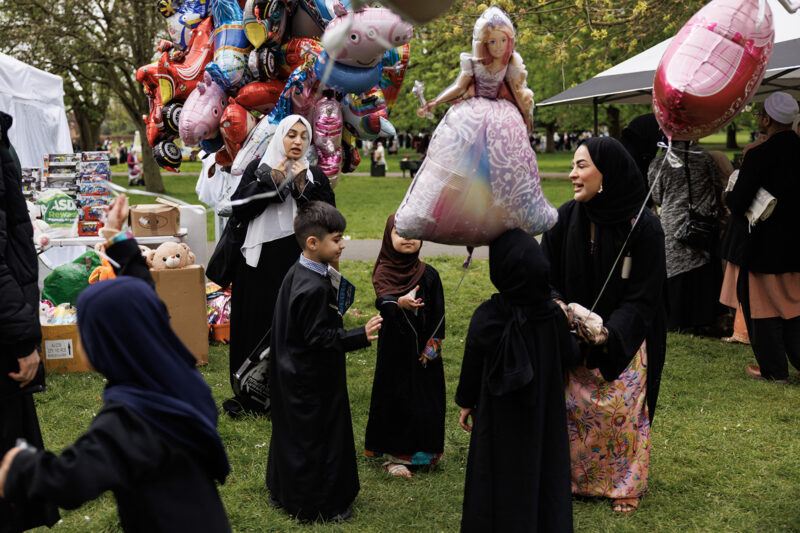
On Eid, I was heartened to see non-Muslims sharing messages online about exchanging food and gifts with their Muslim neighbours. It is a reminder that, beyond the noise of politicians and pundits, many people in Britain not only accept Muslim traditions but actively enjoy and look forward to them. In the past few years, local parks in Luton have hosted Eid festivals, with funfair rides, entertainment and food to take the celebrations beyond the household.
Public expressions of Muslim life in Britain are nothing new. In the 1920s, Eid prayers were held outside the Shah Jahan Mosque in Woking, the first purpose-built mosque in the UK, drawing large and diverse crowds, including women and visiting dignitaries. Footage of these gatherings still exists in the BFI archive.
Elsewhere, archival footage from 1937 shows a thriving Yemeni Muslim community in the north-eastern port of South Shields, many of them sailors working on British ships, taking part in a religious procession with flags . Likely referring to the same event, local reports stated that a funeral procession had drawn some 2,000 Muslims to the town’s streets.
Beyond Ramadan, British Muslims are increasingly woven into the fabric of national life. Muslim hiking groups are encouraging communities, many of which are based in urban areas, to explore the countryside. Mosques frequently host or support food banks that serve local people, regardless of faith. The annual Visit My Mosque weekend, organised by the Muslim Council of Britain, opens Muslim places of worship to the public.
Is this “domination”, or is it simply what integration looks like?
Muslims make up 6% of the UK population and 15% of Londoners. We are neighbours, colleagues, friends. We share in the life of this country and we believe our non-Muslim friends should be able to experience the beauty of our traditions too. The alternative would be to turn inwards and withdraw from wider society. Precisely the behaviour we are so often accused of, even as we are criticised for doing the opposite.
What we are witnessing from Timothy is not genuine concern about public order or social cohesion. It is part of a familiar pattern. A moral panic about Muslims, dressed up in the language of national survival. In recent years, this rhetoric has become louder, more theatrical and increasingly detached from everyday reality.
And it has consequences. A 2018 poll found that nearly one-third of Britons mistakenly believed there were “no-go zones” in the UK governed by sharia law. Meanwhile, Islamophobic attacks have risen, with mosques targeted and hijab-wearing women subjected to abuse in public.
This latest episode of manufactured outrage offers a glimpse of the direction in which parts of British politics are heading. The hard right is intensifying its campaign against Muslims, pushing a “clash of civilisations” narrative that presents Britishness and Muslimness as fundamentally incompatible. Yet millions of us live that reality every day, comfortably and unapologetically both.
There are, however, other voices and other conversations. The vocal defence of the Open Iftar by Christian and Jewish leaders shows that many reject this politics of division. An editorial in Jewish News defended the principle of shared religious freedom, while the Bishop of Willesden described the event as “profoundly British”, an act of hospitality rooted in a long tradition of public faith. Religious freedom in this country has never meant hiding belief away; it has meant the right to live it out openly, visibly and without fear.
Trafalgar Square itself carries within its name a history of cultural exchange. Derived from the Arabic Taraf al-Ghar (Cape of the Cave), it refers to the Spanish cape where admiral Horatio Nelson secured his famous 1805 victory against the French and Spanish fleets. Muslims breaking their fast there is not “domination”. It is a simple expression of community, entirely in keeping with Britain’s traditions of pluralism.
The truth is that those most prone to stoke outrage tend to offer little to the communities they claim to defend. Having presided over the erosion of public services, social infrastructure and economic opportunity, Conservative politicians and an increasing number of defectors from the party are now turning to division as a political strategy. Where we seek to build connections through initiatives such as the Open Iftar, they seek to fracture them.
Taking many of its cues from the US-based Christian nationalist movement, some opportunistic members of the hard right have started to use the cross as a cudgel, but hate couldn’t be further from the Bible’s teachings.
As the journalist Fraser Nelson has pointed out: “Robert Jenrick barely said a word about religion in most of his parliamentary career but now pops up to demand that Keir Starmer celebrates what he calls ‘Psalm Sunday’. He means Palm Sunday, and the fact that he can get the two confused shows the level of cynicism here. Faith is a new tool he has picked up only recently.”
The scenes in Trafalgar Square, where people of all backgrounds shared food and conversation, points to a different future. A Britain where diversity is celebrated. A Britain where the public square belongs to all of us. A Britain that’s really worth defending.