

Palestine Action hunger strikers speak for first time since being granted bail

Heba Muraisi, Qesser Zuhrah, Teuta Hoxta and Kamran Ahmed held a press conference in London alleging mistreatment by prison staff

Palestine Action hunger strikers have alleged that they experienced violations of their human and religious rights while in prison, with one saying she was left “paralysed” on a cell floor for 22 hours.
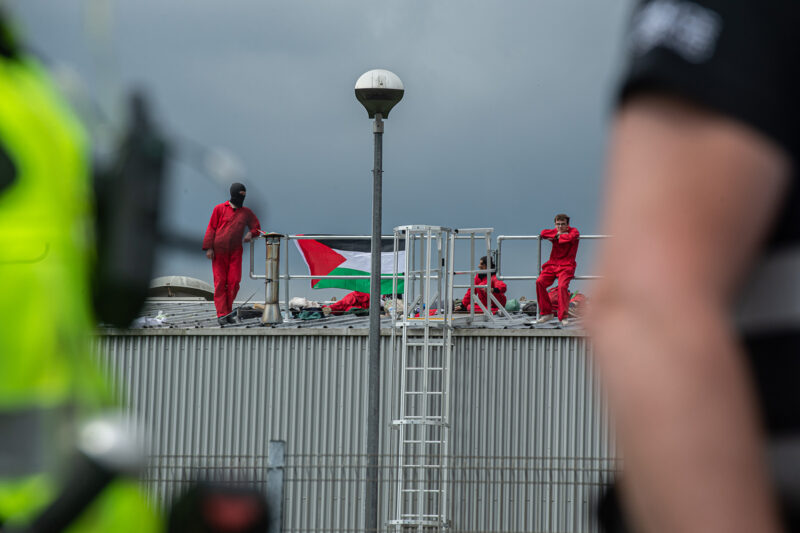
Five of the activists who were held on remand over their alleged involvement in a Palestine Action break-in at an Elbit Systems factory in August 2024 made their first media appearance on Wednesday after being granted bail in February.
The group included four activists who had participated in a hunger strike against the proscription of Palestine Action and their treatment in prison. They told a press conference in London that they were subjected to medical mistreatment while in prison and are exploring legal avenues for restitution.
Related content
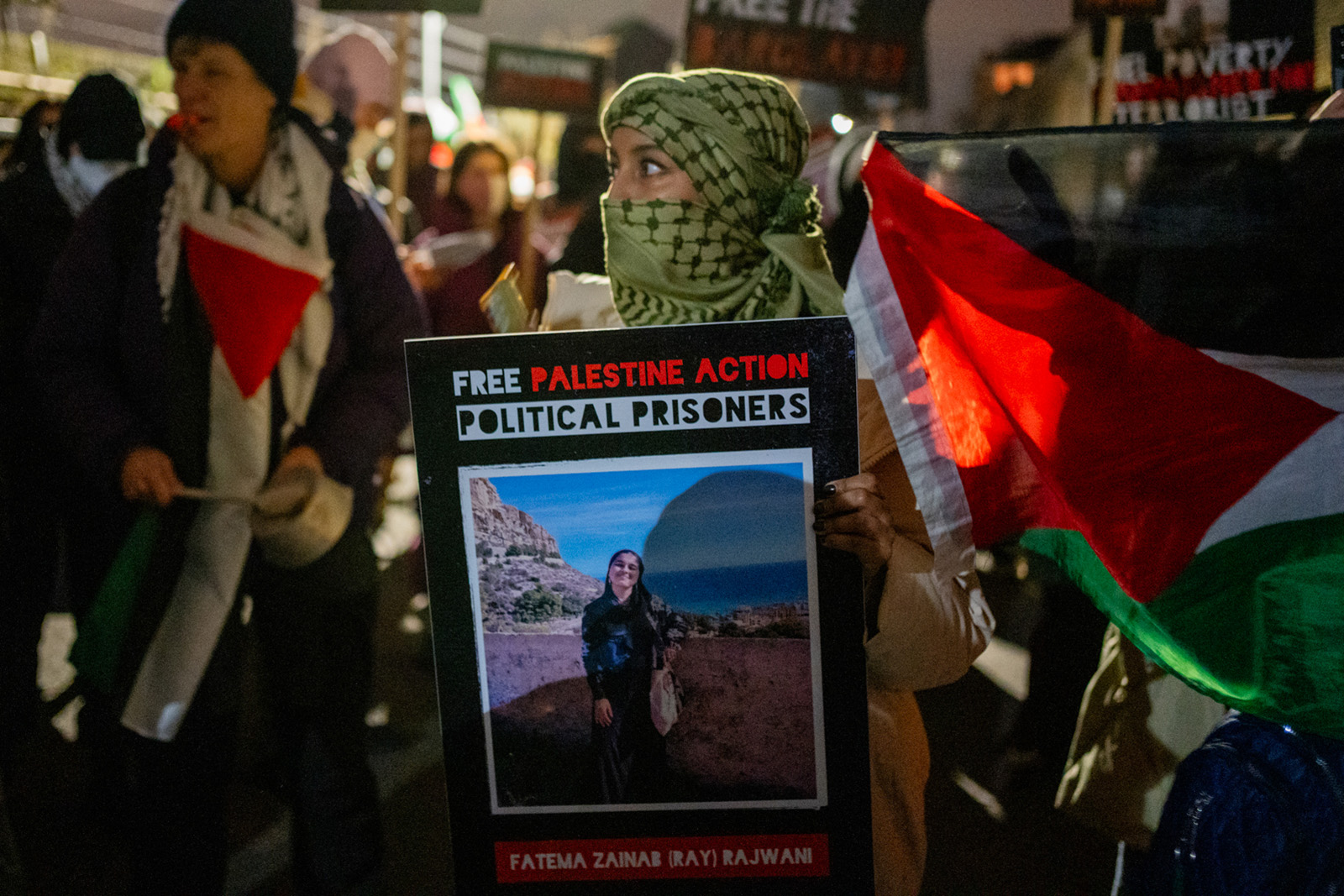
Heba Muraisi, 31, said she had to use a pillowcase as a hijab during prayer, as the prison staff at HMP Bronzefield in Surrey, where she was held, took away her keffiyeh and refused to replace it with a different hijab.
Muraisi, who spent 15 months in prison, during which she was on hunger strike for 73 days, also said her body was “exposed on the street in the presence of a man” during arrest, though she did not give details. When Muraisi was sent to hospital for refeeding, after 30 days of her hunger strike, she added, she was cuffed to a male guard.
“They tried to force me to change out my clothes, meaning I would have to strip while cuffed to a man, vulnerable and exposed, waiting for this male guard to hand me my clothes,” she said. “There was a second guard who was female, but she refused to swap places with him.”
Like other hunger strikers, Muraisi said that she was not given electrolytes — essential minerals that help muscles and nerves to work, which normally come from food — and that staff delayed granting her medical attention.
Qesser Zuhrah, 21, said that prison staff left her “paralysed” on the floor for 22 hours after she had collapsed due to her hunger strike.
“For the first 20 days of my hunger strikes they denied me electrolytes completely, then after 42 days, after I collapsed, they suddenly decreased my electrolyte dose and then gave me none. They orchestrated my rapid deterioration,” Zuhrah said. “Instead of killing me, they wanted to push me to the point of death, to scare me into stopping. On the 45th and 46th days of my hunger strike, they left me paralysed from muscle wastage on my cell floor for 22 hours and refused to call an ambulance.
“The guards took turns staring at me, watching and waiting for either my soul to leave my body or my dignity to collapse, and for me to end my hunger strike. They shoved my arms and legs to take my vitals and then refused to tell me the readings, keeping me in the dark to my own state.”
News of Zuhrah’s deterioration was made public at the time, resulting in a round-the-clock vigil outside HMP Bronzefield whose members — among them independent MP Zarah Sultana and Green peer Jenny Jones — were demanding that she be taken to hospital.
Kamran Ahmed told the press conference that he had reconciled with death during his 66 days on hunger strike and entrusted his fate to Allah.
Related content

“Today I still suffer with chest pain and shortness of breath [as a result of the hunger strike] but it was worthwhile,” Ahmed said. “I hope that perhaps we allowed one more kid in Gaza to smile for one more day.”
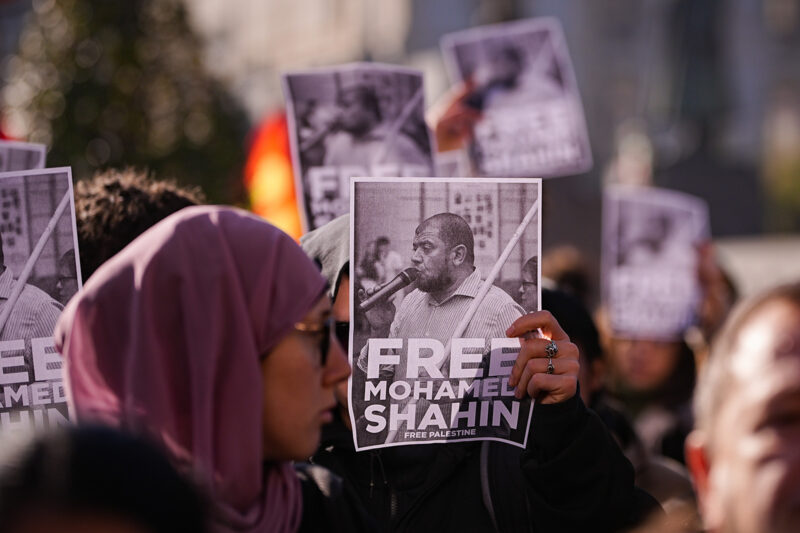
Teuta Hoxta, the fourth hunger striker, also told the press conference she was removed from her job as a prison librarian after Palestine Action was proscribed in July, with staff allegedly having said there was a risk she could radicalise other inmates. The High Court ruled last month that the government’s ban of Palestine Action had been unlawful, though it remains in place.
The hunger strikers are part of the Filton24 group who were arrested over alleged involvement in the Elbit break-in. All but one were bailed in February after being cleared of aggravated burglary, although they still face retrial over lesser charges including criminal damage.
A Ministry of Justice spokesperson said: “All individuals were managed in line with longstanding policy while in prison. This includes regular checks by medical professionals, heart monitoring and blood tests, and support to help them eat and drink again. If deemed appropriate by healthcare teams, prisoners were taken to hospital.”
The ministry believes it is unable to comment on allegations made by individual prisoners because of data protection legislation.