

Asian and Black Met police less likely to be promoted than white colleagues
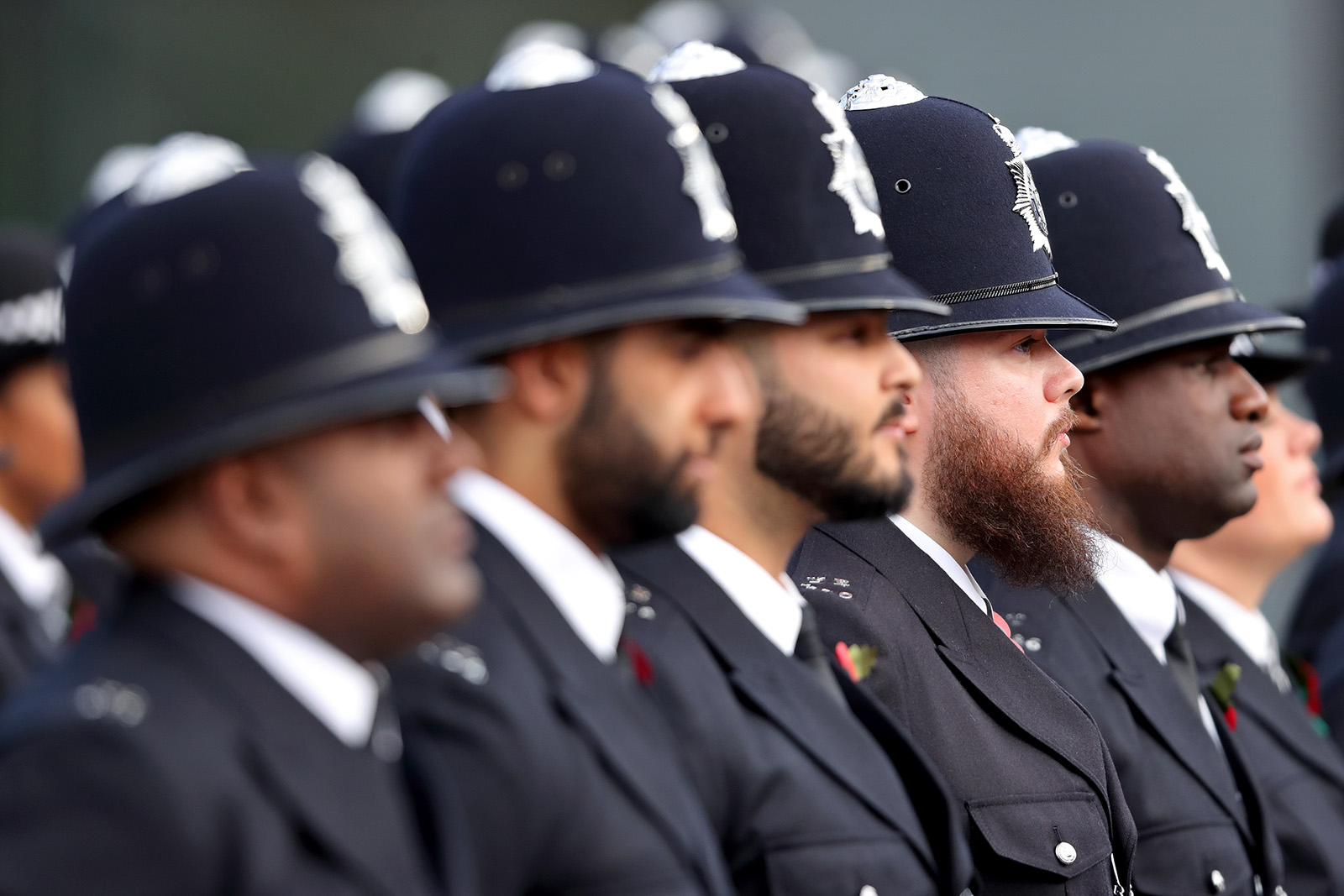
Data obtained by Hyphen for the Metropolitan Police substantiates warnings made by Baroness Casey’s landmark review in 2023


Asian and Black officers serving in Britain’s biggest police force are less likely to be promoted than their white peers, particularly in lower ranks, data exclusively obtained by Hyphen suggests.
It appears to substantiate anecdotal evidence heard by the landmark Baroness Casey Review, published in 2023, that found the Metropolitan Police’s promotions system was seen as unfair and discriminatory against staff from minority ethnic backgrounds.
Figures from the Met covering the years 2019 to 2024 released following a freedom of information request show that 44.5% of Asian officers who applied for a promotion from constable — the lowest rank in policing — to sergeant were successful, compared with 58% of white applicants. Meanwhile, 55% of Black applicants were successful.
For promotions from sergeant to inspector for the same period, 38% of Asian applicants were successful, compared to 42% of white applicants. Black sergeants applying for the inspector role had a success rate of less than 34%, but figures for this cohort were so low that data supplied by the Met was partly redacted and the true rate may have been as low as 26%.
Andy George, the president of the National Black Police Association (NBPA) — which supports both Black and Asian staff — said the figures come at “absolutely no surprise”.
“Proper mentorship around career development is something our members regularly miss out on. Despite being more qualified a lot of the time, there are so many barriers put in their way,” George said.
A key issue is the lack of a standardised promotion process across UK police forces. In some forces, officers can only apply for promotion with their line manager’s approval. This is a system that disadvantages ethnic minority officers, George said.
“If you don’t get your line manager’s approval to go forward with it, then you’re stuck,” he said. “Given the racism that some of our members face, and the lack of awareness about how other cultures integrate and talk to each other, your line manager may think somebody whose second language is English is less coherent or eloquent than some of their own friends, and they’ll mark somebody down for that.”
George also highlighted a culture of nepotism that unfairly disadvantages ethnic minority officers due to a historic lack of representation in policing.
At the lower ranks, the promotion process involves an examination and an interview with a board of higher-ranking officers. George said white officers with family members already in the service are more likely to be coached through this process and invited into strategic meetings that build their understanding of how the force operates.
“If you’re a second or third-generation police officer, you come in with a ready-made network and understanding of what the job does, often with somebody else in the force looking out for you,” he said. “That then leads to you getting better opportunities that will help you develop.”
The result, George said, is a lack of belief among ethnic minority officers in themselves and in the system.
Casey’s year-long review of the Metropolitan Police concluded that the force was rife with racism, misogyny and homophobia while, in 2025, an independent report by Dr Shereen Daniels found there was “systematic racism” within the force resulting in sustained anti-Black discrimination.
Related content
Casey’s review found that 59% and 58% of Black and Asian officers respectively disagreed with the suggestion that the Met’s promotions system was clear and fair, compared with 51% of white officers. Casey also pointed to a “who you know culture” that offered people with better connections more opportunities to act up into senior positions and gain experience that could be useful for promotions, and heard that “those who were good at ‘working the system’, or who were good at passing tests” were most likely to be rewarded.
One officer, whose testimony was published anonymously in the Casey review under the initial K, told the report authors he had asked for support with promotion only to be told: “You’re not ready.” This was said, Casey wrote, “without context or help to address this,” even though K had “the same credentials as peers who were supported”. She added: “K feels he has always needed to work harder to be seen as worthy.”
George said members of the NBPA had observed no tangible improvements in the Met since Casey’s review.
“We are seeing more and more people suffering racism and more people getting pulled out through the misconduct system,” he said. “On a day-to-day-basis, our members are reporting increased hostility.”
The Met did not respond to Hyphen’s request for comment.