Hundreds of racism complaints at police forces led to no officers sacked
360 race-related complaints were made against forces that had admitted they were ‘institutionally racist’. In two years, none led to dismissals

More than 350 race-related complaints made to a pair of police forces after they declared themselves “institutionally racist” did not result in a single officer being sacked in two years, Hyphen can reveal.
Police Scotland and Avon and Somerset Constabulary made headlines when they were the first forces in Britain to say publicly that they were institutionally racist in May and June of 2023 respectively. The term, referring to systemic discrimination rather than individual acts of racism, had been applied to UK police as early as 1999 by the landmark Macpherson report into the Metropolitan Police, but no force before Police Scotland had applied it to themselves.
The data, which has only been fully released to Hyphen following an eight-month transparency battle, shows that as of July 2025 no officers had been sacked over 194 complaints made to Police Scotland and 166 made to Avon and Somerset, with most complaints having been dismissed, dealt with using internal processes such as “assurance” and “learning from reflection”, or withdrawn. None of the complaints to Police Scotland appear to have led to formal misconduct proceedings, while just one report from a member of the public about Avon and Somerset was escalated in this way.
Related content
Andy George, president of the National Black Police Association, said: “When police forces acknowledge institutional racism, the public quite rightly expect to see meaningful change in how complaints are handled and how officers are held to account.
“The fact that significant numbers of race-related complaints can be made without clear outcomes risks reinforcing the perception that the system is not working for the communities it is meant to serve.”
On 25 May 2023 Scotland’s chief constable Sir Iain Livingstone declared in a statement Police Scotland was “institutionally racist and discriminatory” and said there was “no place in Police Scotland for those who reject our values and standards”. His successor, Jo Farrell, told ITV News in September 2024 the force had “kicked out” staff for racism and sexism in the preceding year, though its own records — disclosed to Hyphen — show no complaints made since Livingstone’s declaration had resulted in sackings.
Scotland was followed by Avon and Somerset on 16 June 2023, when chief constable Sarah Crew declared the force institutionally racist.
At Police Scotland, 29 allegations were dealt with informally through a practice known as “front line resolution” (FLR), which the Police Investigations and Review Commissioner (PIRC) for Scotland has said is “not appropriate” for dealing with most allegations of racial discrimination.
Reacting to our findings, Carla Denyer, Green Party MP for Bristol Central, which is covered by Avon and Somerset Constabulary, said she would be “taking this up directly” with the force.
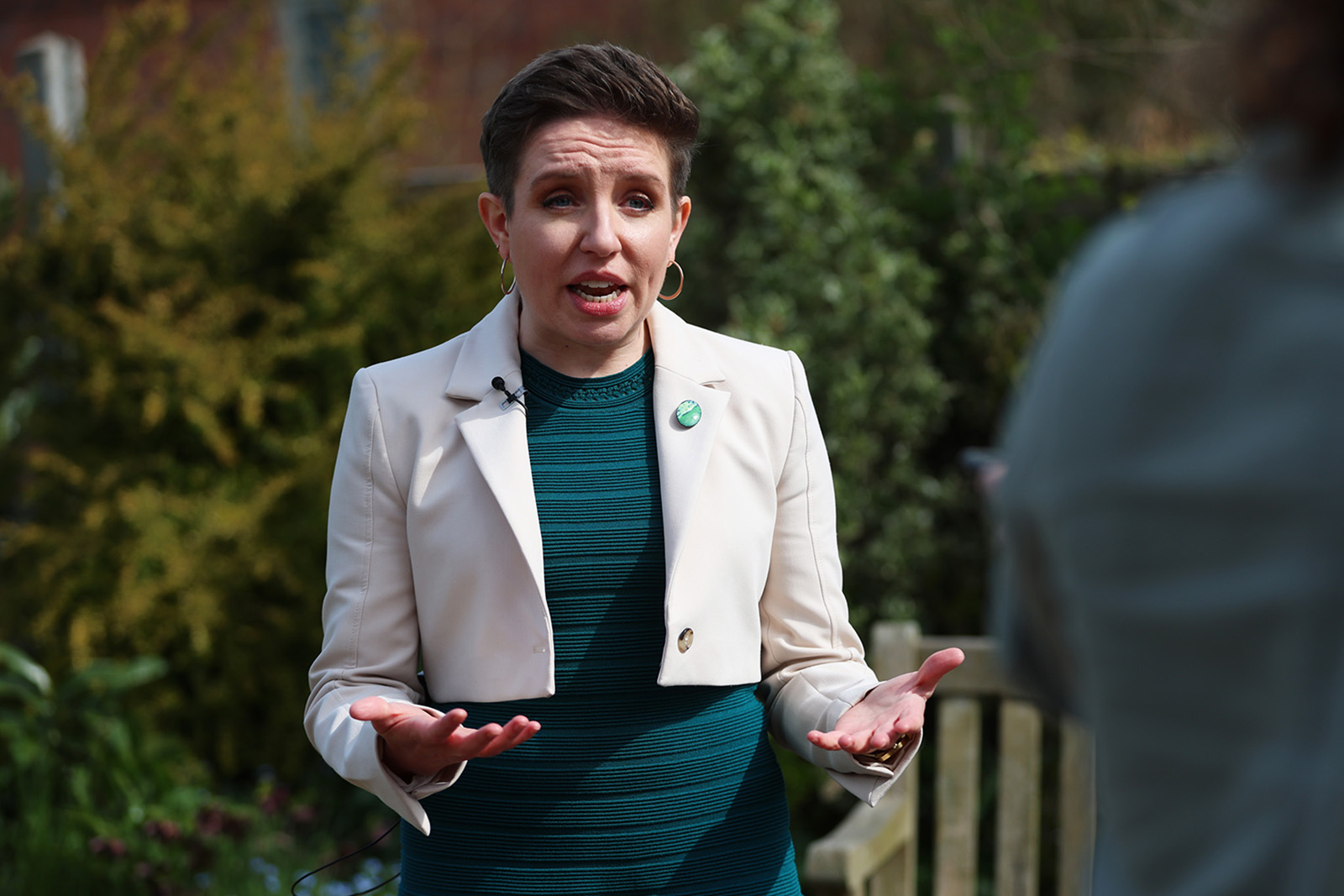
“Properly investigating complaints and holding individual officers to account is a basic requirement to overcoming institutional racism in the police,” she said. “Yet this data suggests there’s very little commitment from either police force to repairing public trust and confidence or to justice.”
Diane Abbott, a former Labour shadow home secretary and the UK’s first Black female MP, said it was “quite a breakthrough” that multiple forces had declared themselves racist, but added: “Of course, that means they have to follow through and implement some effective policies to tackle that racism.”
The data from Police Scotland was only released after a tug of war with the force that eventually sparked an intervention on Hyphen’s behalf by the Scottish information commissioner, which investigates and enforces freedom of information laws north of the border.
We found 37 of the allegations had been “abandoned” and 38 had not been upheld because they were “concluded by explanation”. A further nine were not upheld due to “insufficient evidence” and seven were thrown out after they led to “no proceedings” by the area procurator fiscal — a legally qualified civil servant who investigates allegations of wrongdoing by police in one of 11 Scottish regions.
Of the remaining cases, 29 allegations were “resolved by FLR”: four through apologies, 11 through “assurance” and a further 14 via “explanation”.
The PIRC, which reviews how policing bodies in Scotland handle complaints, has already highlighted “inappropriate use of front line resolution” by the force, saying it is a “recurring” theme for Police Scotland.
Ilya Zharov, PIRC head of reviews and policy, told Hyphen: “Our statutory guidance is very clear that FLR should not be used to deal with allegations of a complex or serious nature, and this includes allegations of discriminatory behaviour.”
This guidance, which applies to Police Scotland, states that FLR should only be used to deal with allegations of discrimination “in exceptional circumstances where, for example, the complaint is clearly unfounded or based on mistaken information”.
The data also shows that 15 allegations with a “racial element” against Police Scotland officers were later withdrawn, while 59 had not been resolved when the data was compiled.
Avon and Somerset, whose catchment area in the south-west of England covers 1.81 million people in cities including Bristol and Bath, deemed that the “service provided was acceptable” in response to 102 complaints, but admitted it was “unacceptable” in six — three of which were resolved through “learning from reflection” while no further action was taken over the other three complaints.
It was “not determined” if the service was acceptable in respect of five complaints, while 11 were withdrawn.
Officers were found to have a “case to answer” in respect of just three of the allegations: one made by a member of the public, which was referred to misconduct proceedings, and two made by officers’ own colleagues. Six other police-on-police allegations at Avon and Somerset did not get that far, with two being referred to the reflective practice review process (RPRP), a non-disciplinary procedure, while six were still ongoing at the time the information was provided.
Sal Naseem, the first Muslim regional director for the English and Welsh police watchdog, the Independent Office for Police Conduct (IOPC), said investigating claims of racial bias proved tricky for forces when he was working for the watchdog between 2019 and 2023.
“If we’re talking about something which is overt racism, and a racist remark, it’s very clear what needs to happen,” he said. “But if you’re talking about racial bias, it’s difficult to investigate and I know from my professional experience — because I used to lead nationally on this area for the IOPC — that police forces struggled. In fact, the whole police complaints system really, really struggled in how to deal with complaints to do with racial bias.”
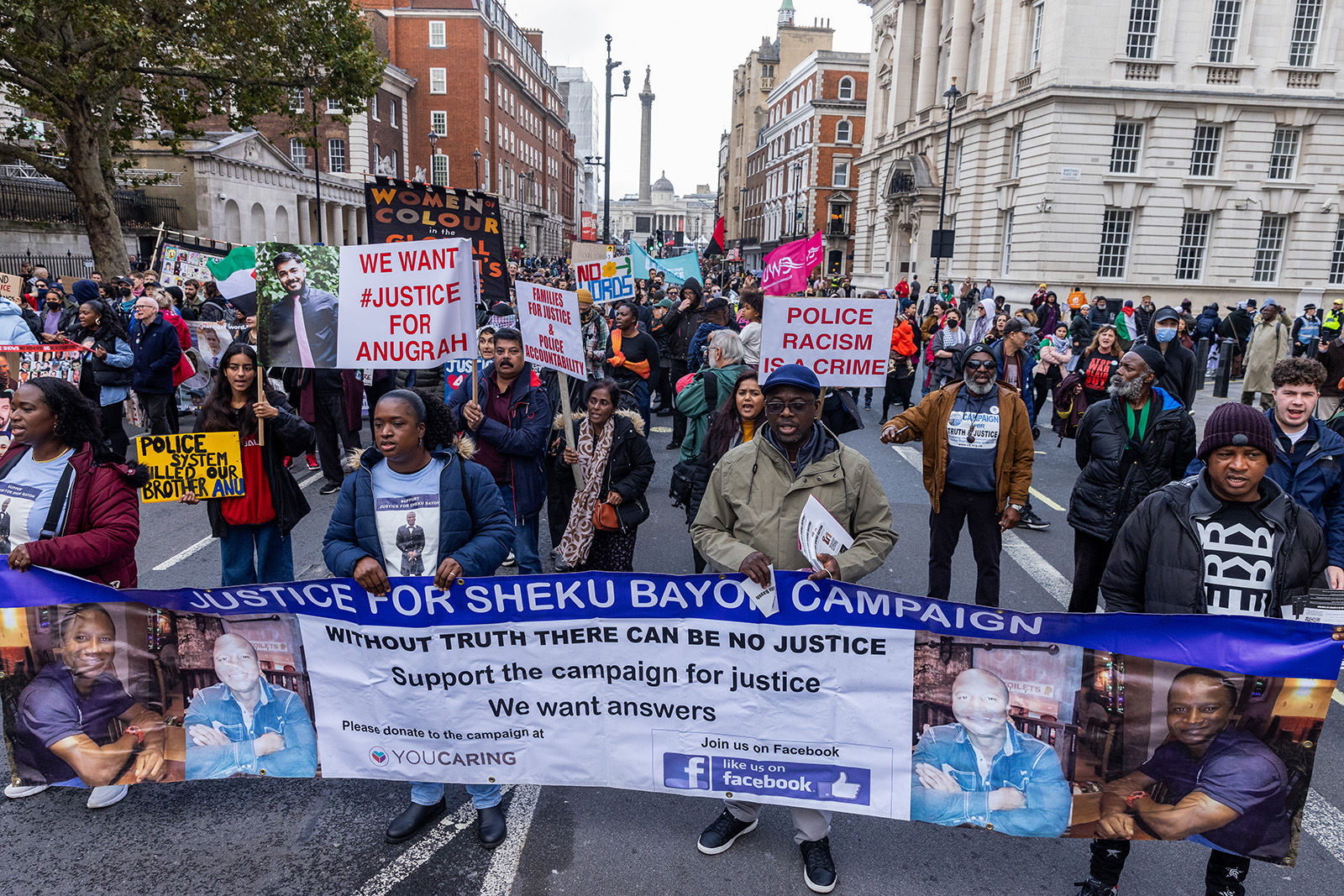
Livingstone’s admission that Police Scotland was institutionally racist came amid the still ongoing public inquiry into the case of Sheku Bayoh, a Black man who died in police custody in Kirkcaldy in May 2015.
It also came after UK police chiefs vowed in a joint statement to “tackle bias, racism or discrimination wherever we find it” in June 2020, amid international outcry over the murder of George Floyd, who was Black, by white police officer Derek Chauvin in the US city of Minneapolis.
Forces such as the Metropolitan Police and Greater Manchester Police have rejected accusations of institutional racism, but the head of the National Police Chiefs’ Council — a body representing the leaders of every UK force — said in January 2024 that his personal view was that policing was institutionally racist, and Dorset Police’s chief constable acknowledged “institutional racism” within the force in September 2024, more than a year after Police Scotland and Avon and Somerset did likewise.
Katrina Ffrench, director of Unjust UK, which challenges discrimination within policing and the legal system, said: “These statistics highlight that there is still so much more to be done.” Stephen Walcott, head of policy at the Runnymede Trust, added: “These findings highlight how simply acknowledging institutional racism is far easier than eliminating it.”
A Police Scotland spokesperson said the force “endeavours to undertake complaint investigations as efficiently as possible”.
They added: “Where any officer or staff member falls below the standards expected, there are robust and transparent mechanisms in place to hold them to account. Any instance where an officer or staff member fails to uphold our standards is investigated and appropriate action taken. Every complaint is given full consideration and is dealt with according to the circumstances. We are fully committed to focusing on our standards and values of integrity, fairness, respect and human rights.”
A spokesperson for Avon and Somerset Constabulary said the force was “committed to delivering a policing service that is fair and equitable to all” and was making “significant efforts” to “ensure officers and staff understand how race and policing intersect”.
They added: “Since the start of 2021, six police officers have either been dismissed — or would have been dismissed had they not already resigned — as the outcome of misconduct investigations related to breaches of the policing standard of equality and diversity.
“We have also recently introduced lived experienced practitioners to our professional standards department to ensure the lens of cultural awareness is extended to the consideration of misconduct and complaints.
“But we know there is more to do. Tackling racism and discrimination in policing is about the standards we set, the action we take when those standards are breached, and the trust we build with the communities we serve. We remain committed to policing that is fair, inclusive and accountable to every community in Avon and Somerset and work towards being an anti-racist police service.”