

‘This film is a ceremony’: Óliver Laxe on the Oscar-nominated Sirât
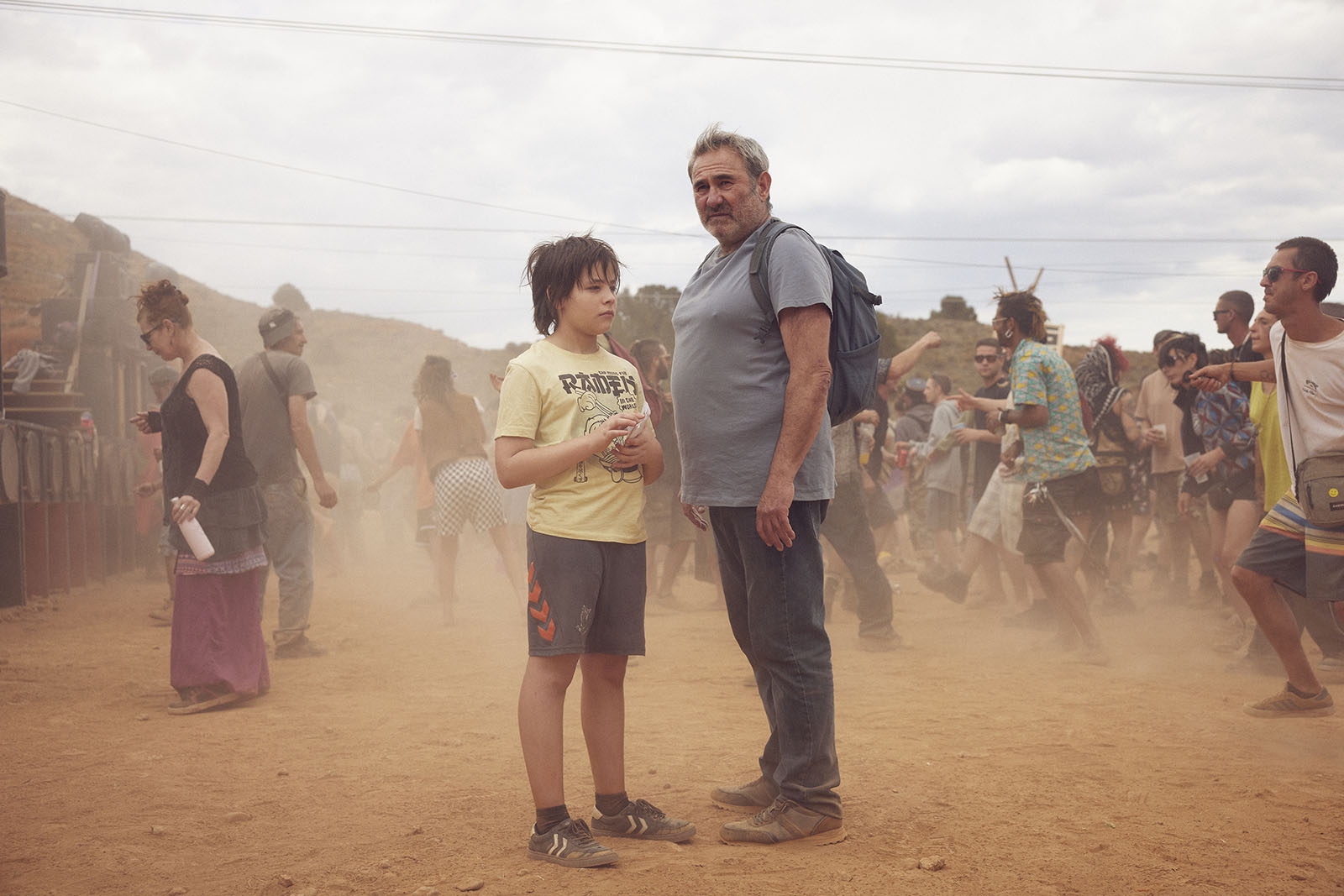
Set against the vast Moroccan desert, the director speaks about his film’s journey of spirituality and self-discovery

There are films you admire, that you enjoy, and then there are those that confront you. Óliver Laxe’s Oscar-nominated Sirât belongs firmly to the last category. To simply like this masterpiece would be too simple. It is a journey into human fragility that lingers long after the credits roll.
The title itself invites a spiritual reading. In Islamic eschatology, As-Sirāt is the bridge stretching over hell that souls must cross on the Day of Judgment, traversing it according to their deeds. It is not merely a crossing, but a reckoning. Laxe’s film, set against the vast Moroccan desert and unfolding in an apocalyptic atmosphere, operates much like this bridge.
Related content
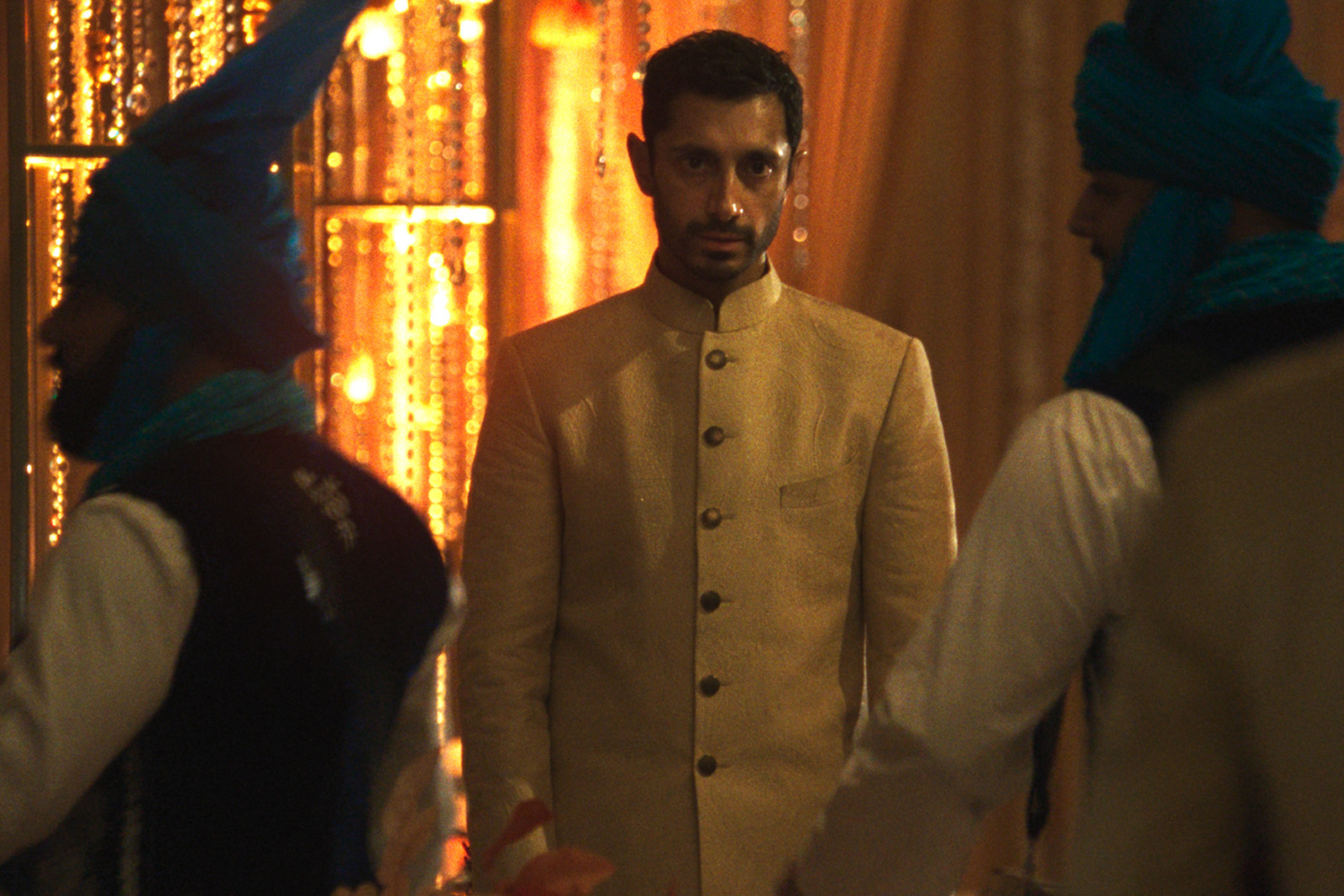
Sirât follows a father, Luis (Sergi López), and his young son Esteban (Bruno Núñez Arjona) searching for a missing daughter who vanished into the Sahara’s rave scene. They team up with a group of ravers when something akin to a third world war breaks out. But this is only the scaffolding of the story. What Laxe constructs is metaphysical; a journey that feels more like a spiritual trial than a rescue mission.
“I wanted to make a film where people could die before they die,” Laxe tells me as we speak over Zoom a few days before Sirât’s UK release on 27 February. In it, death is not an endpoint, but a pathway to serenity. “The film is really a ceremony.”
Laxe employs what he describes as a form of “shock therapy” in his film-making. “Here you are watching with the body, with the guts, with the heart,” he says. “It is really an experience. That’s the way the catharsis is made.”
His path to Sirât follows a body of work — You All Are Captains (2010), Mimosas (2016) and Fire Will Come (2019) — rooted in landscapes of extremity and quiet spiritual questioning.
Sirât was 12 years in the making and a true labour of love for the 43-year-old director. “If you want to have beauty, you have to deserve beauty. The way I do films is challenging — the desert, the heat, the sandstorms, everything. It’s tough. But the war is with yourself,” he says. “The most difficult thing is yourself on a shoot: your fears, your strength, your faith to keep faith.”
The Spanish director has returned to themes of faith and endurance throughout his career. This is palpable in Sirât’s hypnotic rave sequences, where bodies move in rhythmic and spiritual communion with electronic music.
Growing up in Sudan, I was immediately reminded of Sufi dhikr and the whirling of dervishes, practices where repetition, music and movement become vehicles for transcendence. When I mention this parallel, Laxe leans into it, describing the film as deeply connected to religious practice: “The film, it’s Sufi. It is swimming in this culture.”
“One of the first names for the film was Jihad,” Laxe explains, clarifying that he meant it in its spiritual sense — though his producers told him in no uncertain terms that he could not call it that. “This war is jihad nafsi… the control of your ego is the war with yourself. The film in a way is a minefield that they have to cross, they have to control the ego to cross, and the battle is with yourself.”
Related content
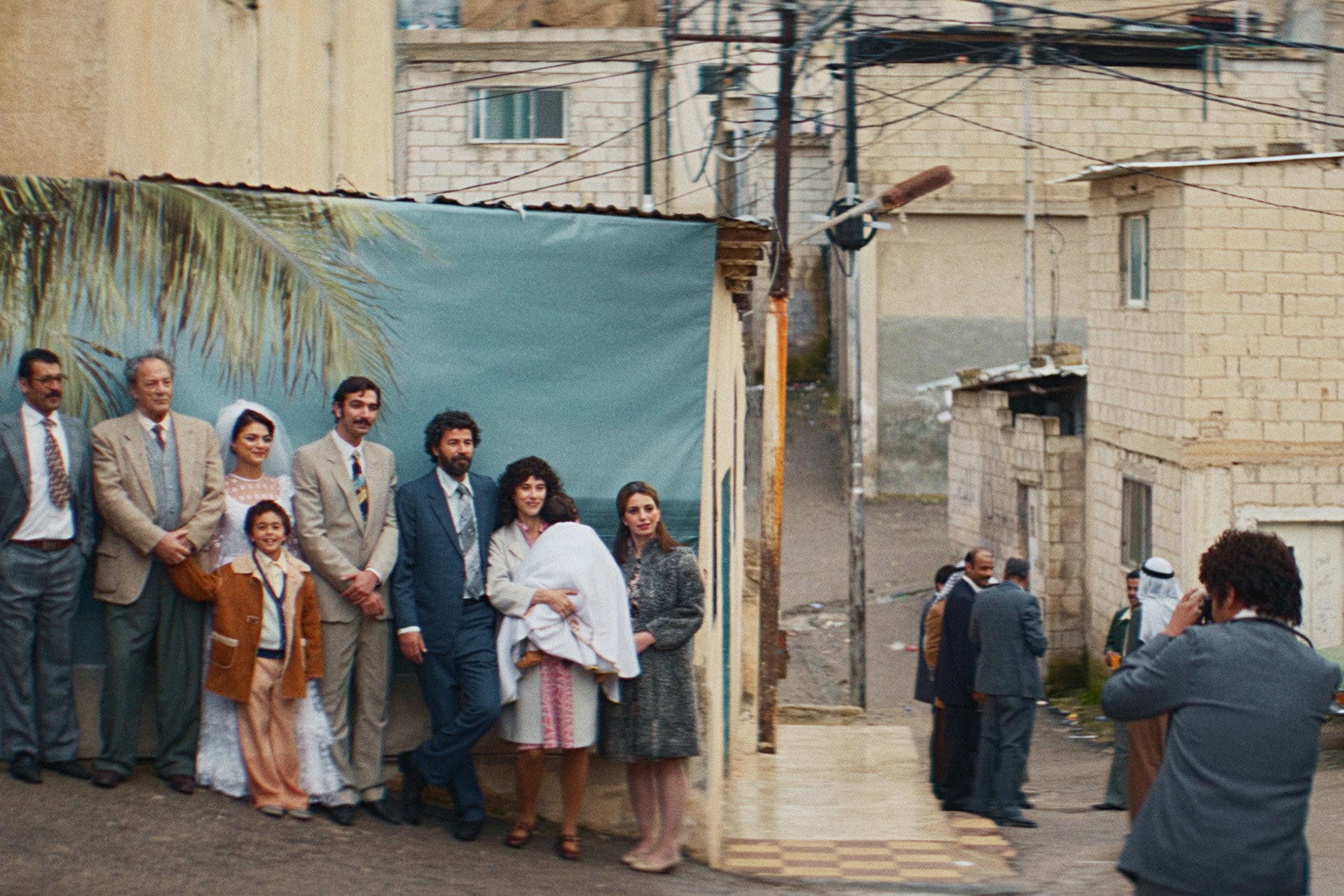
Indeed, the journey of the convoy that Luis and Esteban join to travel across the desert is secondary to an internal battlefield, where fear, grief, faith and surrender are tested under extreme conditions.
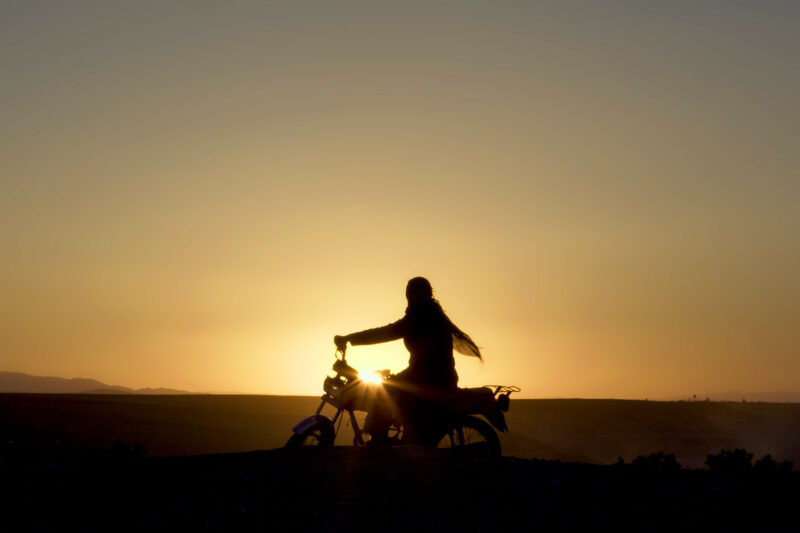
The desert is crucial to this storytelling. The landscape is an active presence, captured by Laxe’s long-term collaborator, cinematographer Mauro Herce. Having lived and worked extensively in Morocco, Laxe speaks of the desert as a site of transcendence. “The desert is alive. It’s not just a beautiful place. It manifests the divine,” he says. In Sirât, the camera lingers on rock, sky and dust with a reverence that makes the terrain feel sentient, as if it is quietly observing the travellers’ unravelling.
There is also a political undercurrent that resists specificity. Radio broadcasts hint at global collapse, borders tightening and mass displacement, yet no single conflict is named. Instead, Morocco emerges as an interzone — a liminal space where European, African and Middle Eastern identities, along with Islamic, new age and secular practices, coexist.
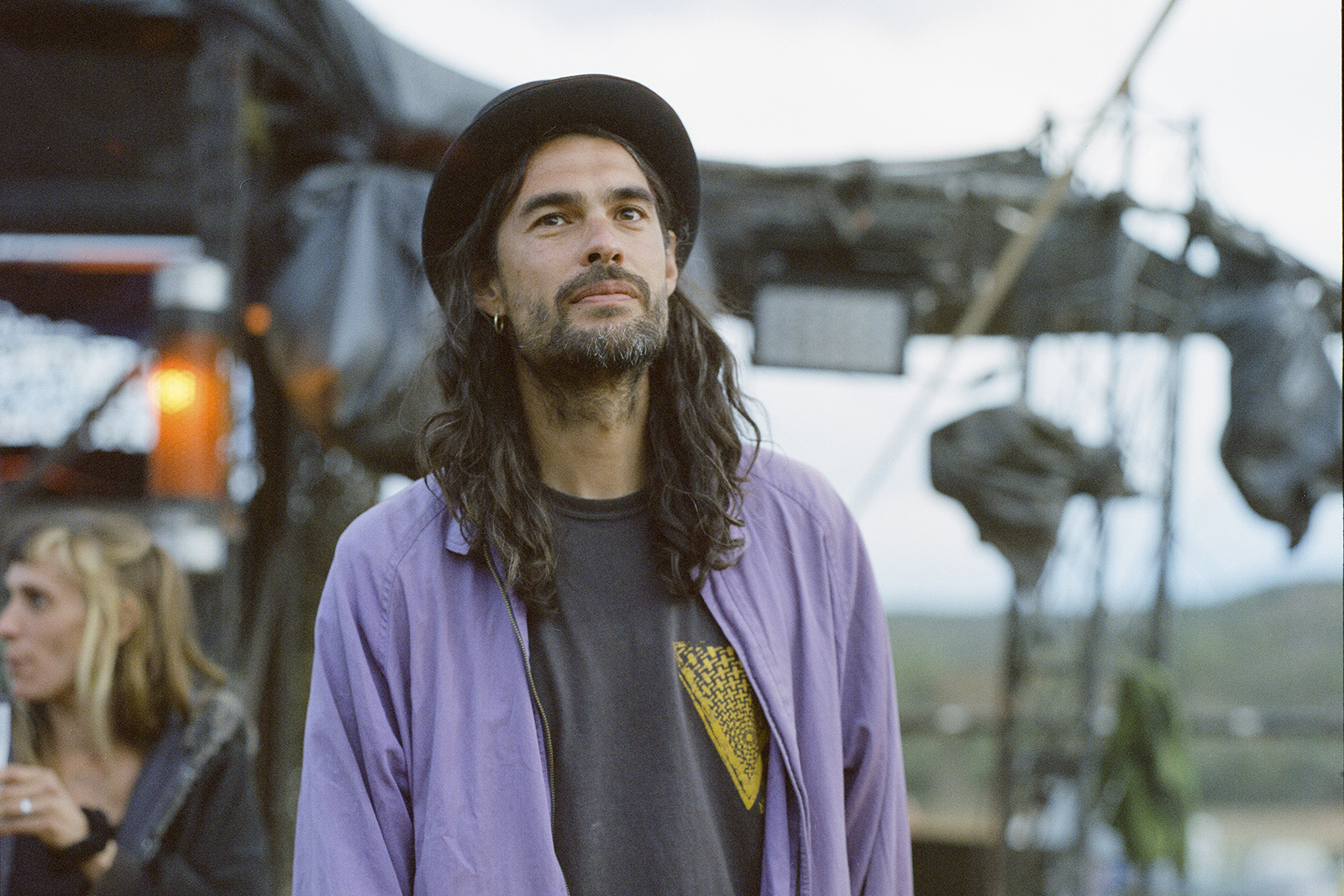
Laxe frames this in almost theological terms. “Western people, we are spiritual refugees. I was a spiritual refugee when I arrived in Morocco,” he says, relating the movement of the characters southwards to his own journey. Laxe grew up in southern Spain to, he says, a “family of peasants” where beyond the region’s historic ties, Islam was integrated into their spiritual practice. Conversations at home were punctuated with “inshallahs”.
After film school in Spain, Laxe made the conventional move northwards to London to begin his career as a film-maker. But he became “miserable” there and felt untethered from the world. It was only when he moved to Morocco 13 years ago that he finally felt at home, setting three of his four features in the country.
He tells me that when he moved to Morocco he recalls learning the phrase: “‘We come from God and we come back to God.’ That was important to learn and I felt familiarity because I am a believer and because of my family.”
Much like Laxe before he found his home in Morocco, the characters in Sirât appear displaced both geographically and existentially, searching for meaning in a world that is disintegrating.
“Making a film like this is a test,” Laxe says. “You don’t know where you are going. What plays on screen is proof of your faith.”
Sirât is out now in UK and Irish cinemas.