

Learning the dishes of my cultures gave me a taste of belonging
Being Egyptian, Irish and Pakistani, the closest I’ve ever come to feeling less ‘other’ was when I prepared meals with the women in my family

I’m standing in the airport waiting for my flight to Egypt, the country of my birth, wondering where to get breakfast. To my right is an Irish pub, and I think about my mother smoothing butter over soda bread and handing it to me as a child. My brother and I would complain at the time, asking why we couldn’t have white bread like other kids, to which my mother would argue that it was better for us while regaling us with stories of Ireland.
To my left is a popular Indian street food chain and I think of my father making doodh pati each night, filling my small mug with milky tea, the smell of cardamom sending me to sleep.
My phone pings and I see a message from my cousin in Egypt telling me my auntie is making my favourite Egyptian dessert, kunafa bil ashta, in preparation for my arrival. For a moment I’m paralysed, frozen at the intersection of my three families — the three places I belong but have never felt truly part of.
Related content
It’s hard to exclusively belong to any one culture when you have only half of yourself in it in the first place. I was born in Cairo to an Egyptian father and an Irish mother. When I was three, my parents divorced and my mother found herself in the north-east of England and, a few years later, remarried to a Pakistani man.
I was raised on summer holidays in Egypt, Irish folk songs at night and Bollywood movies on the weekends with my cousins. I belonged everywhere and nowhere. A mutt. A shapeshifter. Too brown to be Irish, too white to be Egyptian and too adopted to be Pakistani. I would sometimes get asked if I was Brazilian or Spanish, and each time I would be seared with a stab of loneliness so sharp it was nauseating. But food gave me a way to slide in and out of my cultures, eating shepherd’s pie one night, koshari the next and salan and chawal at grandma’s on a Sunday.
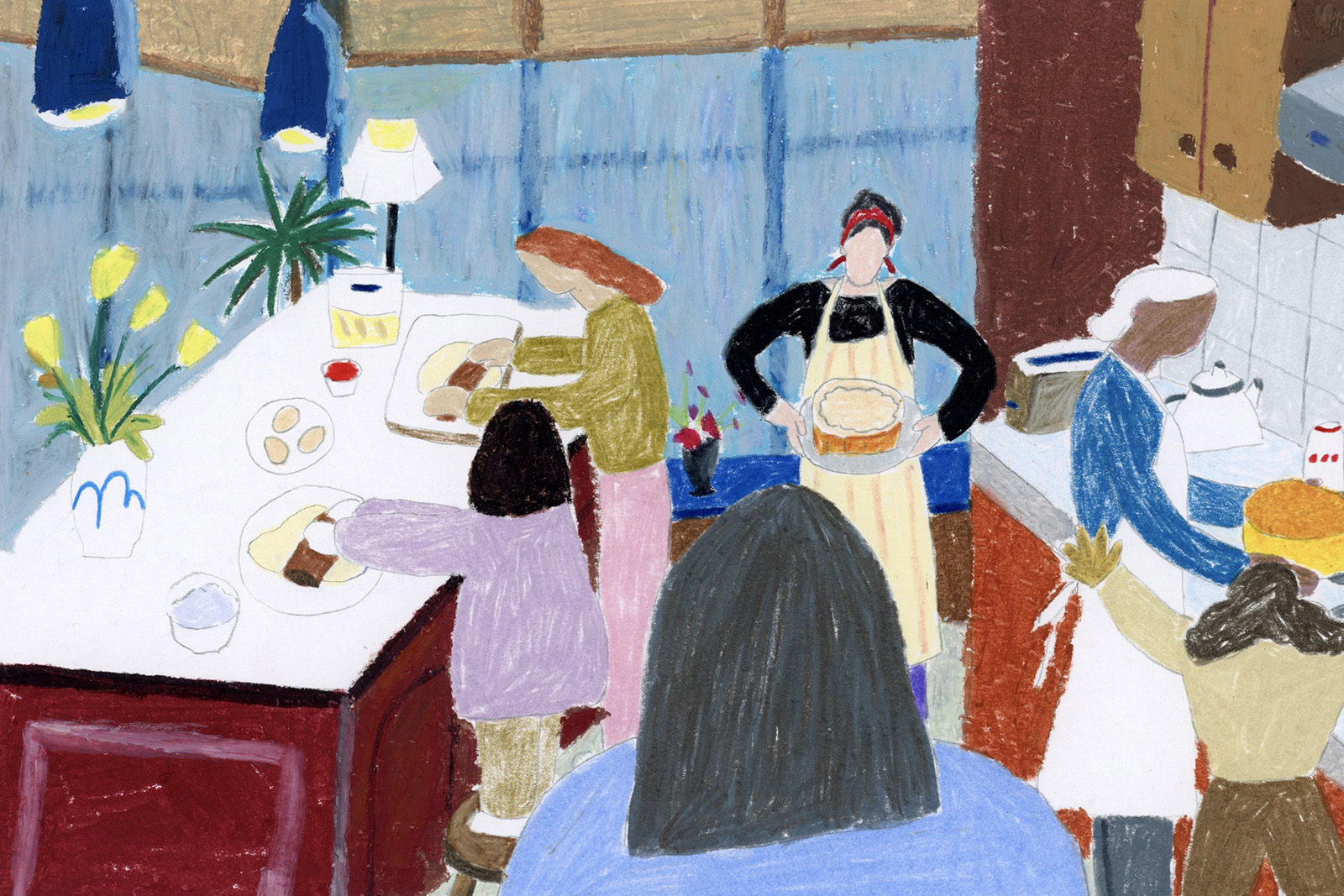
These dishes were portals to different worlds, submerging me in the culture, traditions and tastes of my family. I learned how to roll roti standing on a little stool in the kitchen with my grandma. Her lack of English and my lack of Punjabi meant the lessons were delivered mostly by her smacking my hand out of the way when I was doing it wrong and calling me a “pagal” (silly), which is one of the few words I did understand.
I learned how to make creme caramel cake in Cairo with my auntie during the Egyptian revolution of 2011. These lessons were delivered mostly via my cousins who did speak English, while my auntie occasionally called me “abita” (silly) — which, again, was one of the few Arabic words I understood.
My Irish granny would let me help her make the packed lunches and I would peel the boiled eggs for the sandwich fillings. We didn’t have a language barrier, but there were still ways in which we didn’t understand one another. She was raised Catholic in Ireland in the 1940s and kept her emotions tucked tightly away. I was a mixed-race kid raised as a Muslim who wouldn’t stop talking — mostly about how I felt.
In those moments, preparing food with the women in my family — and being lovingly admonished for not doing it right — was the closest I’ve ever come to feeling like I belonged. If I could learn those dishes, I could belong to those cultures. I could say with pride that I was Pakistani, or Egyptian, or Irish. After all, if you can’t make the food of those countries, can you even claim them?
Now that I’m older, the anchor of the weekly meal at my grandma’s, long summer holidays in Egypt or trips to Ireland are no longer there. The siblings and cousins are all grown up. There is less time to congregate over food.
Related content

Recently, my parents divorced after 27 years of marriage, and now that my Pakistani stepfather is no longer married to my mother I often wonder if I still get to be Pakistani. It’s a painful conundrum. People pick sides during a divorce. Lines are drawn. And even though my Pakistani father is the only one I’ve ever known, I wonder if I still get to claim my extended family when we’re not bound by blood? Is growing up Pakistani enough when you are no longer surrounded by the culture and the people of that country?
At the airport, I choose the Indian street food joint, order a prata and some karak chai and call my dad. When I tell him what I’m having for breakfast, he asks if I got pickle with my prata. “Of course I did, I’m not stupid,” I reply. He asks about the tea and I say they didn’t have doodh pati. I point out that it’s basically the same as karak chai, to which my father gives me a five-minute lecture about how it most definitely is not the same, and how the Indians don’t make it as well as the Pakistanis do. For a moment, I feel like I’m home.
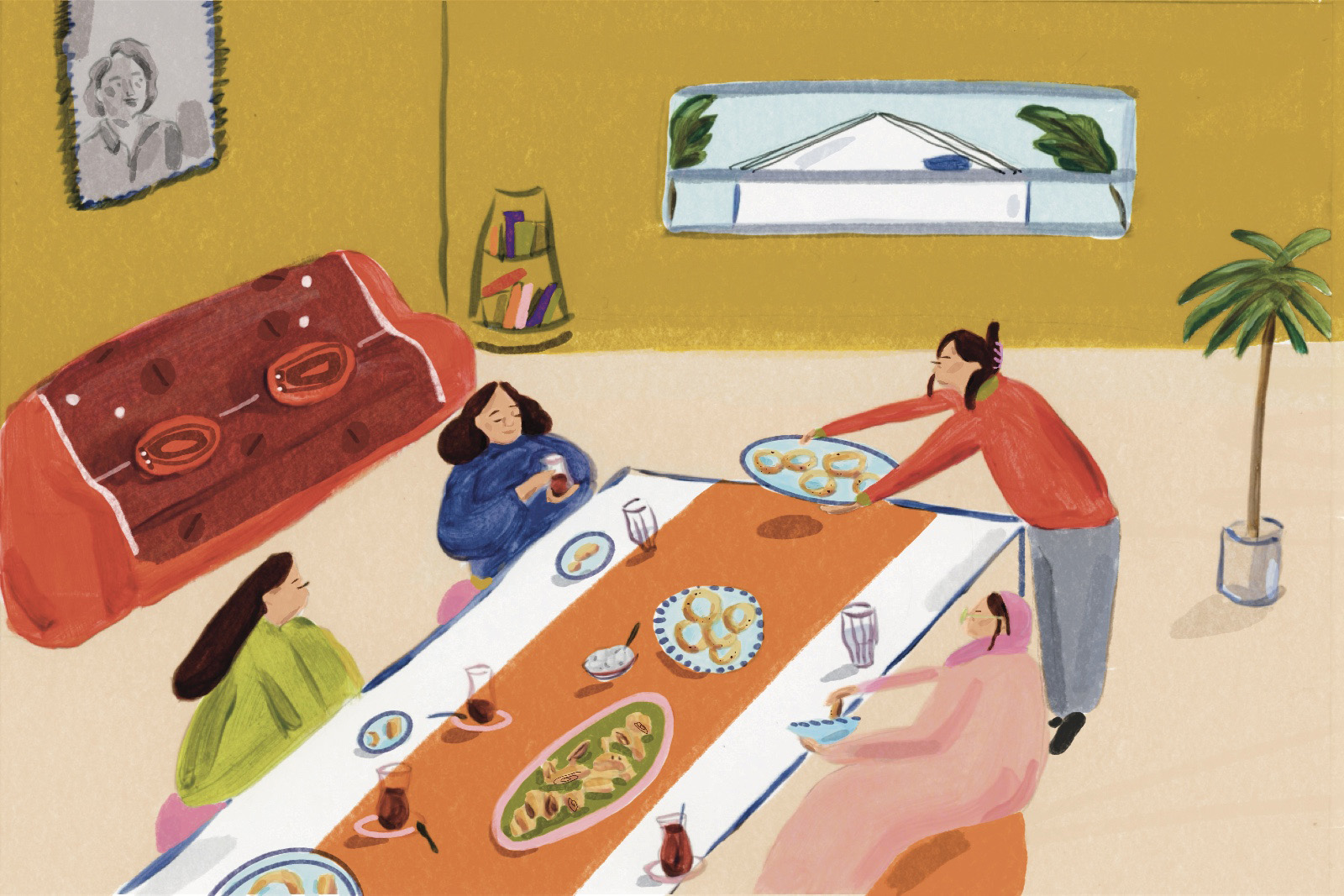
Eight hours later, I sit down in Cairo at a table laden with my favourite foods that my auntie has spent all day cooking. I gobble it all up and ask for more. She laughs and tells me this trait is uniquely Egyptian, and for a moment I feel like I’m home.
It is only when we are gathered around the table, the food of my family piled between us, that I become less mutt, less outsider, less alien. Even if it’s only for the time it takes us to eat the meal, we are all singularly united by our love for our food. It becomes our access point. The thing we all share. The ingredients that bind us. The flavours that make us. The anchor to finally settle my wandering heart.
Read more of the family trees series here.