

German-Iranians urge Europe to sever diplomatic ties with Tehran
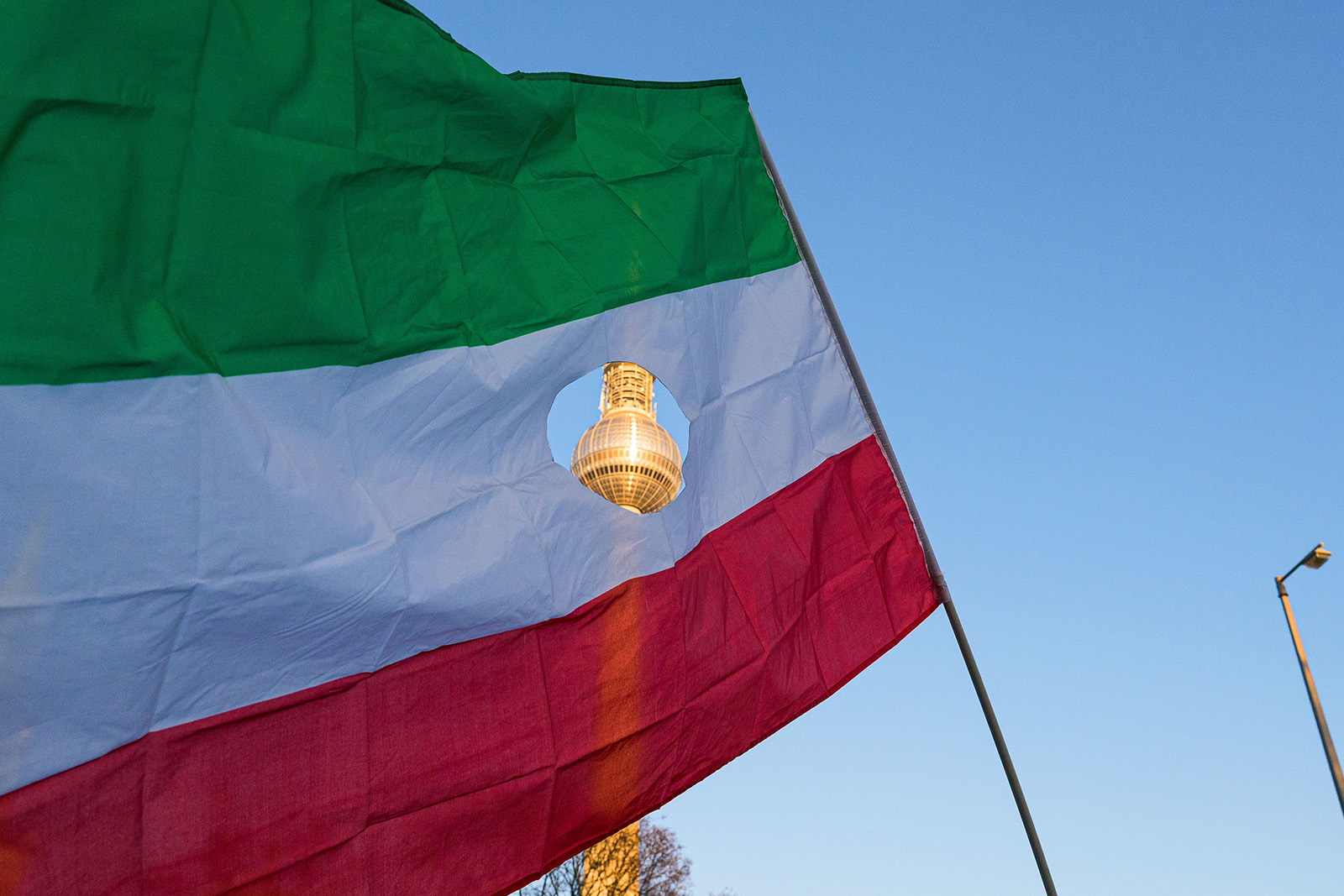
Dissidents on the streets in Berlin told Hyphen they wanted to see ‘real action’

Iranian dissidents in Germany say European leaders must take “real action” and cut diplomatic ties with Tehran amid a brutal crackdown on anti-regime protests in which more than 3,900 are believed to have been killed and many more injured.
In Germany — home to the largest Iranian diaspora in Europe, a diverse community of more than 300,000 — thousands have taken to the streets in recent weeks to march in solidarity with Iran’s protestors. A communications blackout in place since 8 January has hampered accurate reporting on the crisis in Iran, but it appears the government has now largely quelled demonstrations that began on 28 December in response to the collapse of the economy and quickly escalated into a popular movement to oust the 47-year-old regime.
“We want to see real action, not just conversations with a regime that is killing people,” said Amir,* who arrived in Berlin from Tehran six years ago. The 38-year-old was attending a demonstration in the German capital on Sunday, holding a handmade banner saying “a massacre is happening”. “[Iranian leaders] should be banned from any diplomatic talks or relations,” he added.
This sentiment was echoed by other diaspora community organisers who spoke with Hyphen.
“European leaders must stop treating Iran as a normal diplomatic partner,” said Ehsan Djafari, president of the Iranian Community in Germany. “A regime that kills its youth has lost its legitimacy. We expect targeted sanctions against perpetrators, international investigations, protection for Iranian activists in Europe, and a clear political distancing from the regime.”
Hamid Nowzari, president of the Berlin Association of Iranian Refugees, also expressed disappointment in Europe’s reaction. “Politicians have been quite vocal in their criticism of Iran,” he said. “But so far, it has remained just words.”
EU diplomats have met with the regime in Tehran, saying they used the meetings to strongly condemn the violent response to the protests.
Germany’s chancellor, Friedrich Merz, has called on the EU to escalate sanctions against Tehran. “The regime’s violence against its own people is not a sign of strength, but of weakness. It must end immediately,” he posted on X. EU Commission president Ursula von der Leyen has promised plans for a new wave of sanctions.
The EU parliament has also banned Iranian diplomats, but Nowzari thinks it should go further. “All EU ambassadors should be recalled from Iran,” he said, “and Iranian ambassadors should be expelled from the EU.”
Activists such as Nowzari believe sanctions should target individuals rather than indiscriminately punishing the Iranian population. Nowzari also says the Iranian Revolutionary Guard should be designated as a terror group — a proposal that has been discussed in the EU parliament without any formal decisions being made.
Additionally, activists are also calling for an immediate stop to all deportations to Iran. Under Merz’s conservative-led government, in power since early 2025, Germany has increased deportations in general by 20%. In the first six months of 2025, 37 Iranian nationals weredeported from Germany, 11 directly to Iran.
The first Iranians to arrive in Germany in the 1970s were mostly students and professionals but, Djafari explains, the years following the 1979 revolution saw the first big wave of activists and intellectuals fleeing political persecution. There followed further influxes during the Iran-Iraq war in the late 1980s and, more recently, as a result of the economic crisis and brutal political crackdown that followed the 2022 Woman, Life, Freedom uprisings.
More than 10,000 Iranians applied for asylum in Germany in 2023, although this number dropped to just over 5,000 in 2024 as Germany’s increasingly tough anti-asylum stance saw refugee arrivals fall by 50%.
Even Iranian dissidents with a right to remain in Germany can be vulnerable. In late November 2025, German authorities and Iranian opposition groups warned that Tehran’s security services had stepped up surveillance and targeting of dissidents abroad. Exiled activists across Europe have been subjected to hacking, cyber-attacks and online harassment, or have been pressured to inform on other exiles.
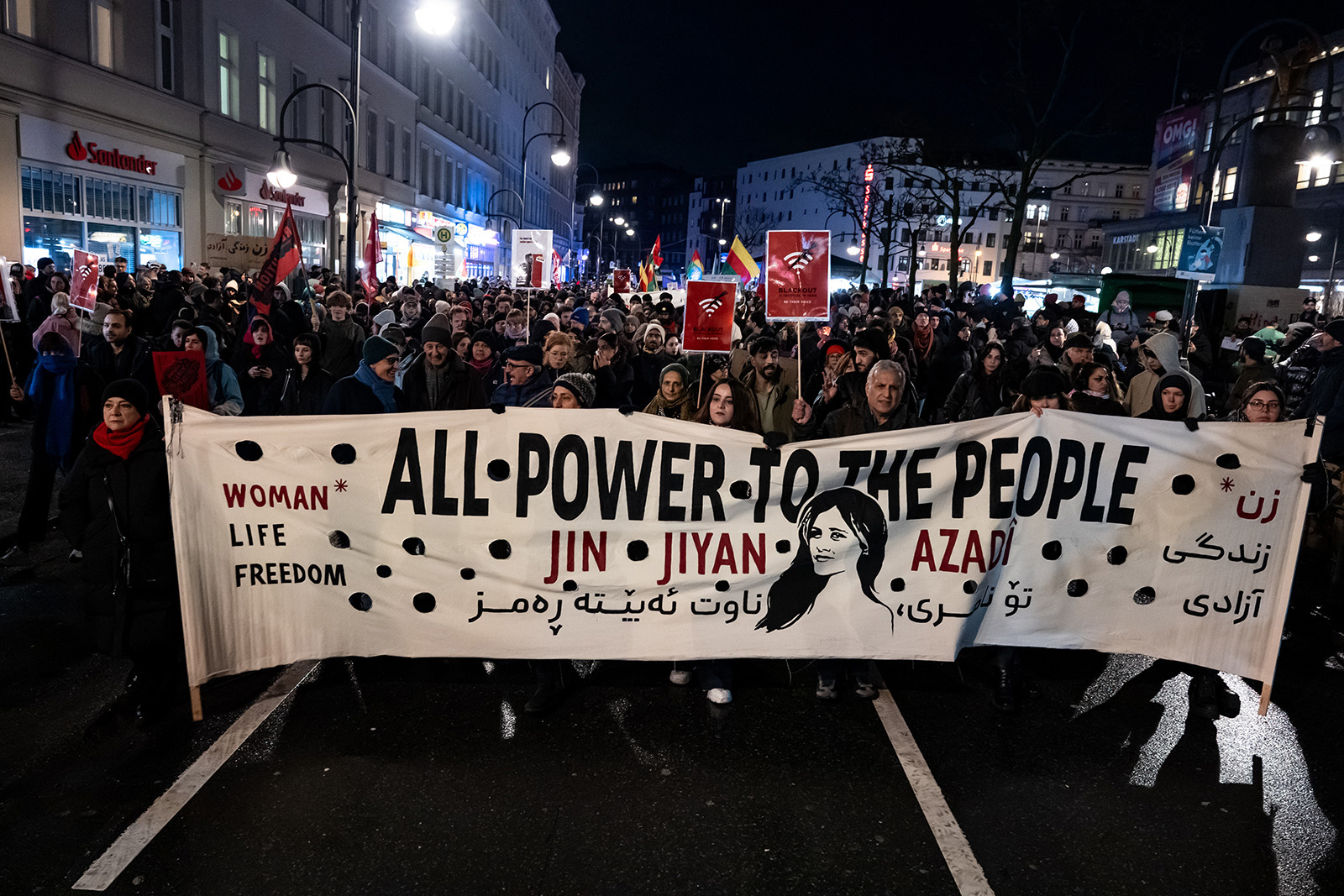
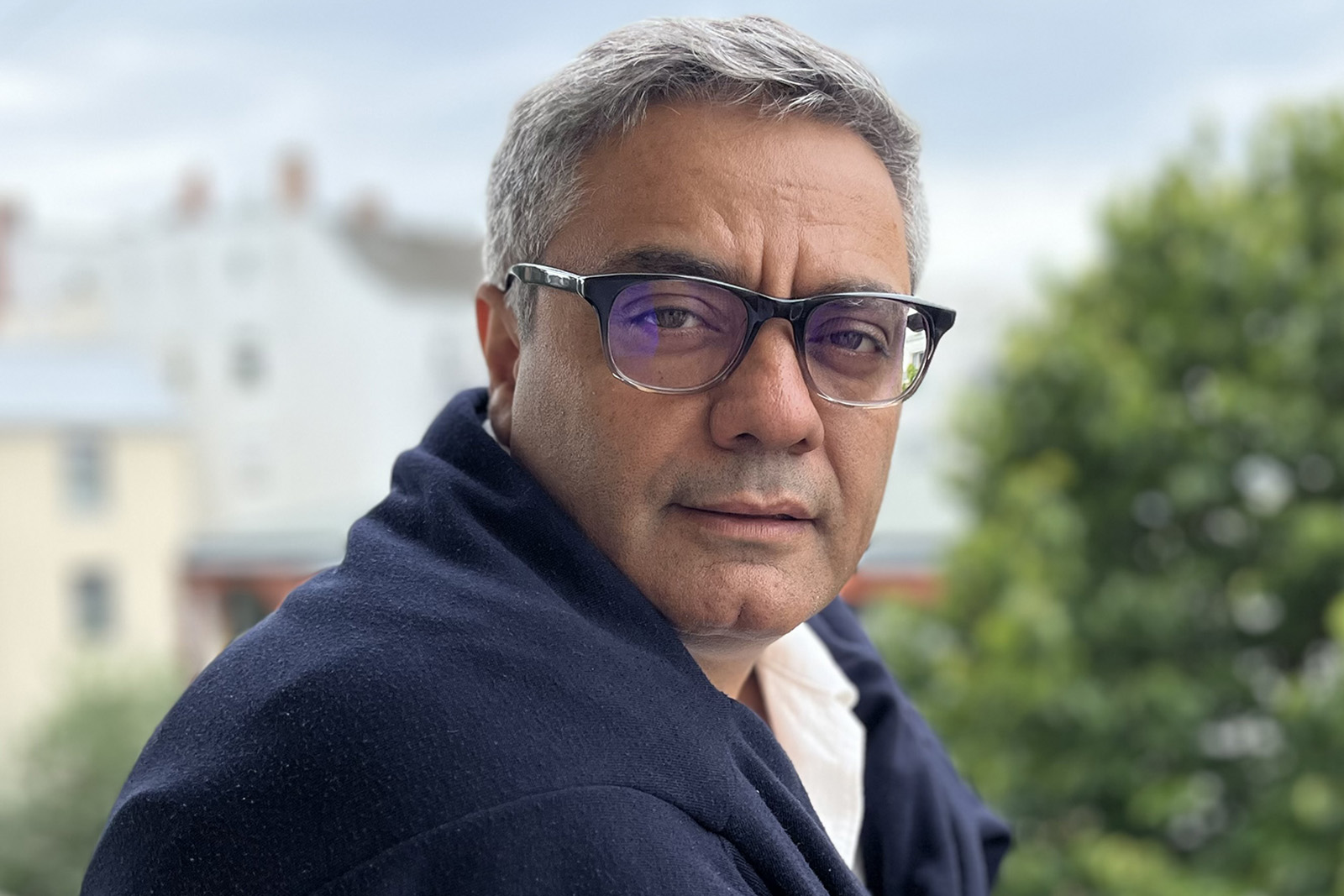
Farhad Barbaei, 48, is an Iranian writer who lives in Berlin as part of the Cities of Refuge programme for exiled artists. He attended the protest in Berlin on Sunday along with around 10,000 others but says some Iranians are nervous about demonstrating in public, even in Europe. Many demonstrators wore face coverings and sunglasses. “We believe people from the embassy come and scan the crowd,” he said. “They can create problems for you if you need to renew your passport or visit family back home.”
Other attendees spoke of their fears for families and friends in Iran, who they are struggling to contact due to the government’s digital shutdown. “I haven’t been able to reach them since last week,” said one of the demonstration’s organisers, who asked not to be named. Many attendees held signs drawing attention to the digital blackout as well as images of some of the 24,000 people arrested since the protest began, including activists such as Erfan Soltani who have been threatened with execution.
This organiser expressed a lack of faith in European leaders to take meaningful action, saying none was taken following the 2022 protests. He was marching instead in the hope that progressive activist groups will unite against the oppressive rule of Iran’s supreme leader, 86-year-old Ayatollah Ali Khamenei.
Related content
The anti-regime movement is diverse. Among those protesting were Bolandgoo and the Berlin Woman, Life, Freedom collective, with many attendees carrying the plain red, green and white Iranian civil flag. Some in the crowd chanted “no mullahs, no kings” — a rejection of groups who support an exiled Iranian prince proposing to reinstate the country’s monarchy. Saturday had also seen demonstrators on the streets of Berlin waving the Pahlavi flag of the deposed shah.
While commentators believe the regime is likely to survive this crisis, German Iranians say it has re-energised activists in exile. “Iran has never left our hearts,” said Djafari. “The current uprising has reactivated a collective memory of resistance and hope that many thought had been buried.”
* Name has been changed