

The Cypriots united in hope for reunification
After more than 50 years of division, the election of a pro-European moderate as president of Turkish-occupied Cyprus has raised hopes of peace

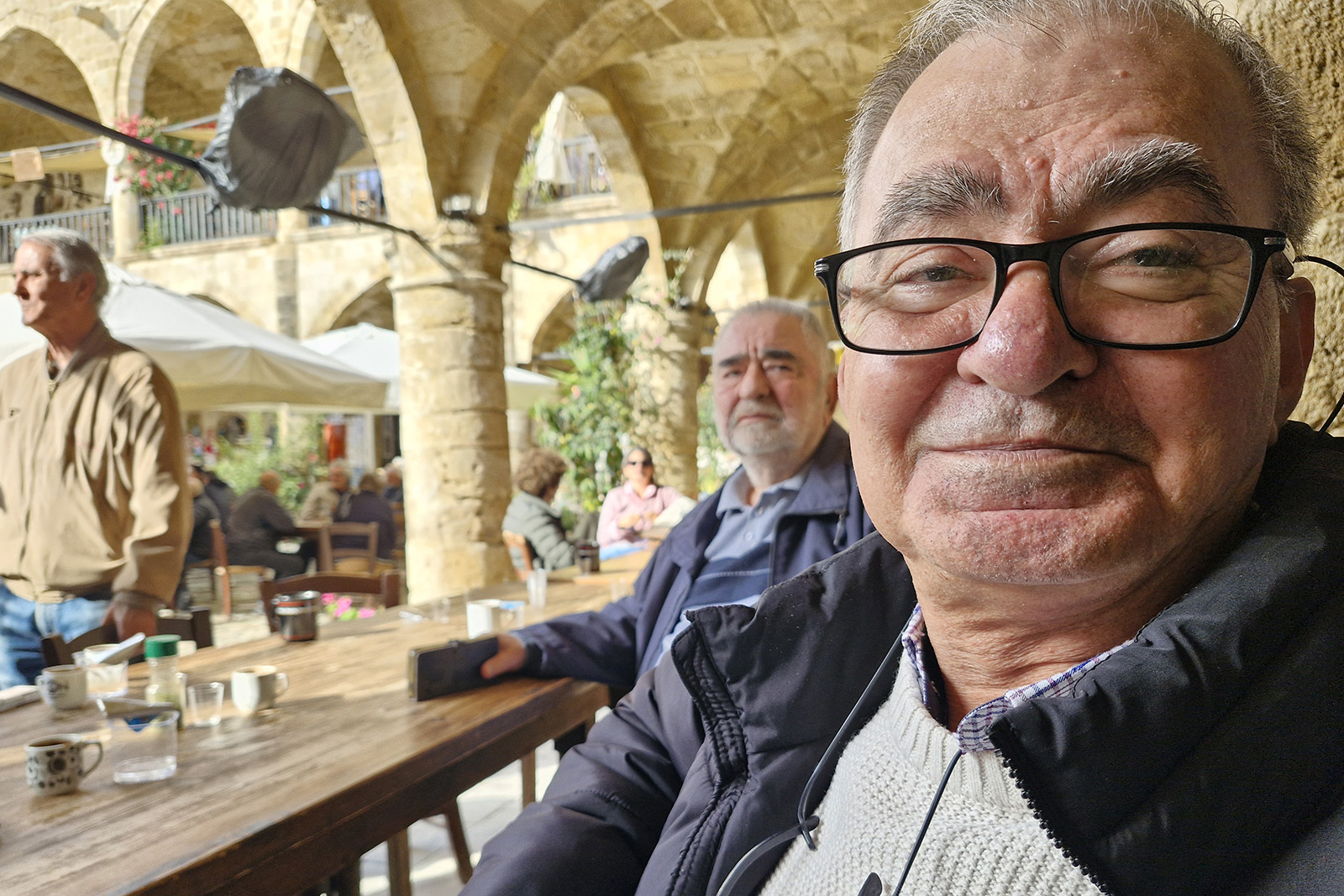
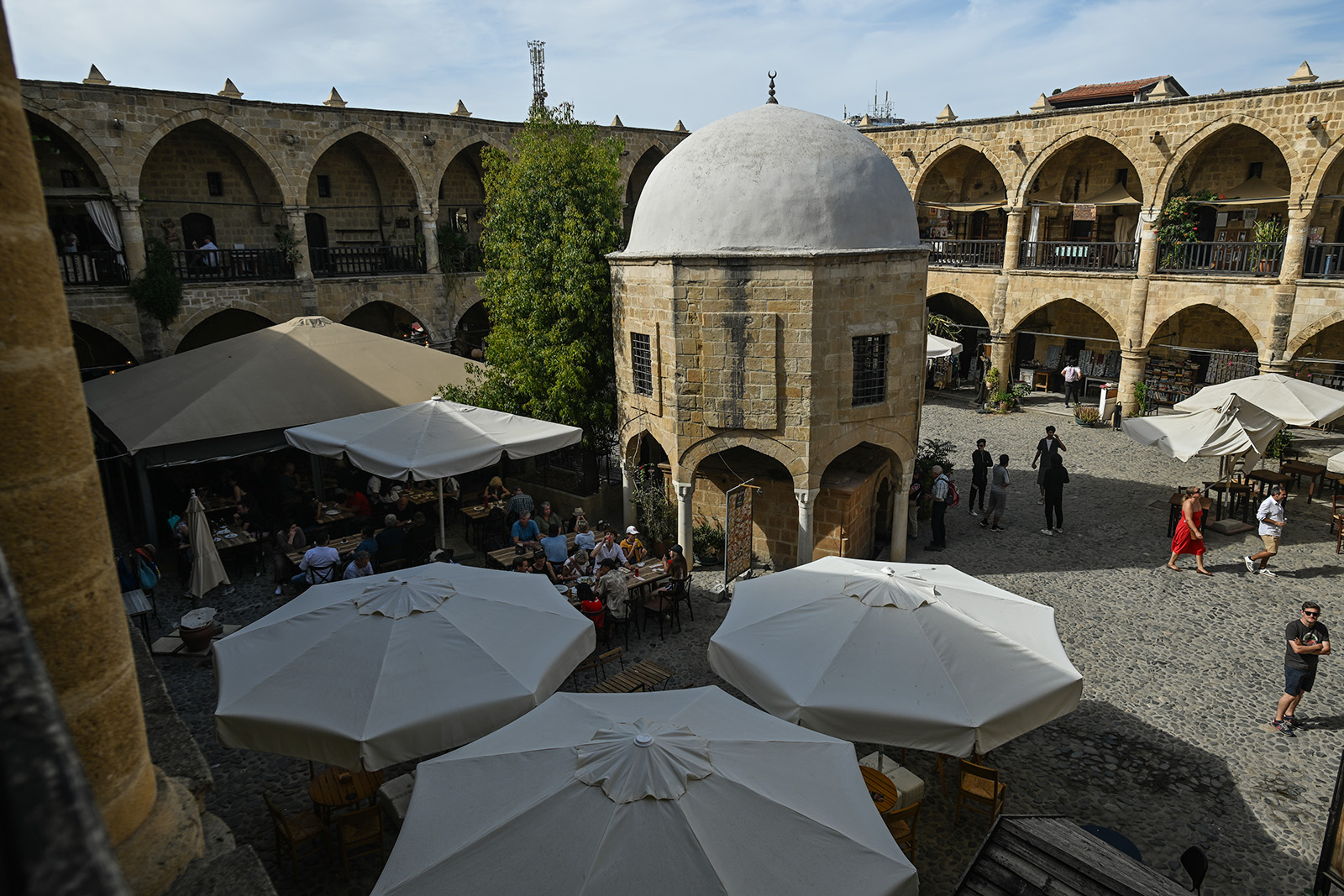
The Traitors’ Club has met at the Büyük Han (Great Inn) in Cyprus’ Turkish-occupied north every Saturday since April 2003, when crossing points first opened along the ceasefire line that divides Nicosia. Over small cups of coffee and the odd glass of zivania, a potent local brandy, its Greek and Turkish Cypriot members have put ethnic differences aside to gather under the sandstone arches of what was once one of the most opulent inns in the eastern Mediterranean region, metres from the capital city’s partition line.
For any outside observer, it is a meeting of friends bonded by the invisible ties of camaraderie and shared heritage. Yet what unites the group — one that on good days will see several dozen coalesce around the same wooden tables at the Büyük Han — is the dream of ending the dispute that has kept Greek and Turkish Cypriots living in two very different worlds, either side of the island’s UN-patrolled buffer zone, for more than 50 years.
When the club gathered for its end-of-year get together in December, a rare optimism, fuelled by the possibility of longed for change, was in the air. Two months earlier, Tufan Erhürman, a pro-solution moderate, had been elected president of the breakaway Turkish Republic of Northern Cyprus (TRNC).
“Finally, we feel there is room for hope,” said Hasan Chirakli.
At 72, the retired chocolatier helped found the Traitors’ Club — so named because it was felt its members betrayed the nationalist cause of their respective Muslim and Orthodox Christian communities. Like Vassilis Petrides, the 71-year-old Greek-Cypriot owner of a food and beverage distribution company sitting beside him, Chirakli has sought to make up for lost time in the almost 23 years since Turkish Cypriots were allowed to mingle freely with their Greek compatriots. Not a weekend has gone by with him missing the Traitors’ Club.
“Mainstream politicians may call us romantics,” said Petrides, eliciting a chuckle from his Turkish Cypriot friend. “They may consider us non-realistic, say that we are lovers of any solution because we believe in reunification so strongly, but all we want is to end this artificial division and live in a normal country.”
Both men were children when they experienced the violence that would estrange their communities. Three years after the former British colony won independence in 1960, inter-communal strife triggered the collapse of a turbulent spell at power-sharing in the newly created republic. Turkish Cypriots withdrew into enclaves, setting the scene for the invasion that would ensue when Turkey, in its role as a guarantor power, intervened in defence of the minority more than a decade later.
Cyprus now sets the record for being the western world’s longest running diplomatic dispute, with negotiations stalled since 2017. But in Erhürman — the 55 year-old, bespectacled academic respected as a leading expert in bi-communal affairs — Chirakli believes his community has finally found the man who can “please Ankara enough to strike a deal”.
In the 42 years since the TRNC unilaterally proclaimed independence, the territory has been recognised only by Turkey, leaving Turkish Cypriots under a trade embargo and isolated internationally.
The desire to break free of such diplomatic exclusion was key to Erhürman, the pro-European leader of the Republican Turkish party (CTP), securing a resounding 62.8% of the vote on 19 October when Turkish Cypriots cast ballots for the election of their sixth president. Ersin Tatar, the hardline nationalist in power since 2020, picked up 35.8%, ruling out the need for a second round vote a week later.
“It was a great win,” enthused Chirakli. “It proved that nationalists are now in the minority and people, like us ‘traitors’ are the majority. Tatar wanted something the international community would never accept: a two-state solution. For five years nothing happened. Turkey supported him and there was no move towards peace.”
On either side of the country’s ethnic divide, analysts have seen Erhürman’s victory as concrete evidence of Turkish Cypriots wanting to not only change course, but to embrace a settlement that will cement their place in Europe.
Cyprus has been split between Turks in the north and Greeks in the south since 1974 when, responding to a coup sponsored by the junta in Athens to unite the island with Greece, Turkey invaded and seized its northern third. An estimated 40,000 Turkish troops have been stationed there ever since.
At the time of the incursion, Turkish Cypriots accounted for 18% of the population. In the years that have elapsed they have been outnumbered by settlers, encouraged to relocate from mainland Turkey, whose children, according to political scientists, also voted overwhelmingly in favour of Erhürman.
Özdil Nami, the TRNC’s former foreign minister, told Hyphen the dramatic demographic decline had “without doubt” contributed to the new leader’s landslide victory.
“People really want to see a solution in the north,” he said. “There is this overwhelming sense that things are changing here very rapidly and that the Cypriot part of our identity is eroding very fast. Turkish Cypriots value their Cypriotness just as they do their Turkish identity, but they also regard themselves as European and see their future in Europe and the EU. This non-solution situation puts all of that in jeopardy.”
Cyprus joined the EU as its easternmost member in 2004 but its accession was not without controversy. Barely a week earlier Greek Cypriots had overwhelmingly rejected a UN-brokered peace plan to reunite the country as a bi-zonal, bi-communal federation. Turkish Cypriots had overwhelmingly supported the blueprint.
The island’s continued division meant that when membership finally arrived — a move hailed in Brussels for extending the bloc’s reach into the eastern Mediterranean — EU legislation was suspended in the breakaway north. While Turkish Cypriots are entitled to EU citizenship as Republic of Cyprus passport holders, vital EU subsidies that could improve infrastructure and everyday life have been put on hold until a settlement is achieved. The TRNC is, instead, forced to depend on Turkey for financial support.
“And most of us do not like what Turkey does here, the way it interferes in our lives and tries to stoke religious animosity,” said Şener Elcil, a veteran peace activist who for years headed the Turkish Cypriot teachers’ trade union. “We take pride in our secular identity. Cyprus is in a region where there is the issue of [underwater] energy [deposits] and everything is changing. Turkey is integral to a solution but more and more I am hearing concerns that a settlement may be imposed on us by Trump, for example. The US ambassador to Ankara has referred to Cyprus as an ‘abscess on an otherwise healthy body’.”
In a world of changed realities, the frozen conflict, he insisted, has to be solved. “2026 will be a critical year,” he smiled.
In January Cyprus assumed the 27-member bloc’s rotating EU presidency. Tellingly, Turkish Cypriots did not attend the 7 January opening ceremony in Nicosia. However, in the north, officials are hopeful that the country’s six-month stint at the Union’s helm will place renewed focus on the need to resolve the partition issue at a time of acute geopolitical uncertainty.
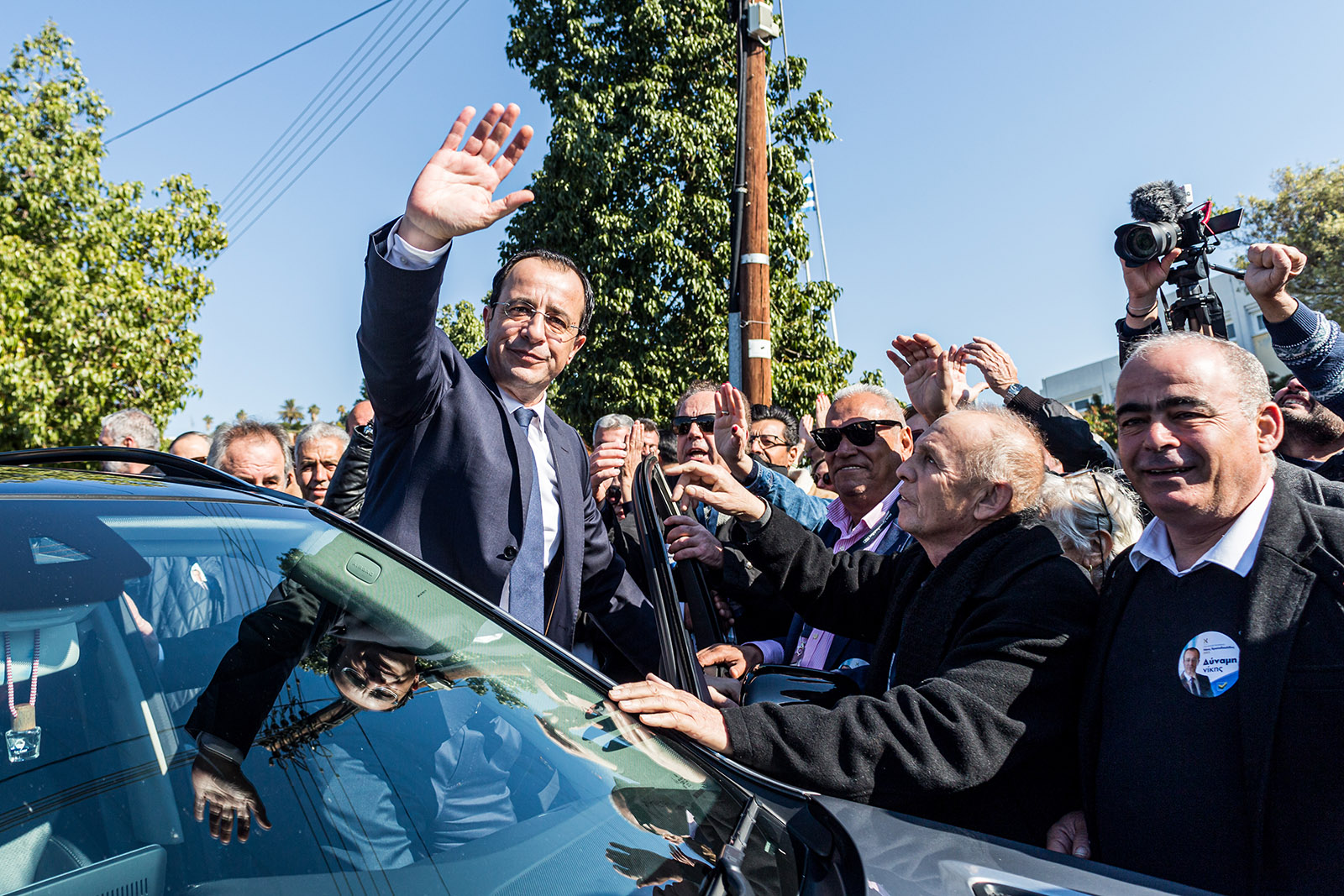
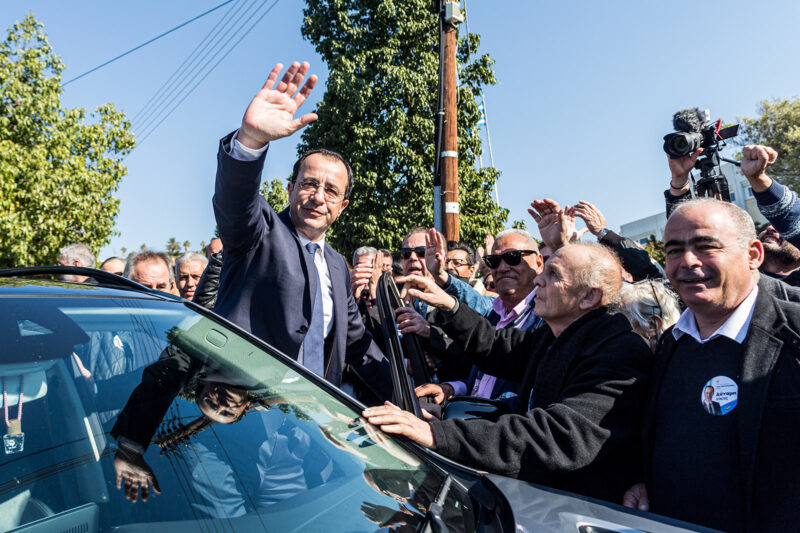
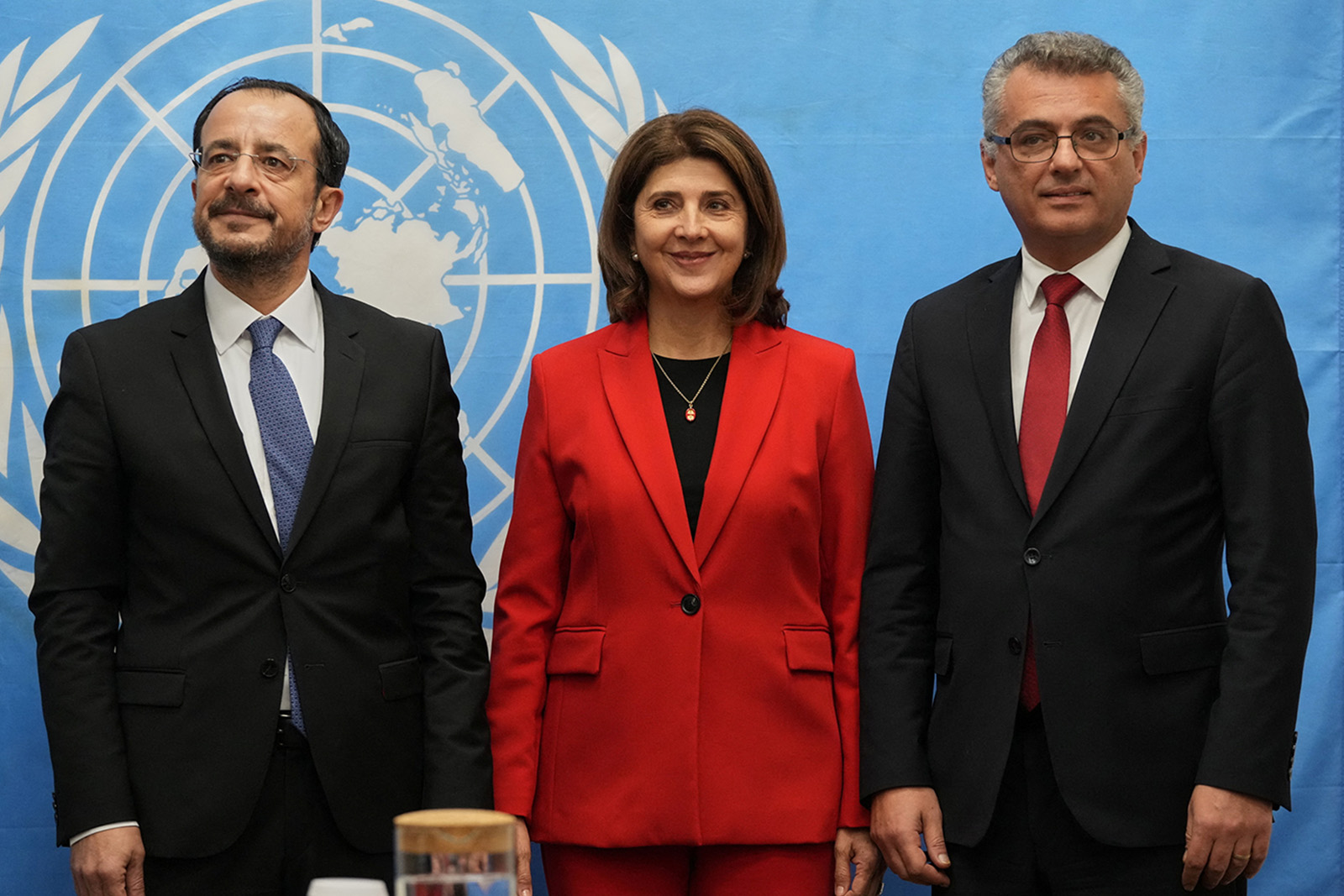
A first meeting between Erhürman and the Greek Cypriot president, Nikos Christodoulides, had been encouraging, Nami said. “The body language was definitely warm and afterwards both made positive comments about each other,” he said, singling out the credit Erhürman had given Christodoulides for insisting the EU presidency “would not be an impediment” for peace talks taking place. “And Mr Christodoulides said clearly we have a new opportunity to resume talks.”
The UN secretary general, António Guterres, has added to the optimism. Soon after the year began he described “a new moment of opportunity” to solve the Cyprus problem.
All agree that time is now of the essence. Greek and Turkish Cypriots may not share the unrestrained hope of regulars at the Traitors’ Club, but like them, they are in no doubt that with memories of co-existence fading fast, this is likely the very last chance of bridging the ethnic divide. And, if done well, finding a lasting peace.