

The legacy of Bradford City of Culture 2025 will live on for years to come

A year of creativity and celebration has brought confidence, economic opportunities and a sense of possibility to visitors and residents alike
Before January 2025, I’d visited Bradford only twice. Both times, I’d passed through briefly — once for work, the other for a wedding — without spending much time in the centre. Like many across the country, I was aware of the city’s reputation as a place of post-industrial decline and deep social tensions, but this year, during its tenure as UK City of Culture, I discovered another side of the story.
At the start of the year, I braved the cold and stood with 23,000 people celebrating the start of the year-long programme at Rise, the opening ceremony directed by Kirsty Housley and Bradford-born Steven Frayne. The excitement was palpable as the crowd cheered on performers from across the district, including Frayne, under his magician stage name Dynamo. It was there that I realised that I had seriously underestimated the city and all it has to offer.
Now, on a grey December afternoon, I’m back in the city centre, visiting one of the more than 1,000 events held this year — Our Story, Our City — an exhibition featuring photographs of Bradford residents from the year 2000 to the present day.
Related content
When Bradford was announced as UK City of Culture, expectations were high. Beyond the cultural programme itself, which has included everything from art installations to music and dance, there were hopes that the designation would help to rewrite the city’s narrative for people from outside of the city and those who live there.
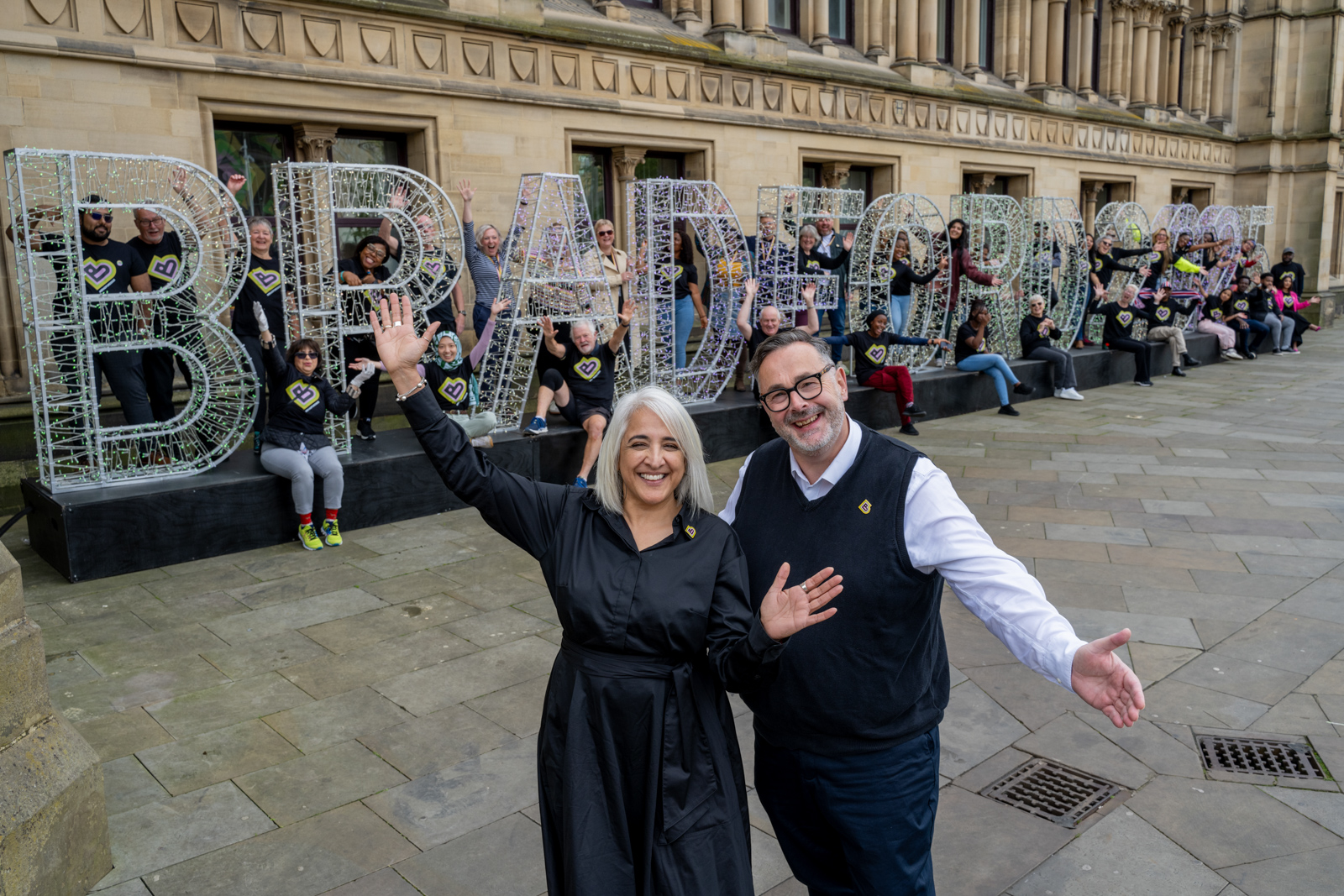
For the festival’s creative director, Shanaz Gulzar, the year has exceeded even her own ambitions.
“I don’t think it could have gone better than it has,” she says. “It’s been stunning — the engagement we’ve had from audiences and communities, Bradford residents, people from across the country and across the world, and the pride that Bradford residents feel.”
That idea of opening up the city’s cultural life to new audiences has been a key element of the programme. Gulzar says visitors have been surprised by Bradford’s rich history, ornate architecture and, most importantly, its people.
“There’s been so much discovery of Bradford,” she says. “The warmth, the welcome, the hospitality — those stories have travelled.”
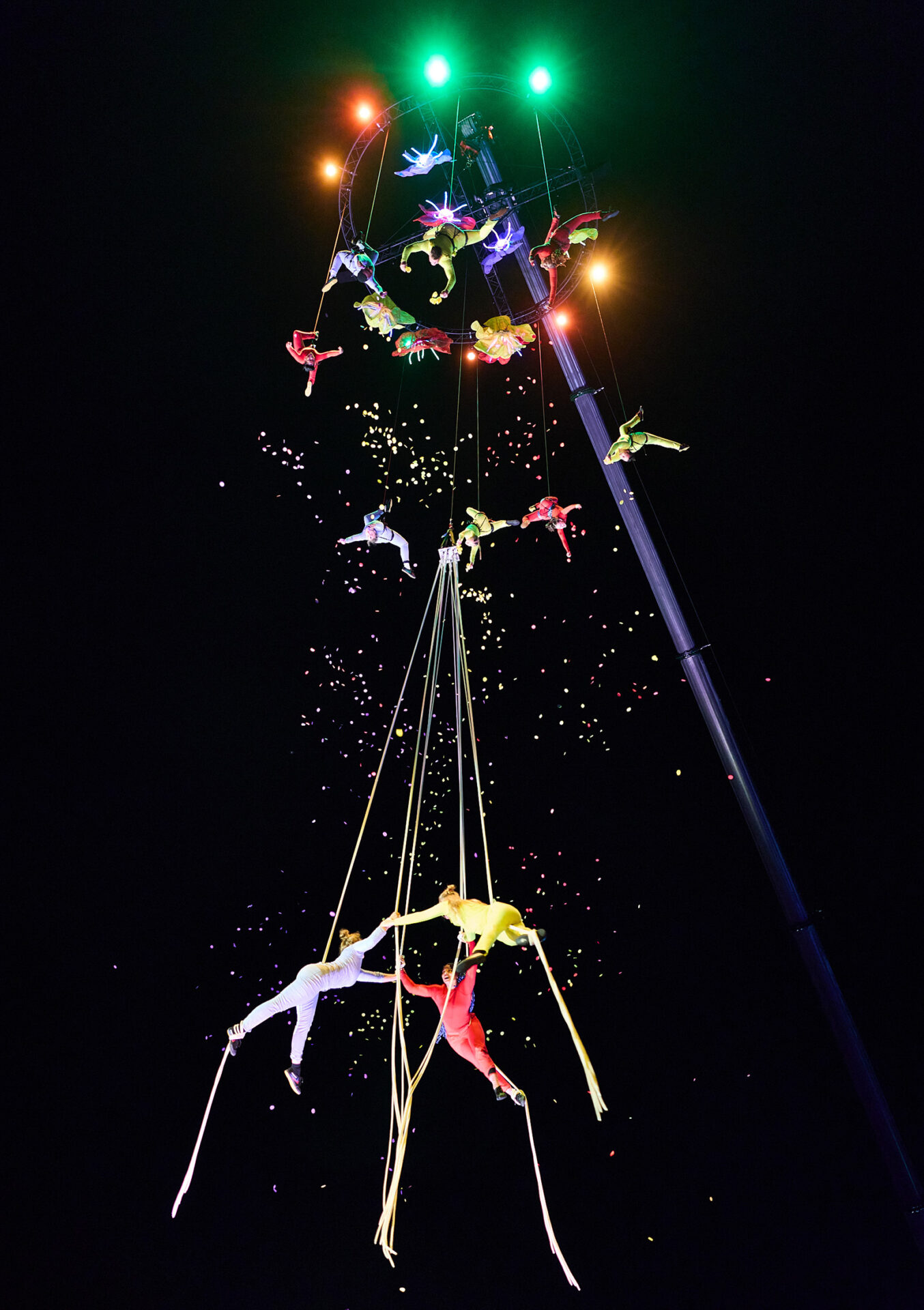
Throughout the year, Bradford 2025 has relied heavily on local participation and talent. From large-scale outdoor performances to exhibitions, workshops and neighbourhood-based projects, the programme was designed with residents, not just for them.
More than 900 people put themselves forward for 14 spots in Bloom, an outdoor aerial performance in September, even though taking part involved learning circus skills and performing suspended from cranes.
“That level of response shows how much people in Bradford have owned the programme,” says Gulzar.
That feeling of ownership is visible on a smaller scale, too. At Our Story, Our City, I met Antonio Gesso, a 31-year-old volunteer who has lived in Bradford all his life. He began volunteering with Bradford 2025 in February, shortly after attending Rise.
“I just thought how amazing it was,” he tells me. “I wanted to help the community and also build my skills.”
Since then, he has completed more than 70 volunteer shifts alongside a part-time job at a sports centre.
For Gesso, volunteering has been transformative. “It’s been one of the best years of my life,” he says. “You meet people from different backgrounds and from far away. You try things you wouldn’t normally try.”
He adds that the experience has helped him, as an autistic person, to grow in confidence. The programme has also reshaped how he sees his home town.
“I didn’t realise how much history we had on our doorstep,” he says. “This year made me realise there’s something special about Bradford.”
Figures released in July — the halfway point of the programme — revealed that around 1.1 million people have visited Bradford 2025 projects, with more than 40,000 local people taking part through volunteering and performances. More than 500 local artists and organisations had also contributed to the programme by that point.
According to early figures shared by Gulzar, more than 80% of attendees said City of Culture events had a positive effect on their wellbeing, while eight in 10 residents reported feeling proud to be from Bradford, and seven in 10 said they felt more connected to their community.
The programme’s reach has extended beyond arts and culture. Gulzar highlights work with schools and health organisations, including partnerships with Mind in Bradford. Over the year, Bradford 2025 has worked with around 165 schools, delivering workshops, outdoor learning and initiatives such as Bradford Made, which provides teaching resources based on stories from the city’s history to help students engage with local heritage through creativity.
“We’ve seen creativity brought back into schools in a way teachers can really see the benefit,” she says.
As for the City of Culture’s economic effects, the final figures are still being collected, but Gulzar anticipates positive results.
“We’ve had anecdotal feedback from businesses that they’ve seen an uplift,” she says, particularly around major events. Local hotels, she adds, have also reported increased bookings when larger events have taken place.
According to figures from Bradford Business Improvement District, footfall in the city centre rose by 25% in early 2025, compared with the same period in the previous year.
Business owners I spoke to were, however, quick to point out that those increases haven’t been felt evenly across the city. Lisa Zhan, 24, manages Pawpaw, a bubble tea shop a stone’s throw away from City Park, where Rise took place in January. She explains that while she has noticed more people in the area during events, that hasn’t always translated into higher takings.

“A lot of people are just passing by,” she says. “The weather probably has more impact on business than events.”
A few streets away at Lefteris Cafe, manager Terence Igbokwe, 54, paints a similar picture, saying that the first few months of 2025 felt promising.
“The footfall did triple at the beginning of the year,” he said. “You could feel it — the events brought people in.”
But that momentum, he says, wasn’t sustained. As the year went on, the number of visitors to his part of the city centre declined, with many gravitating towards larger retail areas such as Broadway — Bradford’s main shopping centre.
“It’s very directional,” he says. “People come in looking for the shopping centre, and once they’re there, they don’t always move beyond it.”
For Igbokwe, who has lived in Bradford for 20 years, City of Culture status has improved the city’s appearance and atmosphere, but hasn’t yet translated into long-term security for small hospitality businesses.
“The aesthetic is better, it feels more welcoming,” he says. “But attracting people to stay, spend time, and come back — that’s the harder part.”
As Bradford 2025 draws to a close, questions about what comes next are already on the minds of many local people. The city has enjoyed positive attention, investment and a different kind of energy over the past year, but the real effects will be judged after the spotlight dims.
For Gulzar, those long-term benefits have always mattered more than those of a single year. Speaking a few days before the closing ceremony, Brighter Still — a large-scale open-air production in Myrtle Park featuring hundreds of performers — she emphasises that the City of Culture’s mission will not end with the grand finale, but will continue to be built on for many years to come.
“Legacy isn’t overnight. It takes time,” she says. “But the fact that people are still excited, still showing up, and we still have that sense of engagement, even as the year comes to an end — that’s something to be immensely proud of.”