

My mother gifted my girlfriend a saree of purple threads, holding my queer family together

I still look for a future in which families like mine, who are both trans and religious in nature, might survive without losing one another

The living room in my family home smells of turpentine and jasmine, two scents that have been a constant throughout my life. A solvent that stings the nose and a soft fragrance that clings to the edges of fabric. The house I grew up in has always been alive with contrast this way.
Mariam, my partner, lives with my parents and me — an addition to this household forged through our romantic life together. She moved in almost by accident. When I was unwell a couple of years ago, she split her days between her flat and the edge of my bed to look after me. Eventually she stayed.
To their credit, my parents took it better than expected. They could see Mariam made me happier than I’d ever been on my own. Her presence reshaped the predictable flows of the home, revealing both the warmth of my family and the limits of their acceptance. Her living with me also made visible perhaps what was always there: parental love blunted by the trappings of religion and tradition.
For all its warmth, this is a family that only partially accommodates both my transgender identity and my life with Mariam. Our romantic relationship exists here at home, but only in fragments, always cut up by the margins of my parents’ faith and rules.
Related content
A few lucky people get on easily with their parents, but for most of us — especially those whose identities run counter to the religion, culture and expectations we were born into — family life can be a source of complications and frequent misunderstanding. Though I reassure myself by looking for the good in what I already have, old tensions somehow always seem to surface.
Mariam and my mum have never had a smooth relationship. Something in my mother’s love is always rationed or withheld from my partner, who is only ever kind and understanding. Toward me, however, my mother is at her most generous in giving me the love I need, albeit not full acceptance. I suspect her unease isn’t really about Mariam at all. It’s about me and what I’ve become; what our relationship represents. A queer life, a transgender life, in a household hoping for something else.
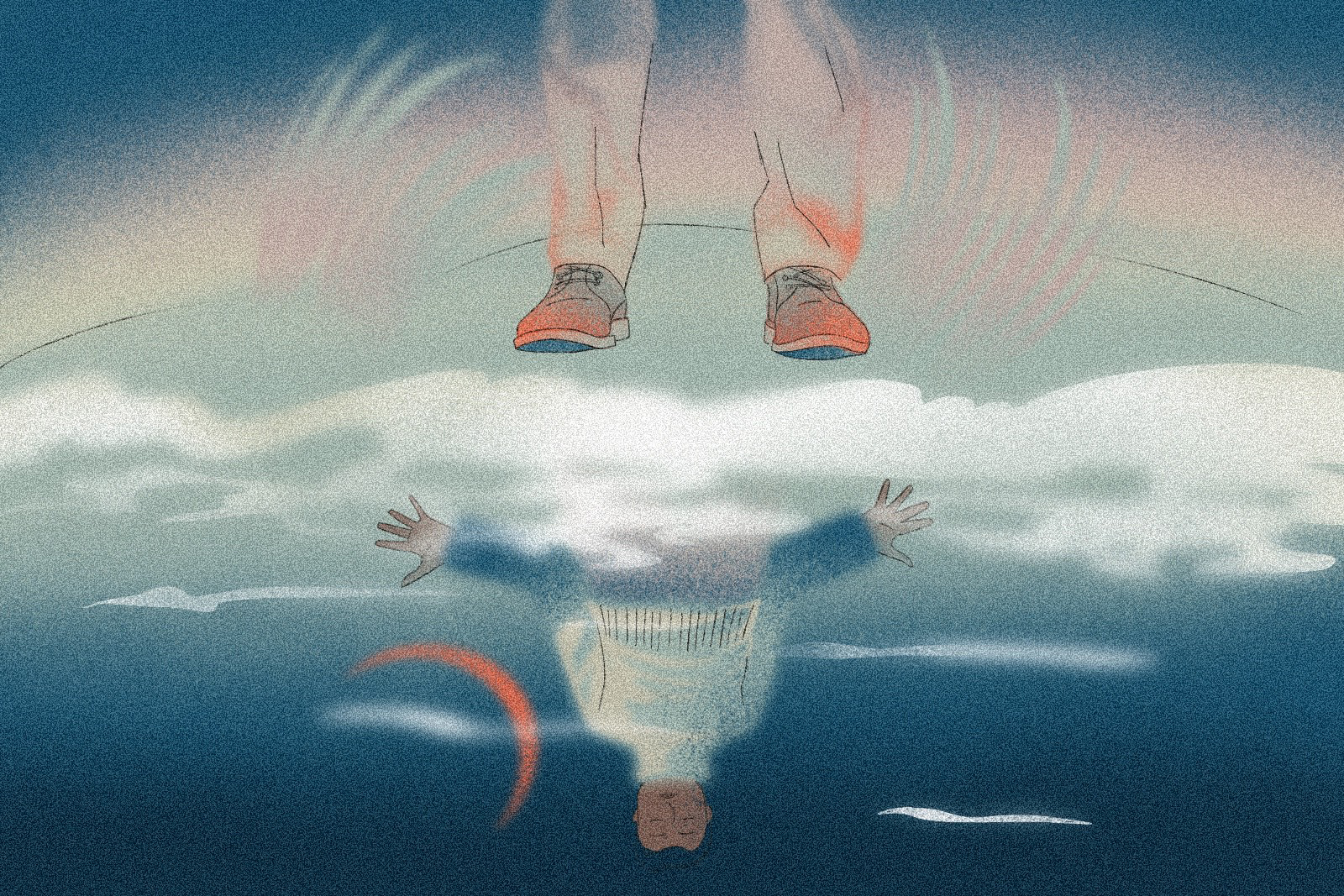
My partner meets me as I am, while my mother looks at me and sees the girl I was before transition. Loving them both means being caught between two versions of myself.
I am envious of those whose family love requires no negotiation, no compromise, nor constant weighing of words and gestures. Those who live inside “ordinary” relationships. But these are the cards I have been dealt and I have grown to accept that.
Though I wait for some secret part of my parents to open up and accept us entirely, I find comfort in the small gestures of care that remind me they are, at their core, good and kind people who I will always love despite the difficulties.
One of those small comforts came on the day earlier this year when my mother returned from Bangladesh, her suitcase lying open on the living room floor waiting to be unpacked. That evening we all sat together as she took out the last of her things — small jars of mishti wrapped in newspaper, handwoven fans from her village. Among them, she had a saree as a gift for my partner, a deep, rich purple fabric embroidered with delicate gold thread. It felt hugely significant.
Mariam is half-Pakistani with Spanish heritage and, in my mother’s gift, I saw an act bridging cultures. Her love, usually rationed, had found a channel. For a moment the future felt close enough to picture. A life with all of us happily in it together. A life that may look unconventional to others, may be judged or dissected, but is still the one I choose.
Related content
The next morning, my mother guided Mariam on how to fold and drape the saree, showing her how to wrap the fabric around her shoulders and waist, and how to pin the pleats around her torso so they stay in place.
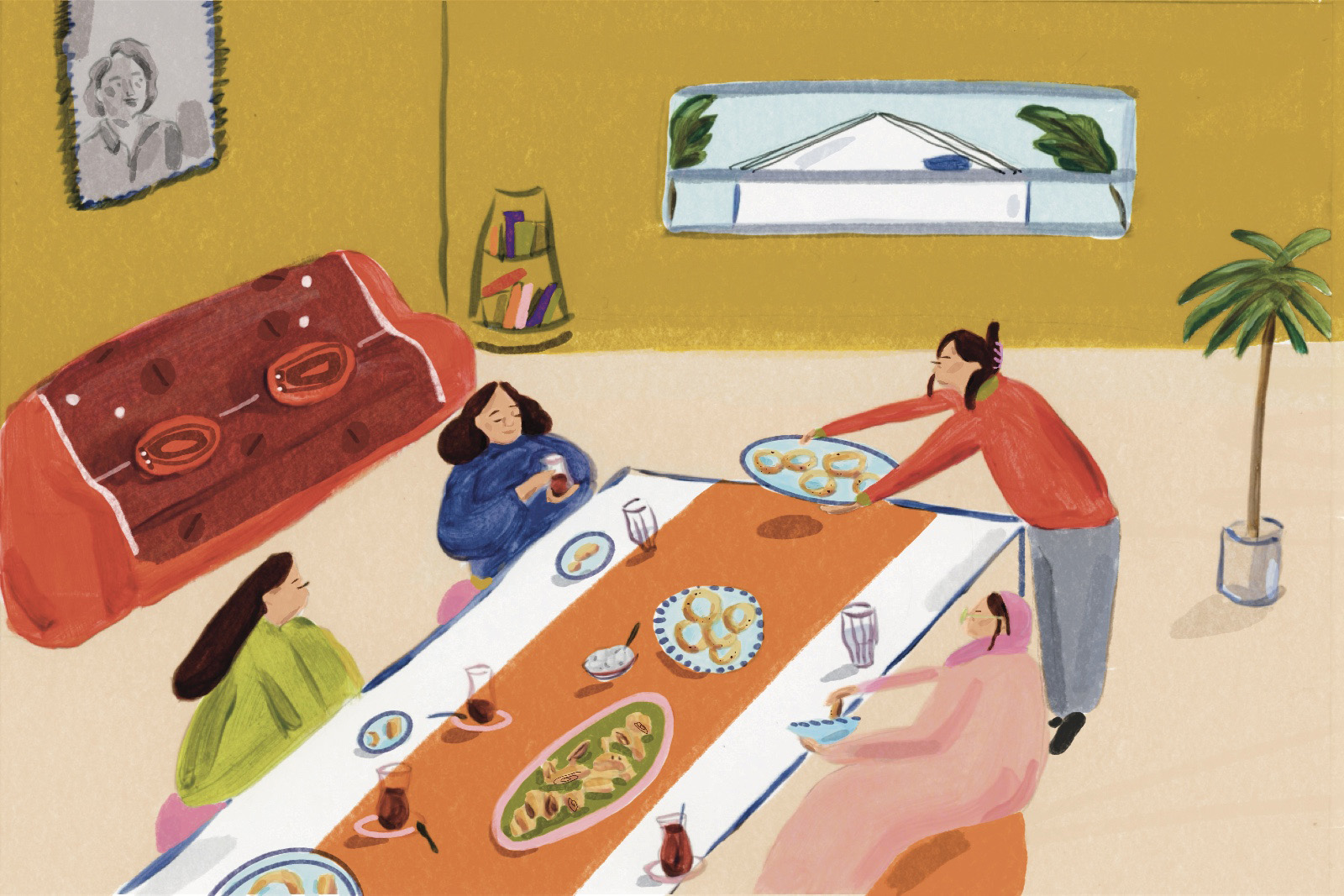
In those golden threads that line the purple cloth, I see my life held together not by full understanding or approval, but by small tolerances. I hope that this is enough for now. It is a modest dream. Sometimes it’s as simple as my parents, partner and I, sitting together in one room. A television on in the background while tea sits on the counter. In a world where many families are dispersed and divided, this fragile togetherness feels like something I shouldn’t dismiss or take for granted.
This, I think, is what it means to be a family. To inhabit the same walls, somehow simultaneously at odds and aligned, testing the limits of patience and understanding.
Of course, I still look for a future in which families like mine, who are both queer and religious in nature, might survive without losing one another. Whenever Mariam wears her saree, I think that perhaps we already have the faintest beginnings of that.