

What a mosque fire shows about Muslim life in Pedro Sánchez’s Spain
Spain positions itself as a progressive outlier in Europe. But the authorities’ response to a suspected arson attack has highlighted gaps in justice

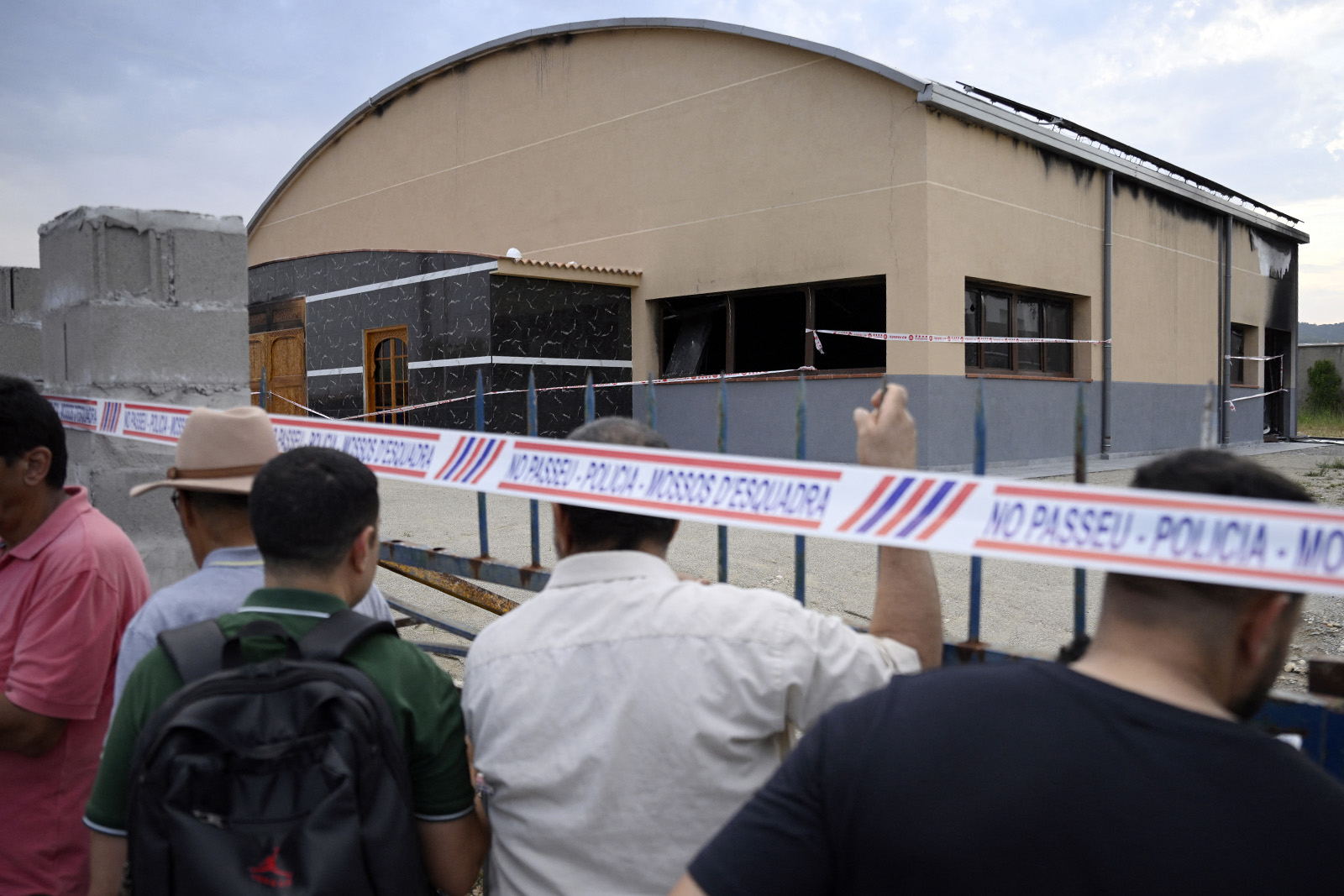
Early one Saturday morning in July 2025 in the quiet commuter town of Piera, an hour from Barcelona, a mosque was set on fire days before it was due to open.
“We found everything destroyed, everything burned,” said Yahya Mokhtari, the mosque’s president. “The whole community was very angry and very sad.”
Related content
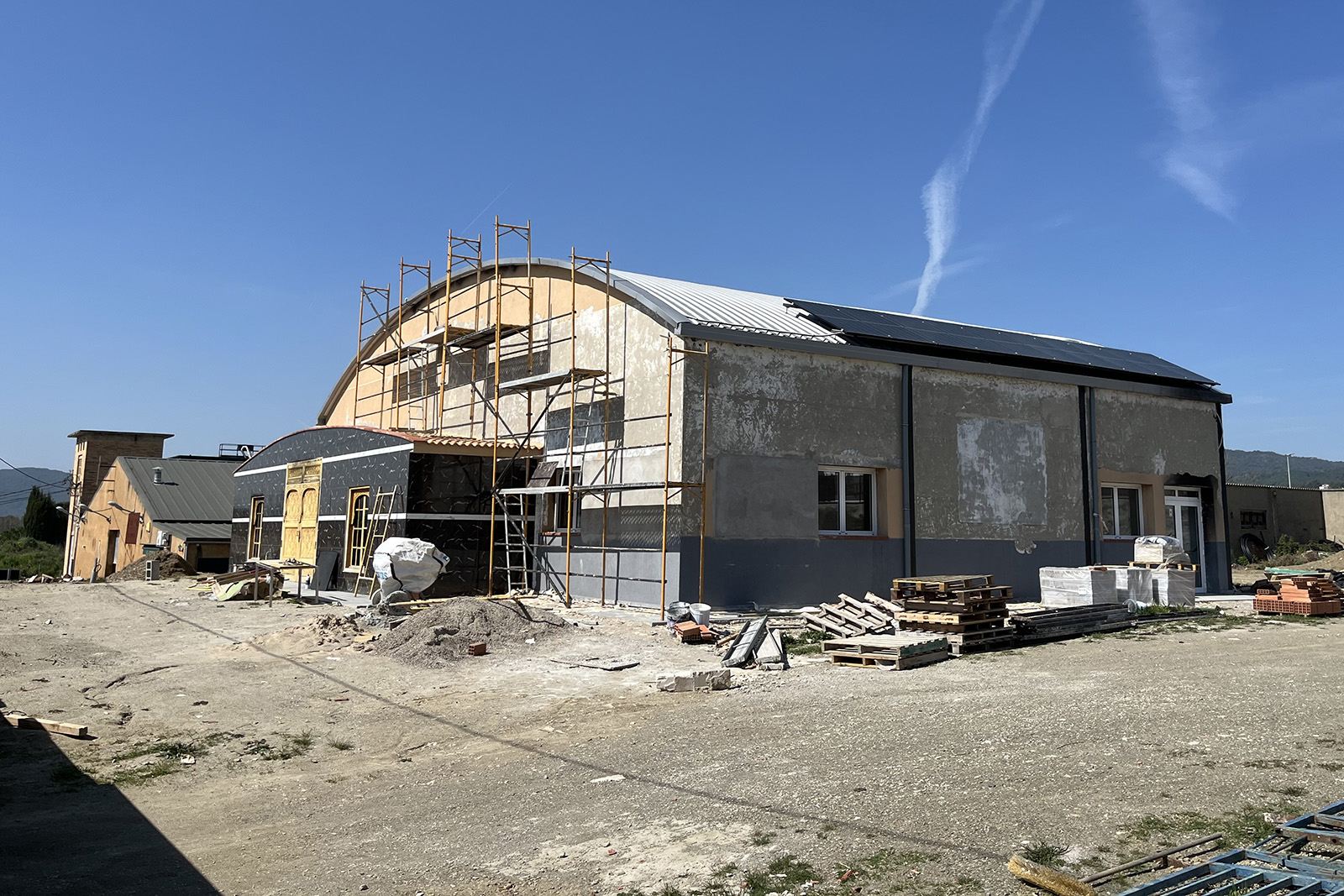
The process to build the mosque had been a long one. The industrial unit was bought at the beginning of 2021 and construction began in 2023.
“We had to start again from scratch,” said Mokhtari.
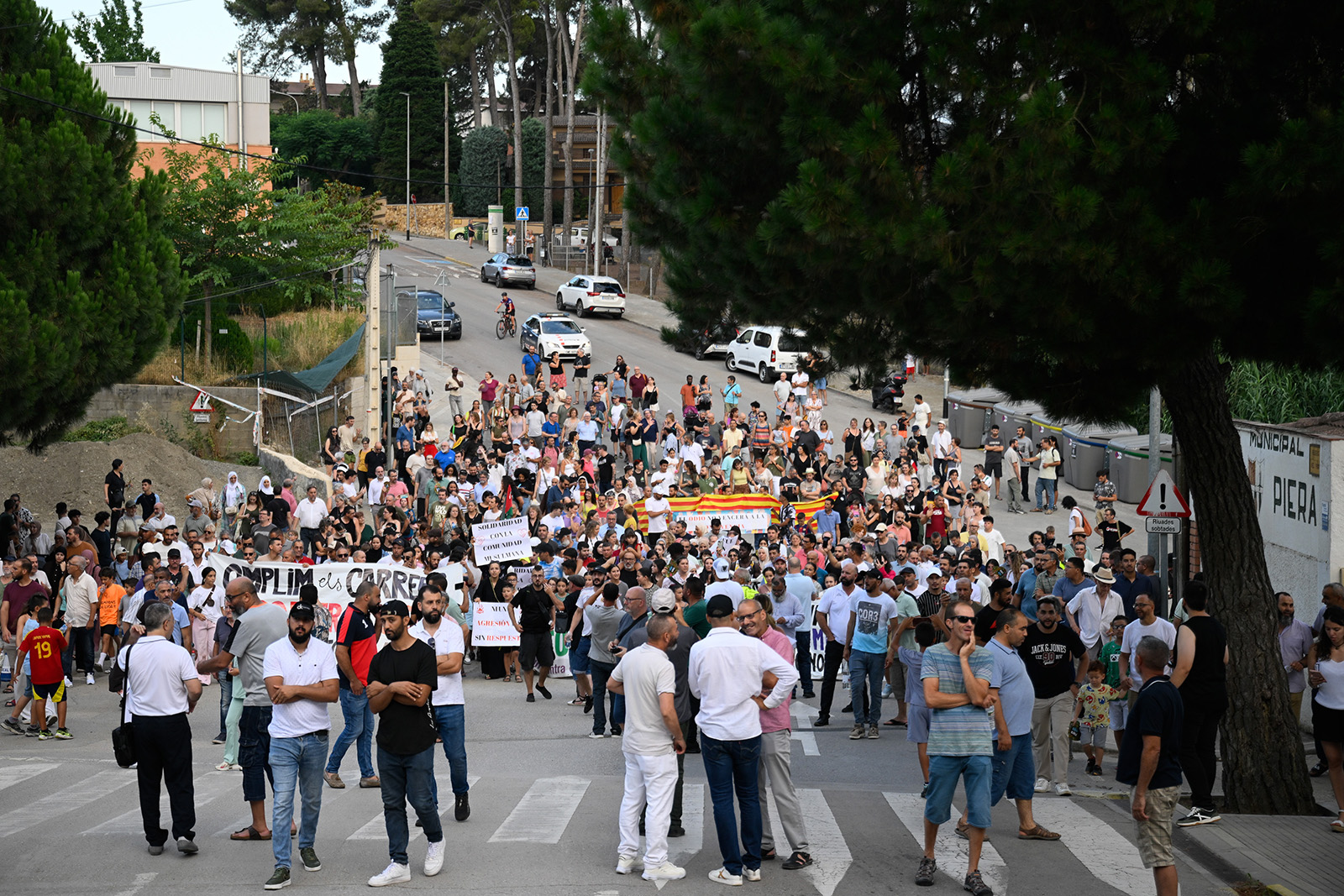
Local residents took to the streets in solidarity last summer.
“The mosque is specifically for Muslims, but it is also part of something that belongs to the town,” said Mokhtari.
Eight months on, the mosque remains a building site – charred walls visible over a barbed wire fence, scaffolding flanking one side.
The Catalan police found traces of accelerants at the scene, leading to suspicion the fire was started deliberately, but the presiding judge closed the investigation weeks later, ordering no further measures and conditioning any reopening on new evidence. The local Islamic community – represented by lawyer Benet Salellas – requested the case be reopened, criticising the judge’s “passivity” and linking the fire to a series of earlier attacks on Piera’s youth centre. The case is currently under appeal to the provincial court of Barcelona.
Núria Parlon, Catalan minister of the interior, suggested that the fire could be a hate crime, while Carme González, Piera’s mayor, pointed to Islamophobic rhetoric being spread intentionally.
Francesc Ordóñez Ponz, a criminal lawyer at Salellas’ firm, argued the burning represented “the ultimate expression of contempt for the Islamic community”. The defence also invoked European Court of Human Rights case law obliging courts to thoroughly investigate acts of contempt towards protected groups, and called for the case to be referred to the Catalan police’s specialist hate crime unit.
“Sometimes we can feel powerless, a lack of protection,” said Mohammed Halhoul, general secretary of the Islamic Council Federation of Catalonia. “But that should not, must not, paralyse our demands or our legal recourse to find those responsible.”
The fire came as Spain’s national government under Pedro Sánchez was positioning itself as one of Europe’s loudest progressive voices — a bold, hopeful alternative to the reactionary tide sweeping the continent. Sánchez has been a vocal critic of the US attacks on Iran, closing Spain’s airspace to US military aircraft involved in the war after already refusing use of its bases.
In 2024 Sánchez’s government, a coalition between the centre-left Spanish Socialist Workers Party and Sumar – an alliance of smaller leftwing parties – made landmark immigration reforms, following consistent pressure from migrant-led civil society groups. The new legislation aims to grant legal status to roughly 500,000 undocumented people, addressing labour shortages and promoting integration.
But the Muslim community in Piera lives in the gap between this rhetoric and reality.
In 2024, Spain’s Ministry of the Interior recorded just 13 Islamophobic incidents across the entire country, the first year Islamophobia was included as a separate category – a change that was reportedly long resisted. The last available report from the Citizen’s Platform Against Islamophobia, published in 2017, recorded 546 incidents.
Data from SOS Racisme Catalonia suggests a significant reporting gap.
Its annual report, published in March 2026, documented a 71.3% non-reporting rate for racist incidents, while identifying the Muslim community – which makes up an estimated 5% of Spain’s population, 8% in Catalonia – as the primary target of hate speech in the region.
For Fatima Ahmed El Haddad, co-founder of Diàlegs de Dona, an intercultural organisation based in Barcelona, that gap reflects a deeper crisis of trust between Muslim communities and institutions. “People still don’t believe they can be right and win,” she said.
Rebuilding that trust, she argues, requires structural change — more training among law enforcement and public officials handling complaints, a review of what she describes as “micro-racist” attitudes and greater representation of Spain’s diversity within institutions.
But she is not optimistic. Too often, she says, highly educated daughters of Muslim families find themselves excluded from the job market: “Your name and surname always conditions you, your appearance conditions you, especially for girls who wear hijabs.”
Halhoul argues there is another problem around lack of awareness about how to report hate crimes.
“We need to sensitise ourselves internally, as communities, to report – both personally and collectively. Any act: an insult in the street, a shove, a provocation,” he said. “There needs to be a record of these complaints, even if they don’t go further.”
The Spanish government’s foreign policy towards Gaza – including introducing an arms embargo on Israel in September 2025 to “stop the genocide” – and recognising Palestinian statehood in 2024, carries symbolic weight, particularly among Muslim communities, says Moussa Bourekba, research fellow at the Barcelona Centre for International Affairs.
“By contrast with other countries, you don’t see at the institutional level, at the government level, any sort of discourse that expresses hostility towards Muslims,” Bourekba said. “You don’t have a strong hardline Islamophobia as you would find reading the news in Britain, or France, or Germany.”
However, in terms of day-to-day interactions “it’s another story” he said, particularly when it comes to looking for a job or housing.
Rightwing rhetoric and Islamophobia, he warns, are “slowly but certainly becoming mainstream in Spain”, and he does not see tangible protection from the current progressive leadership.
Far-right party Vox, currently the third biggest force in the Spanish parliament, having won 33 seats in the last general election, has long deployed Islamophobic rhetoric, and in 2023 proposed suspending Spanish nationality and residence permits to people from countries with predominantly “Islamic culture”.
Data from the Observatory for Racism and Xenophobia, a tool created by the Spanish Ministry of Inclusion, Social Security and Migration, shows a dramatic rise in Islamophobic content as a share of online hate speech in Spain, climbing from 7.7% in 2017 to 26% by 2023.
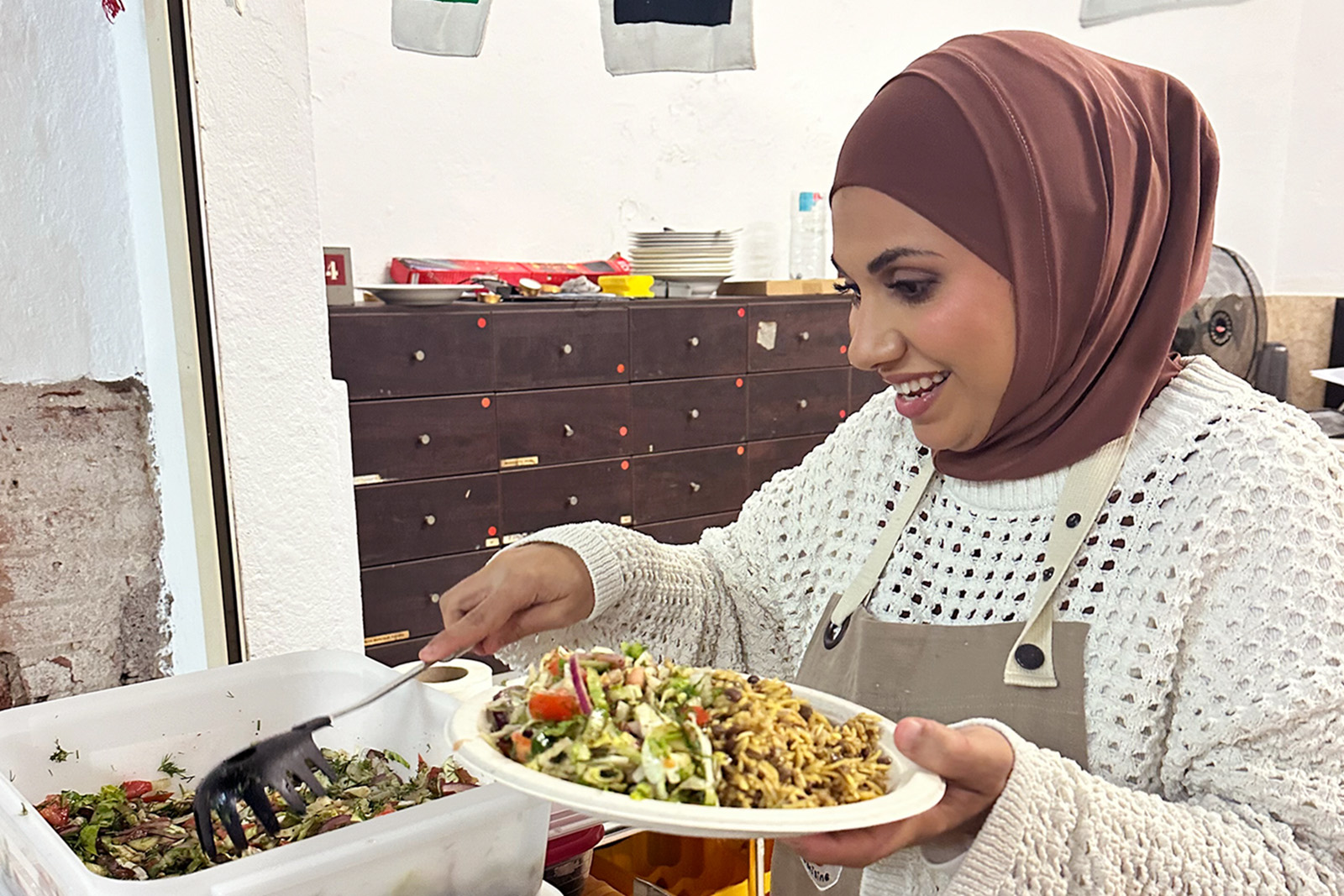
In Catalonia, Bourekba pointed to the rise of the far-right nationalist and anti-immigration party Aliança Catalana, which started a debate in 2025 about the veil, as well as the presence of leftwing Islamophobia that is “rooted also in a feeling of superiority” in terms of values.
“The framing that is being used is a deeply islamophobic one because women are almost never seen as agents. It’s as if you couldn’t be a properly educated and a free woman who is at the same time wearing the veil,” he said.
Just weeks after the fire in Piera, the local council in Jumilla, in the southern province of Murcia, voted to ban religious gatherings in public sports centres, a measure proposed by Vox and approved by the Popular Party mayor. Spain’s migration minister Elma Saiz called the move “shameful” and the central government challenged the ban in court. Nonetheless, Jumilla’s Muslim residents celebrated Eid this March in a swimming pool car park.
Spain may arguably lack the overtly hostile rhetoric seen elsewhere in Europe. But in Piera, where investigation of a suspected hate crime has been closed down, that distinction has not delivered justice. The mosque still stands unfinished and the outcome of the appeal against the decision not to investigate is still unknown. The community continues to wait — for accountability, and for the mosque to finally open its doors.