

How Vox made halal school meals into a culture war in Spain
A new decree aims to guarantee dietary alternatives for students. But the far right has framed halal food as a threat to national identity

When Ilyas was in secondary school in Barcelona, there was little variation in the lunches he was served in the canteen: tortilla or fish.
Though his family had requested halal meals, he was instead given repetitive pescatarian options. “My friends would ask me, why do I never eat meat — am I vegan or vegetarian or something? It always made me feel a bit more different,” said the 17-year-old, whose last name is being withheld to protect his privacy. Despite paying the same as other students, he was not given the option to eat meat.
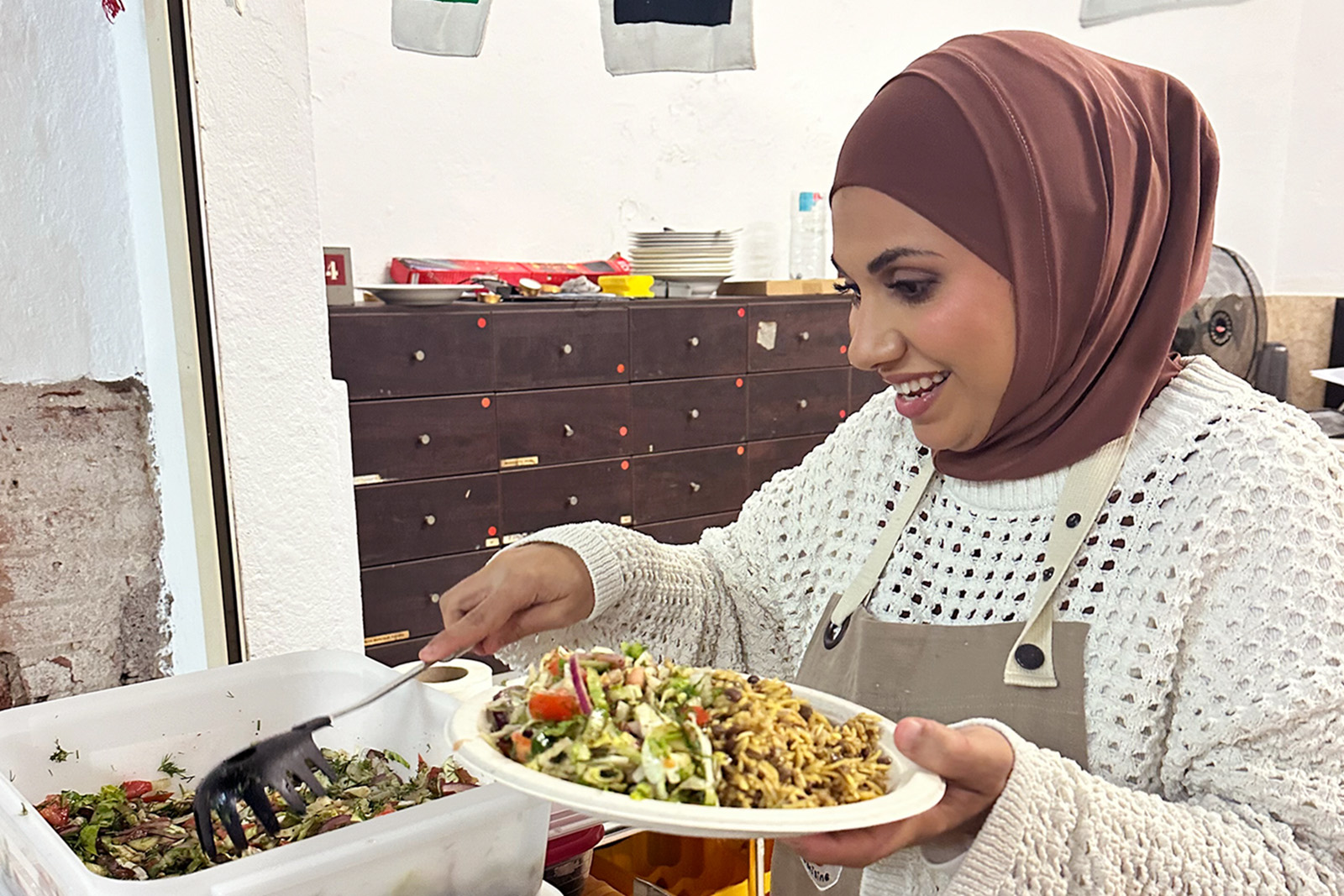
For Muslim students in Spain, access to halal food in school canteens remains uneven — often depending on the institution, the area and how requests are handled in practice.
Patricia Serrano, from Badalona, said that at her nine-year-old daughter’s previous school, the closest option to halal was simply a pork-free meal. After the family moved to a more multicultural neighbourhood, the situation improved and her daughter is now one of several students receiving halal food.
“While they won’t always get the halal equivalent of the main meal, they serve halal chicken and supplement with vegetarian food, eggs and fish,” Serrano said. “We’re satisfied. It’s fair that just as vegetarian alternatives are offered, so are halal meals.”
For the approximately 391,000 Muslim students in Spain, that variation may soon be addressed by a new national decree on school meals, introduced last year and due to come into force in April. While primarily focused on nutrition and sustainability, the legislation also requires schools to provide alternative meals for students who request them on medical, ethical or religious grounds — or to offer facilities for packed lunches.
Advocates say the change strengthens existing provisions. Under Spain’s 1992 Cooperation Agreement with the Islamic Commission of Spain (CIE), schools were expected to try to accommodate religious dietary requirements. The new decree goes further, making that obligation more explicit.
“Here, it is more than just trying — it says that it will have to,” said Gabriel Riaza, director of the Observatorio Andalusí, who notes that many school canteens have already begun to broaden their offer.
But even before coming into force, the decree has become the focus of a political backlash.
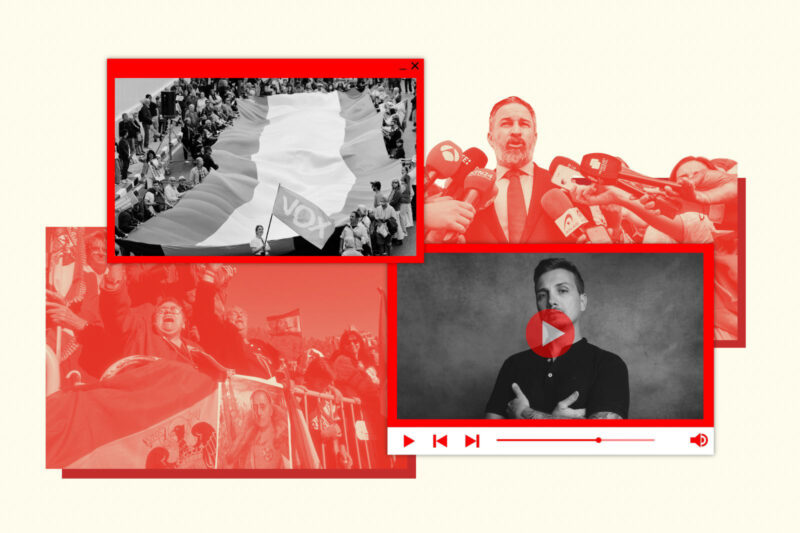
In February, the far-right party Vox launched a nationwide campaign against what it described as the “imposition of halal food” in schools and hospitals. Although the school meals legislation does not specifically mandate halal provision, Vox has used a separate consultation on food standards in social care centres — which mentions halal among various options — to argue that traditional diets are under threat.
The party has claimed the government is encouraging “the dissolution of our most basic identity traits, including our characteristic Mediterranean diet”. Misinformation circulating online has included false claims that pork will be banned from school canteens.
Riaza rejects that framing, stressing that the decree expands, rather than restricts, choice.
“People say everything is going to be halal and pork will be taken away. That’s not it,” he said. “There are several menus. People with coeliac disease have the right to their menu; those who want to eat pork can eat it, those who don’t, don’t.”
In practice, Muslim families continue to navigate a patchwork system. Hicham Oulad Mhammed, a CIE delegate in Madrid, said some students bring packed lunches or go home to eat, while others have had requests for halal meals refused.
“It’s a topic that comes up frequently among parents,” he said. “But we find some are not always aware of what they can request, especially among immigrant families.”
The political framing of halal provision in Spain echoes similar debates elsewhere in Europe. From Marine Le Pen’s calls to ban ritual slaughter in France to incidents of pork being left outside mosques in the UK, food has repeatedly been used as a symbolic marker of belonging — and exclusion.
Dr Katherine Kondor, a senior researcher at the Norwegian Center for Holocaust and Minority Studies, said such debates rely on fostering divisions against groups. “There’s an ‘us and them’ narrative,” she said. “Food is a powerful symbol of nations and ethnicities.”
Her research into far-right online ecosystems shows that Muslims are frequently the target when food becomes weaponised. Asked about the focus on school meals, Kondor adds that the far right often capitalises on the emotive power of children.
“It’s a way to say, we’re saving children,” she explained. “With children and animals, there’s this idea of purity and innocence being [corrupted].”
Claims that halal food will become the only option are part of a broader pattern of alarmism.
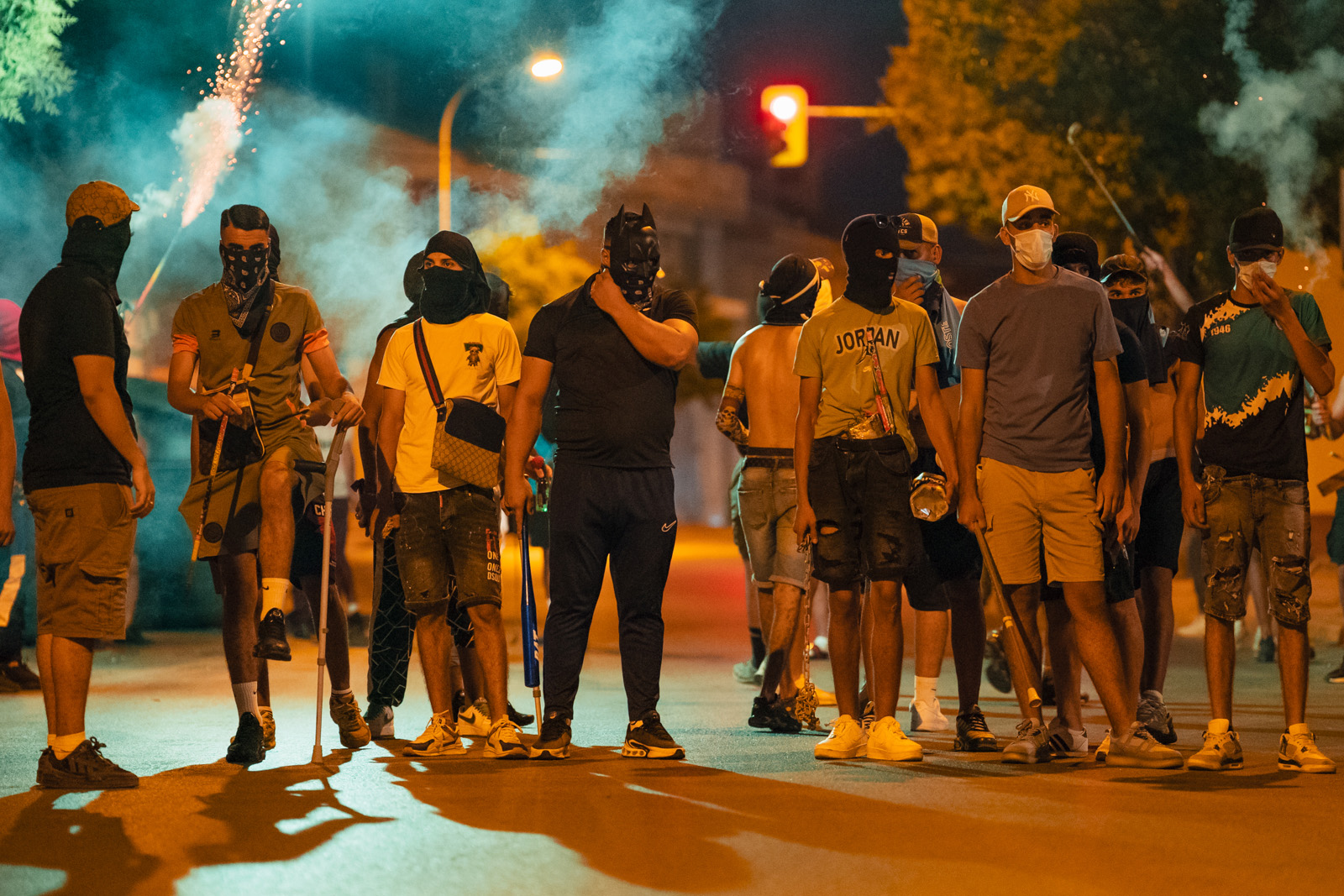
“It’s the same narrative as [the idea] that white people will become a minority,” Kondor said, referring to the so-called “Great Replacement” conspiracy theory, which falsely claims that European populations are being deliberately replaced. “These are scare tactics.”
Such rhetoric has also drawn on examples from Spain’s north African enclaves, Ceuta and Melilla, where 12 schools have introduced halal menus. Vox has presented these cases as a warning of what could follow elsewhere.
But in those schools, Muslim students make up the majority, between 76% and 100% of the student body — and halal provision reflects that demographic reality rather than a wider policy shift.
Vox did not respond to a request for comment.
For those working on the issue, the gap between the political narrative and everyday experience remains stark. What is, in practice, a question of accommodating different dietary needs has been recast as a question of national identity.
As Kondor put it: “Food is such an identity marker. That’s how it’s weaponised — by saying, they want to take away our identities.”