

Kurdish star Aynur brings a message of resilience to the UK
The popular artist blends traditional and contemporary forms into an empowering sound of her own

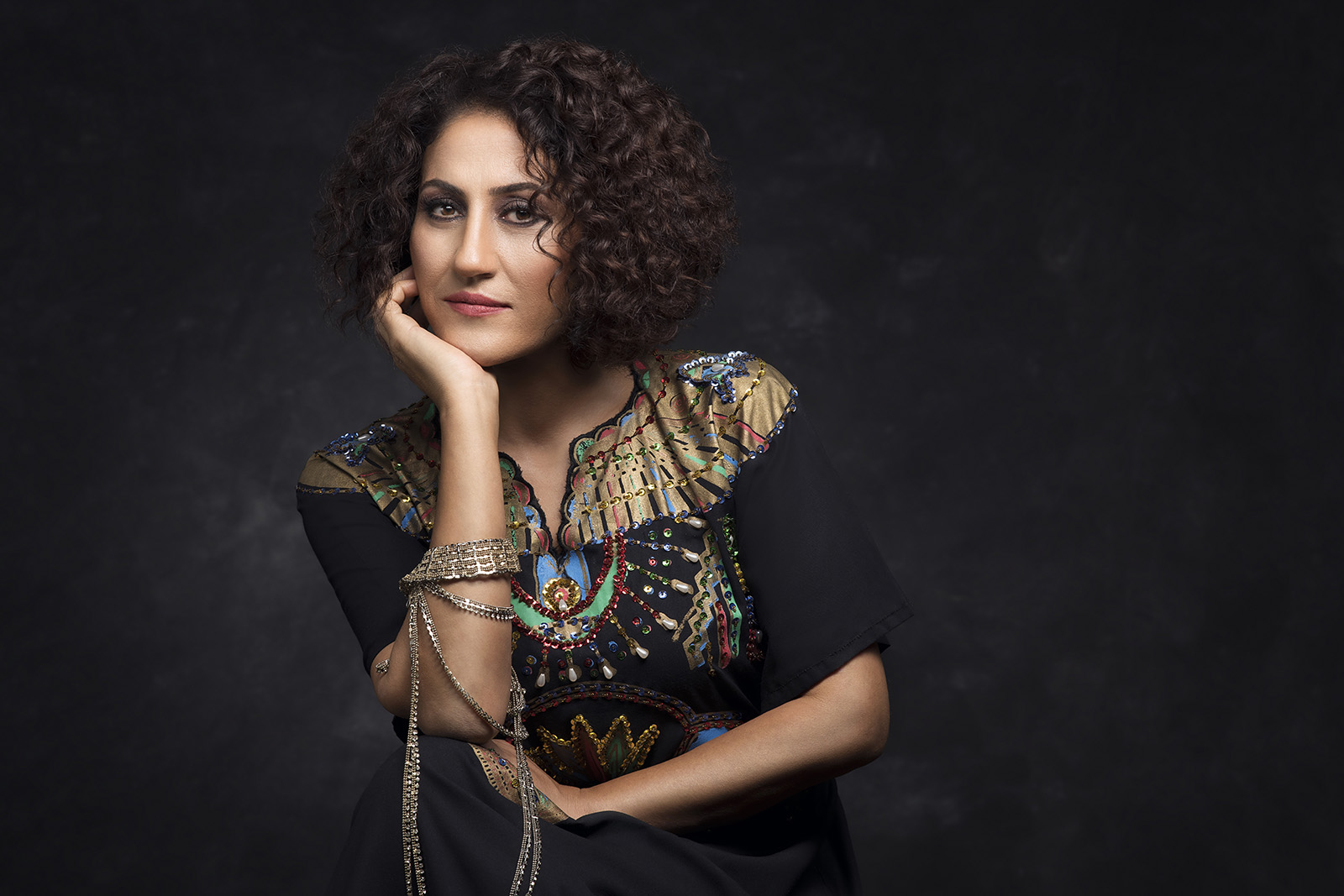
“Our Kurdish culture is oral, it survives ear by ear and heart by heart. It’s a miracle that it still exists,” says Aynur Doğan. “Whatever happens, we have to keep it alive and it’s my mission to have it heard by the world.”
Over the past 22 years, Doğan has become one of the world’s best-known and most popular Kurdish singers. Performing under her given name of Aynur, her soaring, melismatic vocals have been featured on seven of her own albums, which blend traditional Kurdish folksong with western instrumentation, and in cross-genre collaborations with the likes of cellist Yo-Yo Ma and flamenco artist Javier Limón.
In 2017, she was awarded the title of Master of Kurdish Music by Berklee College of Music in the US. Now she is set to embark on a long-awaited UK tour in support of her 2024 album Rabe, featuring dates in Bristol, Birmingham and at London’s Barbican Hall on 2 April.
Yet, despite her international success, Doğan’s championing of Kurdish culture has attracted controversy. In 2011, at the Istanbul jazz festival IKSV, members of the audience pelted her with objects and demanded that she sing in Turkish rather than Kurdish. The following year she relocated to the Netherlands, where she has remained since.
The Kurdish people are a 30 to 45 million-strong ethnic group widely considered the world’s largest stateless nation. Their indigenous territory of Kurdistan takes in parts of Turkey, Iraq, Syria and Iran. While Kurds account for the largest ethnic minority population in Turkey, they have often faced discrimination. Kurdish-inhabited areas of the country experienced repression and periods of martial law until 1946, and from 1980 to 1991 the Kurdish language was prohibited in public life. Speaking it can still have serious repercussions.
“I feel more freedom here to live and concentrate on my music,” she says over a video call from her Amsterdam apartment. “As a Kurdish person who used to live in Turkey, it was never a good time to be there. You were not allowed to speak your mother tongue and it’s as if we don’t exist. The feeling of censorship is always present and in 2011 it came to a head when the audience at this festival were shouting at me to sing in Turkish and throwing plastic bottles at the stage. After that moment, I realised I had to protect my voice — I had to go elsewhere to sing this ancient culture that I love.”
Born in a mountain town in the Tunceli province of eastern Turkey, Doğan was raised in a Kurdish community of Alevis — a mystic tradition that draws from Shi’a Islam. Mimicking the sounds of waterfalls and birdsong before she could talk, she followed in the footsteps of her mother who was an amateur singer.
“Music has a very big role in Alevi tradition and it’s rooted in your heart,” Doğan says. “My mother has always had a beautiful voice and when I sing in my mother language, I feel like I’m at the top of the mountains with my parents or grandparents. It feels like my true self.”
A historic stronghold of the Kurdish Workers’ Party (PKK), Tunceli erupted into violence in the early 1990s as separatist PKK forces clashed with Turkish authorities, causing Doğan’s family to flee the area. Arriving in Istanbul in 1992 when she was 16, Doğan soon enrolled at the city’s music school, Arif Sağ Müzik Okulu, to study the lute-like saz and traditional Turkish singing.
She also began to gradually formulate her unique fusion of Kurdish folk music and contemporary instrumentation. It was a potentially risky practice as even today the singing of Kurdish folk songs can result in arrest on charges of “spreading terrorist propaganda”, for which a conviction can carry a sentence of up to five years in prison.
“We were new in the big city and while my mother believed in me and supported me becoming a singer, my father told me to be careful with Kurdish music as it wasn’t allowed,” Doğan says. “But, since all Kurdish people sing and it’s the only way to access our feelings, it just felt natural to me. I knew I had to express myself truly if I wanted to make music.”
That authentic self-expression was at the heart of Aynur’s hugely popular 2004 album Keçe Kurdan (Kurdish Girls). The title track pairs a rousing saz melody and rollicking hand percussion with Doğan’s clarion call vocals making a direct address to her female listeners: “Girls, stand up, let the world hear your voice.”
The record was a word-of-mouth hit across Turkey, but also brought negative attention to its creator. In 2005, a provincial court in the town of Diyarbakir banned the song on the grounds that the lyrics contained divisive propaganda that incited women to “take to the hills”. The ban was lifted later that year but Doğan’s’s firebrand reputation was already cemented.
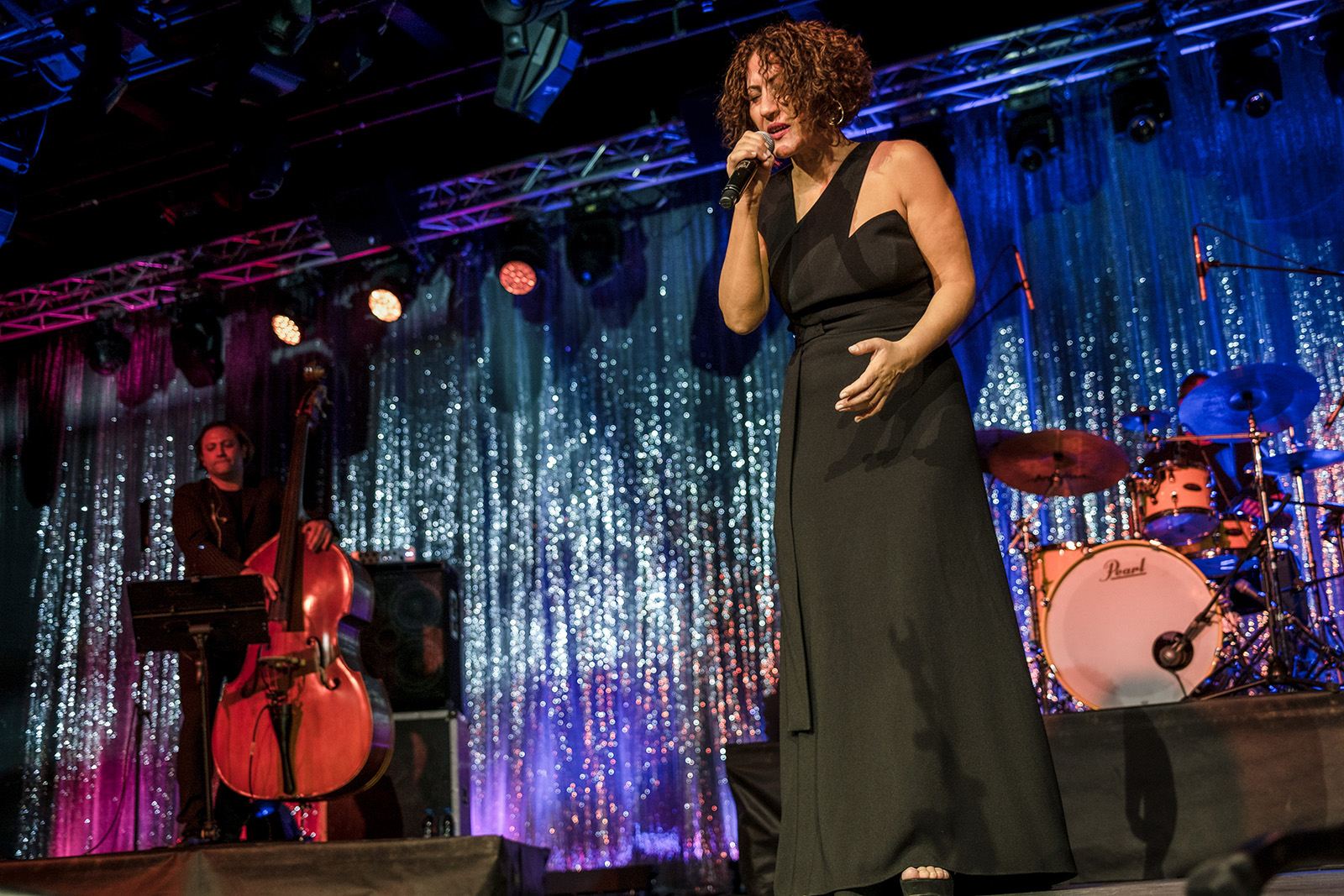
“We knew there was a risk, but as a woman, it’s always been important for me to sing about women’s rights,” Doğan says, two decades on from the controversy. “In Kurdish repertoire, there are lots of traditional songs written by women but they weren’t allowed to sing them until the 1960s — I wanted to address that.”
Doğan sees traditional Kurdish music as more akin to a number of contemporary genres than any form of ancient global sound. “It’s very rich music since we exist between Iraq, Iran, Turkey and Syria,” she says. “Each Kurdish region has a different style but it’s ultimately flexible music that adapts to the way you feel. In that way, it’s like the blues and it can be blended with types of other music like jazz or funk.”
On Rabe, her latest record, Doğan pushes that genre-blending character to its furthest bounds, featuring guests including Chinese pipa player Wu Man and jazz-fusion bassist Michael League in a track list that traverses disco-funk (Rabe Edlayê), operatic contralto (Hekîmo) and guitar-strumming jazz atmospherics (Min Te Dît).
“I set myself the challenge to produce the music and the arrangements myself because I wanted to see my power in the music,” she says. “It was hard but I’m glad I did it. The message is all about resilience and finding our common humanity.”
Related content
While she doesn’t feel safe to return to Turkey any time soon and shows in the country are often subject to last-minute political cancellations, Doğan is bringing her message of resilience on tour to the UK and beyond.
Followed by an enthusiastic Kurdish diaspora fanbase, she ultimately hopes her music can empower them and people of different backgrounds to connect and unite.
“Music is a good bridge and I hope mine is good enough to speak to future generations,” she says. “Even if borders separate us Kurdish people, we must come together and preserve each other. We have a common pain and we must allow our music and art to continue. I will only stop making music and singing these songs once my breath stops.”
Aynur begins her tour at St George’s Bristol on 27 March and plays the Barbican on 2 April.