

Iranians in UK fear for family amid conflicting reaction to US-Israel strikes
‘I don’t defend this regime, but I also don’t want my country and my people bombed to pulp’

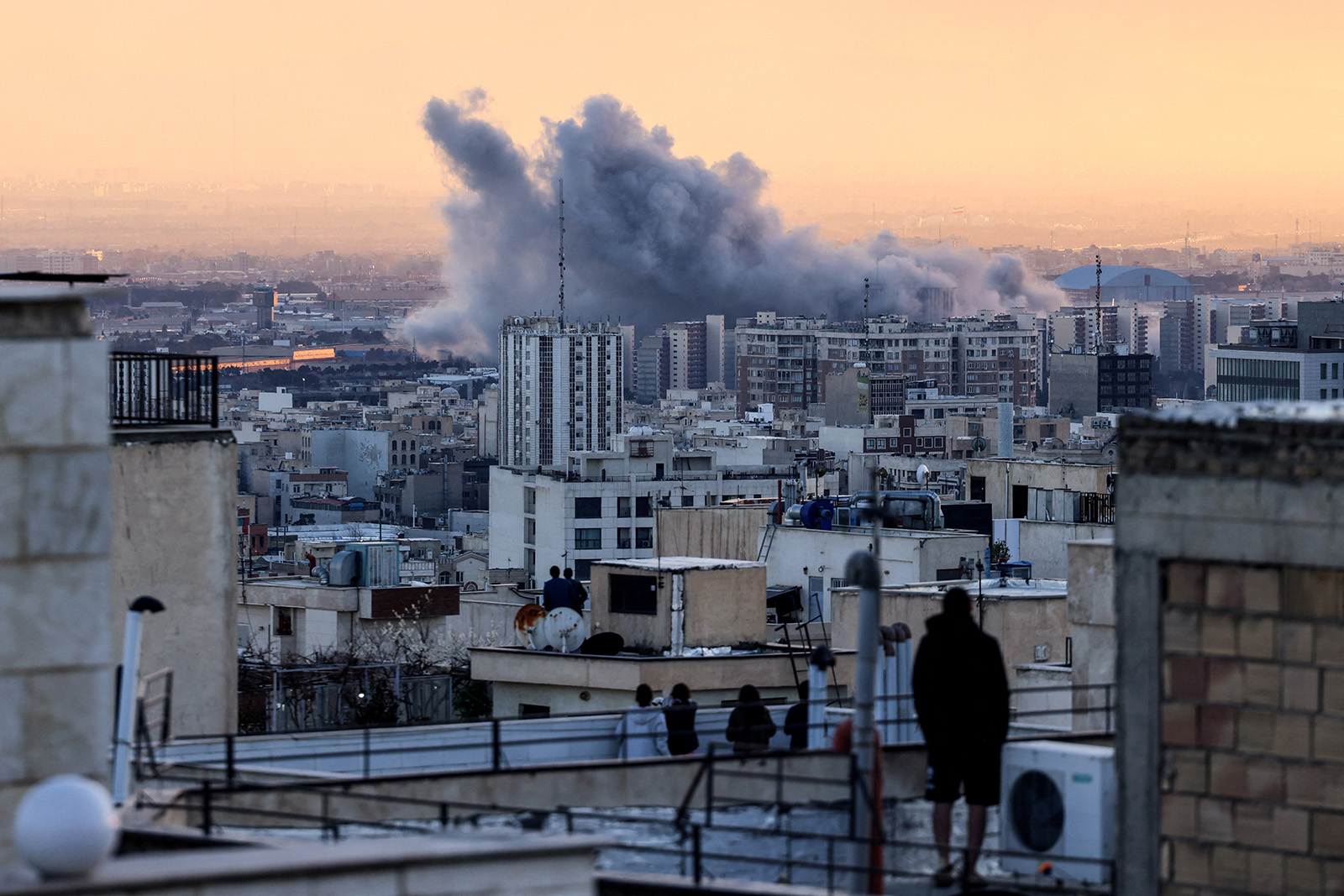
Iranians in the UK have told of their fear for loved ones in Iran as US and Israeli bombing escalates, amid conflicting feelings about the killing of Iran’s leader of 36 years.
The strikes, which have hit cities including Tehran and killed supreme leader Ayatollah Ali Khamenei, 86, have prompted anxiety among diaspora communities in the UK trying to reach family members amid an internet blackout.
According to the Iranian Red Crescent Society, more than 700 Iranians have been killed, including at least 165 people following an airstrike on a primary school in southern Iran on Monday.
Aghileh Djafari-Marbini, 48, a London-based political activist who lived in Iran until she was 15, says her family in Tehran is living in fear following explosions near their home.
“It’s absolutely disgusting,” she said. “The pictures are horrific. Tehran is a very populated city and some people of course can afford to go outside of Tehran… But most people would be stuck.” She described feeling “physically sick” when she first heard news of the strikes.
She added: “Everyone is really anxious. I was a child during the eight-year Iran-Iraq war — when a massive bomb goes off, even if it doesn’t hit your house, the waves can make you fall and you could hit your head against something very hard. So the bomb doesn’t just kill you as a result of an explosion. I don’t know whether people really understand this.”
Arash, an Iranian-British freelance journalist who asked us not to use his real name for fear of reprisals from those who back the intervention, said he had also struggled to contact some family members after strikes in southern Iran on Monday.
“Sadly, I have heard that my birthplace in southern Iran has been hit,” he said. “They just hit a hospital and it’s very close to where some of my cousins live. I haven’t heard anything from them. I’m hoping and praying that they are safe.”
Arash, who says he is anti-war and anti-violence, opposed the strikes, arguing that foreign intervention by Israel and the US would not lead to democratic change. “It did not bring democracy for Afghans, it did not bring democracy in Libya, it did not bring democracy in Gaza,” he said.
“It was a joke, thinking that you’re going to kill the supreme leader and then everything’s going to finish. Iran is a system, it’s not a one-man-based country.”
Djafari-Marbini echoed this, questioning whether military intervention would deliver lasting political change in Iran. “Where in the world, where in history, have you seen foreigners being able to implement democracy in any country? Democracy comes from within,” she said.
She continued: “There’s no love lost between me and the Iranian regime. From the ages of three to eight, my dad was held as a political prisoner in Iran. For a couple of years, we had very sporadic information about him. It was an awful time.
“I have no reason to defend this regime and I don’t defend this regime, but I also don’t want my country and my people bombed to pulp. I want good things for Iran. I want democracy for Iran. I don’t think this is how you get it.”
Her sister, Dr Hosnieh Djafari-Marbini, 47, agreed, describing “horrific” and “nightmarish” updates from family still in Iran. “We’ve had a history of anti-regime activism in our family but despite that, none of us wanted our country to be bombed.”
She added that it had been heartbreaking to see images of historic sites and neighbourhoods damaged in strikes. “When I think about the future and what’s going to happen, I just feel so anxious and sad and distraught,” she said.
Related content
Some Iranians in the diaspora, though, have celebrated the death of Khamenei, whose regime was marked by harsh suppression of dissent and security forces carrying out deadly crackdowns on protests, most recently just weeks ago.
Over the weekend, thousands took to the streets in London and Manchester to celebrate reports of his death.
UK-based Fariba Nazemi, 70, who also lived in Iran during the war with Iraq, believes this marks a moment of hope for some Iranians.
“Iranian people are so happy,” she said, citing videos and conversations with family members she’s been able to reach. She described how one cousin had reacted to the news of his death by doing a kel — a high-pitched celebratory sound often used in weddings — adding that other neighbours had done the same.
“I am very hopeful. Iranians just want ordinary lives. We want to live in peace, we want a future,” she said.
Iran has launched retaliatory strikes across the region, targeting sites linked to Israel and the US, including in Qatar, Bahrain, Jordan, Oman, Kuwait, Saudi Arabia and the UAE. A British RAF base in Cyprus was also hit by a drone, believed to have been launched by Hezbollah from Lebanon on Monday.