

Penguins, whales and Jummah prayers on a halal expedition to Antarctica
Amid the ice and snow of world’s largest wilderness we experienced a deep and life-affirming sense of spiritual and human connection

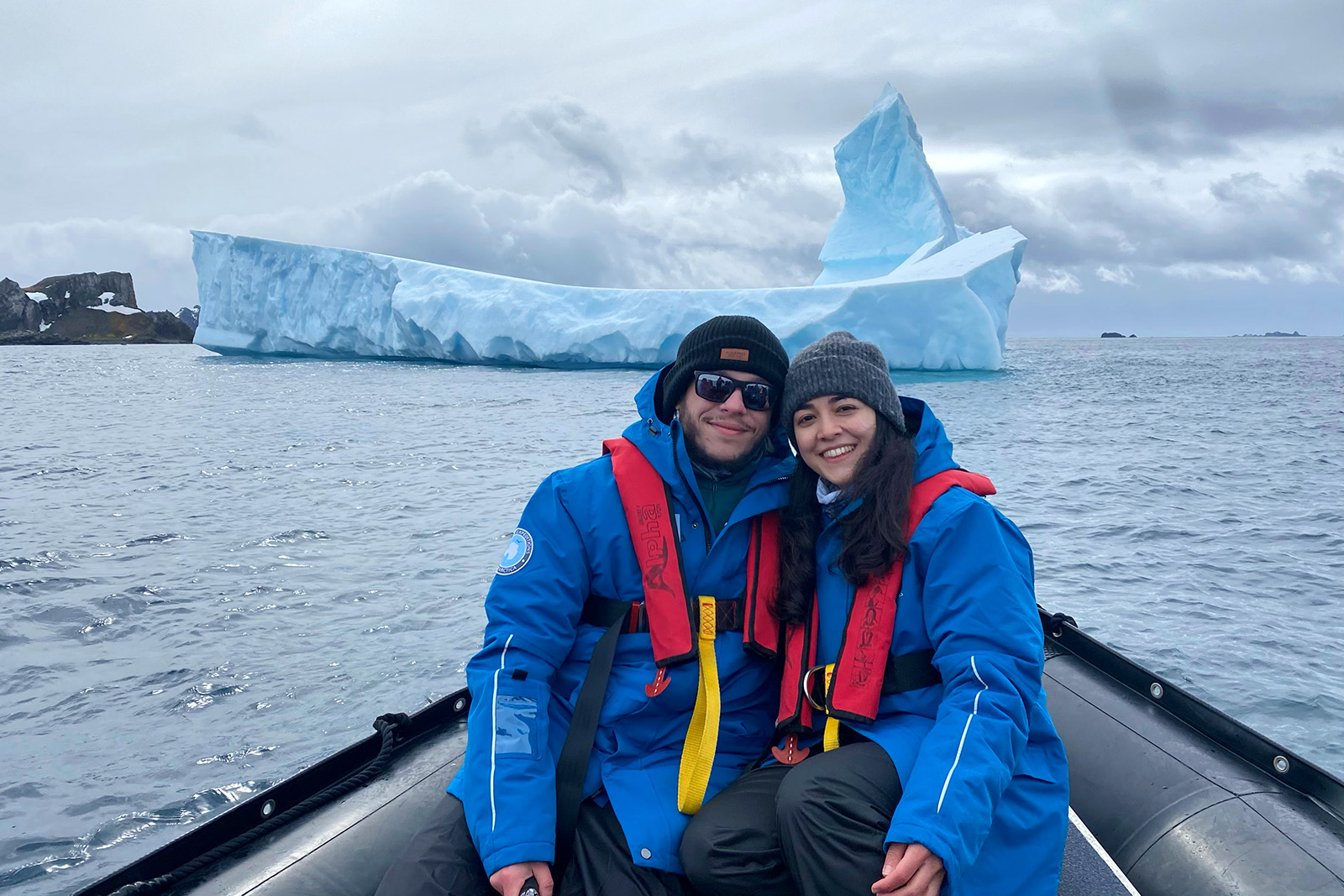
I grab the expedition guide’s hand and step onto the side of the Zodiac inflatable boat. Bare chested and shivering to my right, my husband Christian does the same. Ahead, pristine white walls of ice mark the horizon. Behind us, we hear shouts of encouragement and upbeat music.
We each take a breath as the guide counts down from three, then I yell, “takbir, Allahu akbar” and jump. The icy waters of the Antarctic Ocean shock us like a flash of lightning.
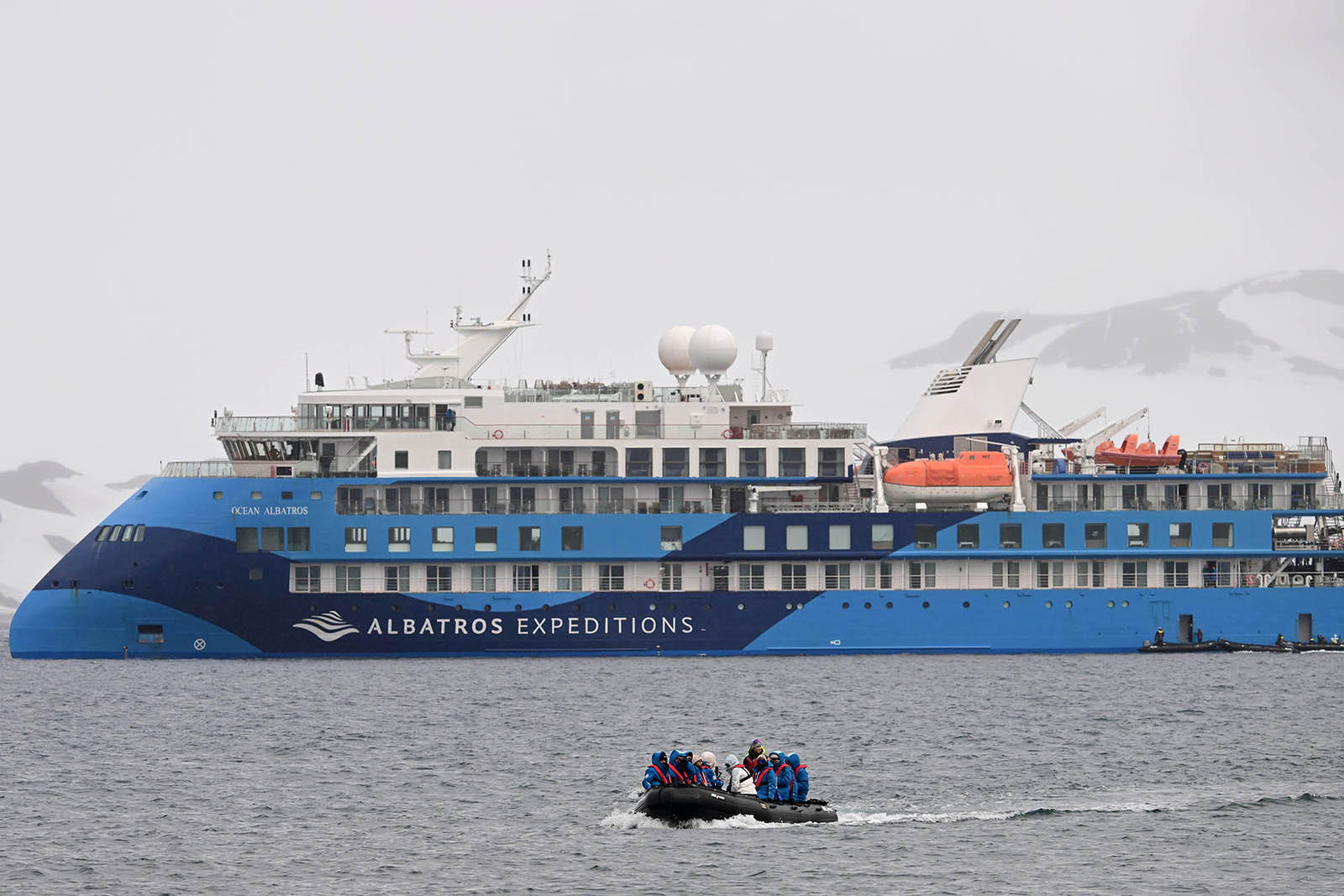
It’s day four aboard the Ocean Albatros — a boutique cruise ship comfortably carrying up to 175 guests — and we have just survived the polar plunge, a rite of passage for visitors to this frozen continent.
Like many travellers, I’ve always been keen to visit Antarctica, the world’s largest wilderness, and this particular voyage — the first halal-catered expedition, organised by Danish Polar expeditions company Albatros Expeditions — presented the perfect opportunity to do so.
According to Rashidah Lim, a former expedition leader and business development manager Asia for the company, the halal cruise was years in the making. As the first Singaporean-Muslim and Asian woman to lead expeditions to the polar regions, she wanted to make the experience more accessible for Muslim travellers.
“When I was working on the ships, I worked with a lot of specialised groups from China and India,” says Lim, now sales director for Asia Pacific for Polar Latitudes Expeditions, after a merger with Albatros Expeditions. “They had certain food and service requirements. I thought it’s a shame that we didn’t have anything catering to the Muslim community. It felt like a missed opportunity and a barrier preventing people from going to Antarctica.”
Lim took the idea to her Albatros Expeditions colleagues in late 2022. With the company’s support, she began speaking to halal travel agents to see if there was a market for such a voyage. By 2024, a date of January 2026 was confirmed and tickets went on sale.
Christian and I began our journey by flying via New York, and an overnight stop to see in the new year in Buenos Aires, to Ushuaia, a small city at the southern tip of Argentina and the point from which the Ocean Albatros would depart. The city’s languid pace and mountainous vistas provided a welcome reprieve after crossing through multiple climates and time zones.
As we dropped our luggage off at the pre-embarkation point on 3 January, we queued up alongside several women in hijab. It was a stark contrast from the last time Christian and I had been to South America. In nine months backpacking south from Mexico to Bolivia we encountered just one other Muslim traveller.
First impressions of the Ocean Albatros, our home for the next 10 days, were of a space that was modern, airy and unexpectedly intimate. Hosting 95 rooms, Antarctic expeditions aboard the ship typically start from around $11,000 (£8,000). That price includes full board, Zodiac cruises and landing excursions. Flights, however, are paid for separately.
At the initial group briefing in the ship’s lecture hall, I was once again surprised by the diversity of my fellow passengers. The assembled crowd included Muslims from the US, Australia, Saudi Arabia, Uzbekistan, Singapore and more. There were also plenty of non-Muslims, including groups from China who were accommodated with signage and announcements in Mandarin.
A buffet dinner in the main restaurant was served, featuring trays stacked with various meat curries, seafood, pasta dishes and vegetables. There were also cold cuts, salads, vegan alternatives, fruit and desserts.
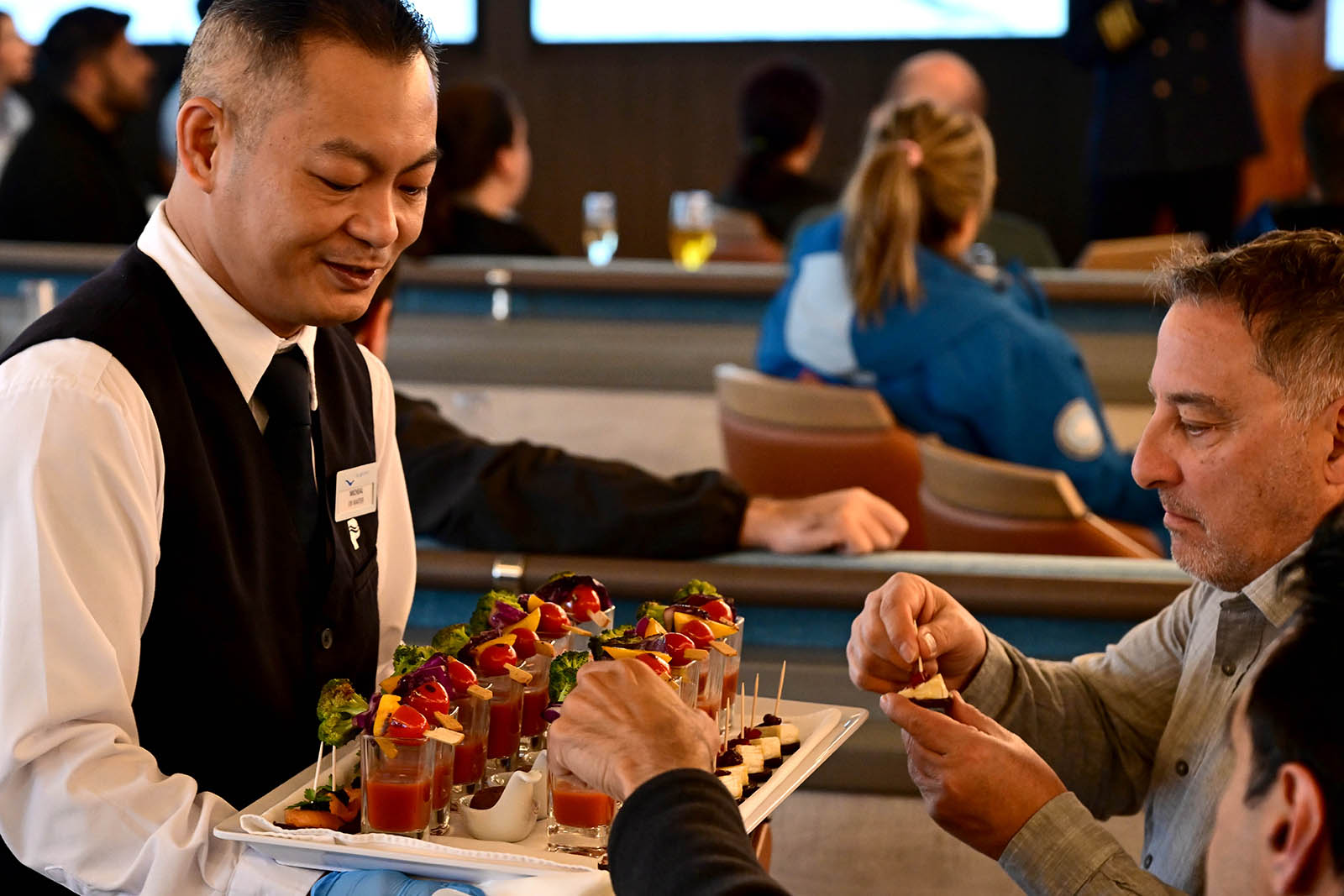
On subsequent nights, dinner was served a la carte, with options ranging from Patagonian-style beef tenderloin medallions to slow-roasted lamb racks and steaks. It was refreshing to know that everything was halal, especially in this most remote corner of the globe.
The ship didn’t serve pork. Alcohol, however, was available, after Albatros Expeditions’ market research indicated that the majority of Muslim travellers had no objection to it being served to non-Muslims. Ladies-only hours were offered at the onboard jacuzzi and sauna, and a dedicated female guide for a group of Muslim women travellers.
The sun was starting to set when we set sail from Ushuaia. Verdant mountains hugged the coastline along the Beagle Channel, the waters darkening as we headed for Drake Passage — a 600-mile-wide stretch of sea connecting the Atlantic and Pacific oceans south of Cape Horn, widely considered the world’s most dangerous body of water. Within a few hours, all land disappeared from view.
The first two days at sea were testing. My nausea wasn’t as bad as some others, but between the incessant rocking and the drowsiness caused by my motion sickness tablets, I spent most of our time entering the Antarctic region in our cabin. By the time we reached the South Shetland Islands on the third day, I was itching to get back on solid ground.
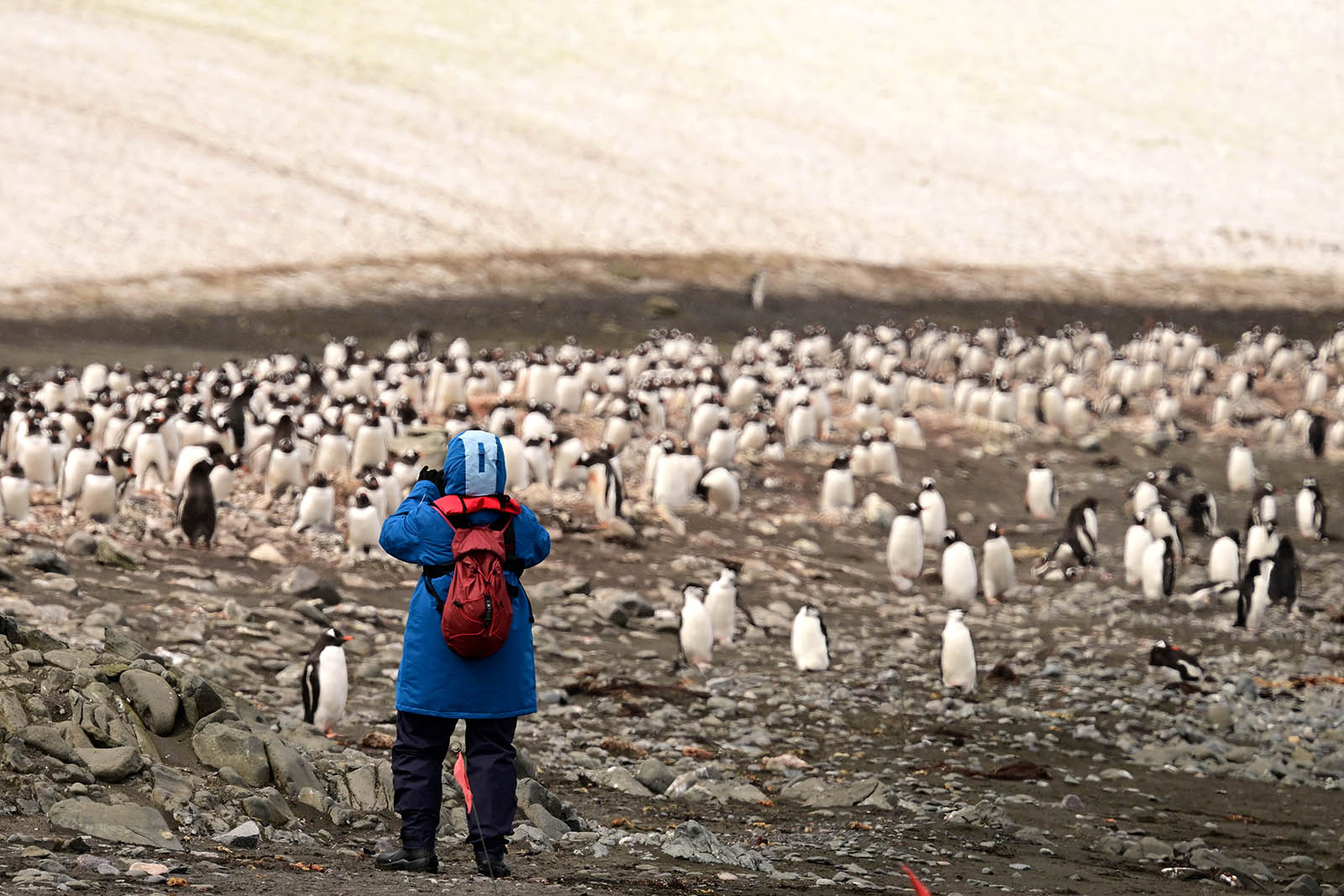
That afternoon, we took our first excursion to the Aitcho Islands, at the entrance of the English Strait. The islands are home to large colonies of gentoo and chinstrap penguins. Being surrounded by thousands of these flightless birds was wonderfully surreal, like stepping into your own David Attenborough documentary.
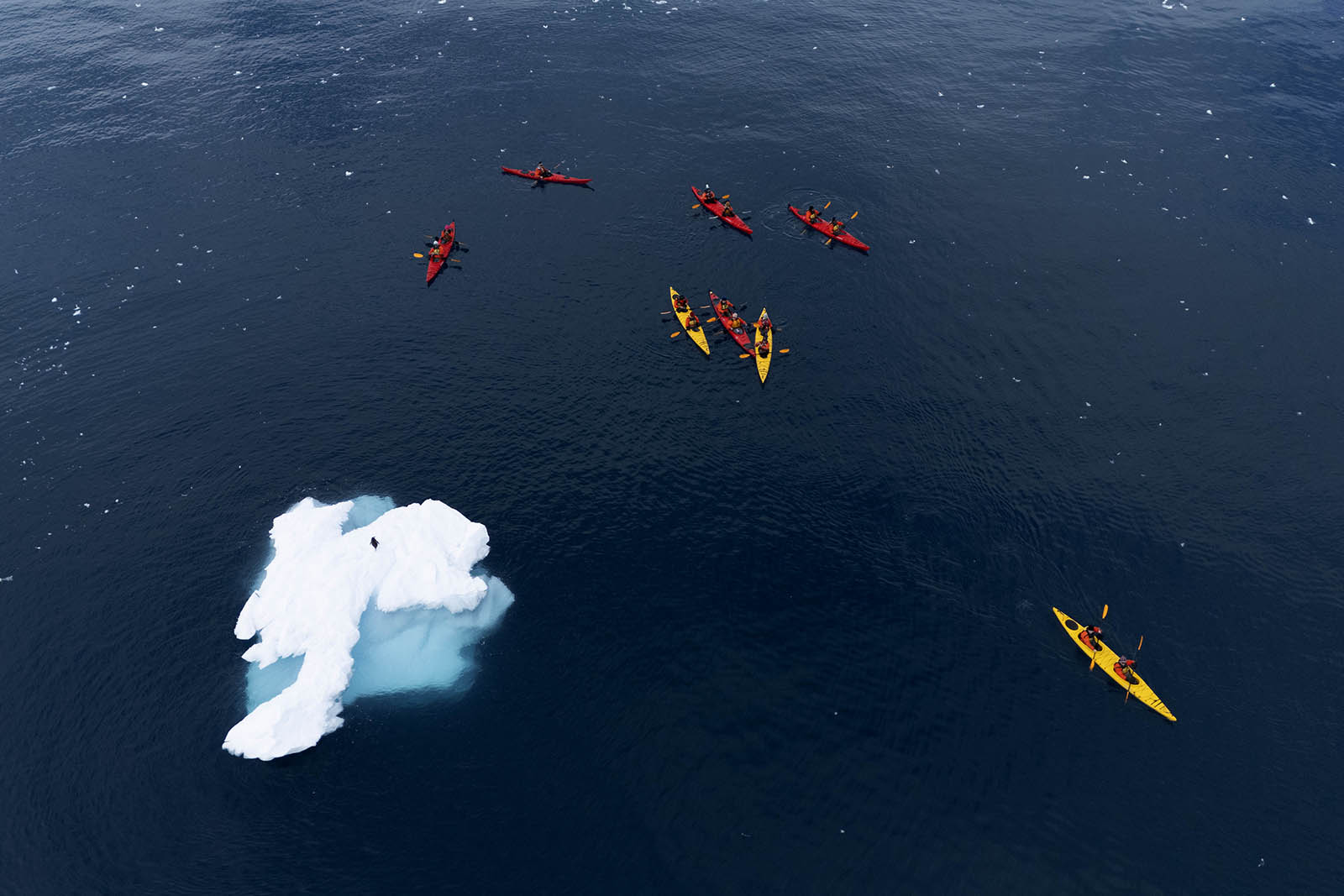
The next day, we reached Cierva Cove — a stunning bay off the Gerlache Strait, known for its diverse wildlife. Christian and I had our names drawn for kayaking, an optional add-on activity to the two daily Antarctic excursions.
That afternoon, the sun was shining and the sea shimmered in translucent blues, dotted with floating ice. Nestled in our double kayak, with me at the front, we rowed towards rarely sighted leopard seals lying idly on the ice. We also caught a glimpse of two humpback whales fluking nearby.
On day five, expedition leader Mark’s much-loved wake up call came at 6.20am. “Good morning, good morning explorers. The weather today is a balmy five degrees.” Our first excursion was a Zodiac cruise around Skontorp Cove. At lunch, the restaurant filled with a chorus of excitement as we began to spot killer whales through the windows.
We landed on the Antarctic Peninsula for the first time that afternoon. Hiking to the summit of Orne Harbour and observing the powdery white landscapes enveloping each side was like staring down at another planet. Another penguin colony greeted us at the top.
The next day, the crew threw a barbecue on the seventh-floor outer deck. That same evening, I spoke to the expedition team with Christian and Amira, the lady leading the Muslim women’s group. We wanted to confirm the excursion time for the following afternoon, because we had a plan to hold Jummah prayers.
Christian had agreed to my suggestion that he deliver the khutbah. We had found our muezzin, Mohsin, who would perform the adhan, and a brother from Uzbekistan had agreed to lead the prayer.
It was hard to contain the excitement as we were shown the ship’s top deck by Andrej, the friendly hotel director. I created a poster for the notice board and began approaching other guests, Muslim and non-Muslim, to let them know.
As far as I could tell, it was set to be the first ever recorded khutbah and congregational Jummah prayer in Antarctica — “history being made,” as I told everyone.
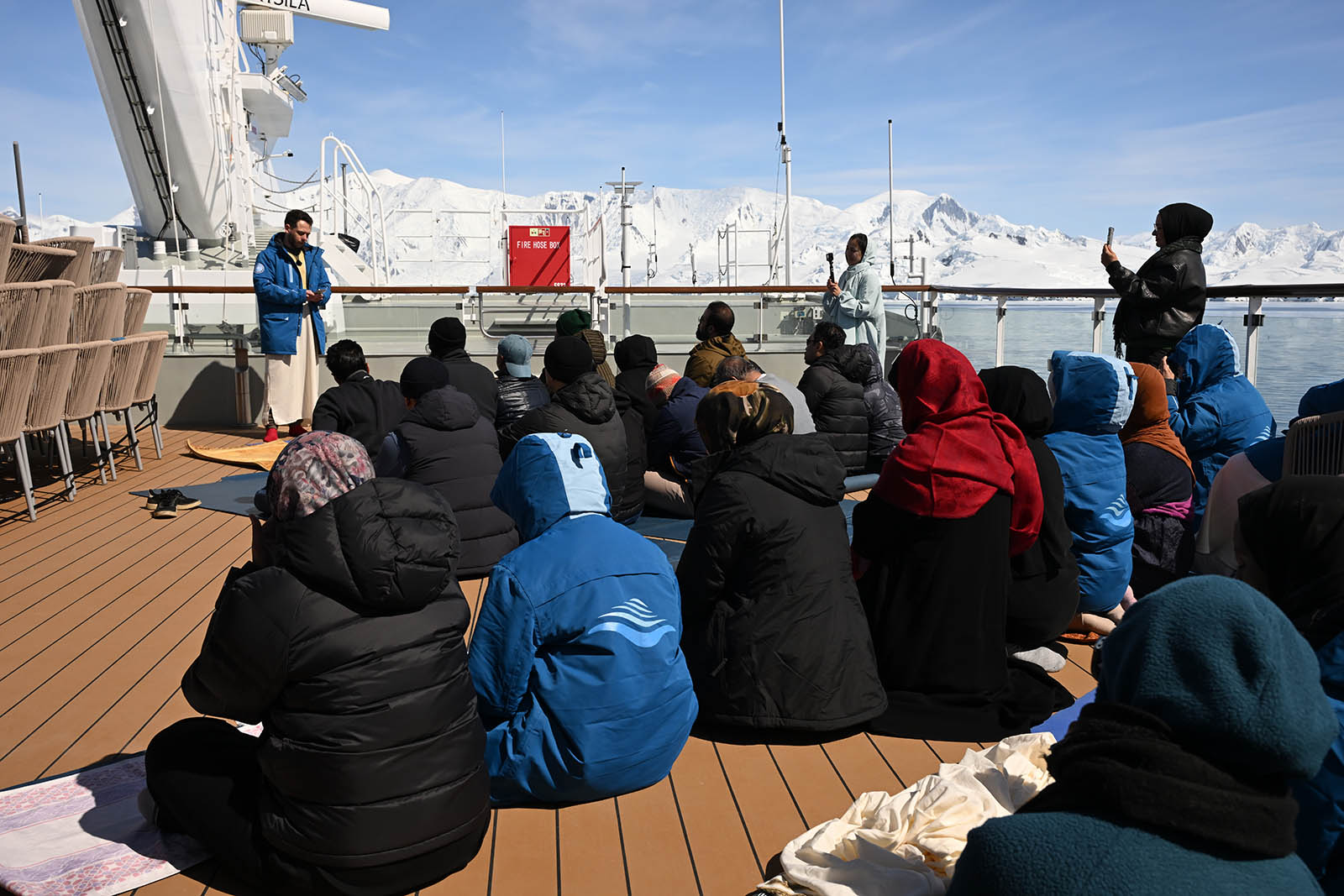
Just before 1pm that Friday in Antarctica we gathered, Muslims and non-Muslims side by side. Amira gave a brief welcome, brother Mohsin’s voice sounded the call to prayer and Christian delivered the khutbah on his journey as a Muslim revert.
During the prayer, I felt an overwhelming wave of gratitude and connection — to God, my fellow passengers, the purity of the place we were in and to the rich Islamic legacy we were now a part of.
Afterwards, many of us cried and hugged each other. Members from the expedition team thanked us for including them. One told us how honoured she was to be there and that it gave her a lot of hope.
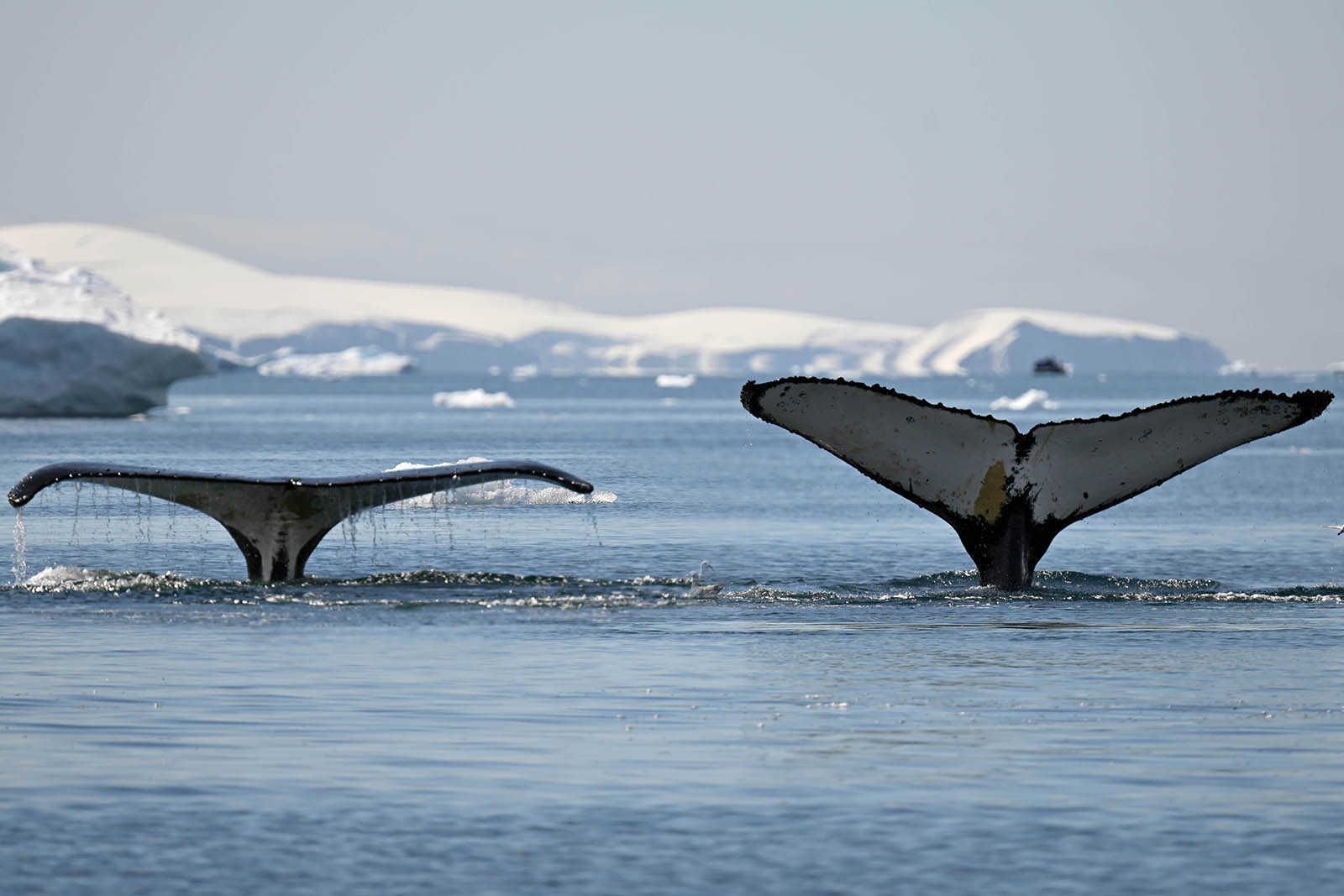
Fittingly, our final excursion that afternoon — a Zodiac cruise around Fournier Bay — outshone all the others. There must have been at least 50 whales in the surrounding waters, some getting so close that you could see the barnacles on their skin.
At one point, we watched a stream of air bubbles approaching our boat, barely breathing ourselves. Awestruck and silent, we watched them disappear directly underneath. Then, on the other side, three humpback whales emerged from the water.
From the pristine weather conditions to the abundance of wildlife, everything about the expedition felt blessed. And it wasn’t just the Muslims who thought so.
“It’s because you guys prayed,” said Charlie, another guest from the UK who had proposed to his girlfriend two days before. “Allah brought the whales.”
Mark even mentioned the prayer in his briefing that evening and, later, added that ours was one of the most diverse expeditions he has ever led and one of the most special.
Several guests also shared their reflections, praising the positive energy between everyone on board. The ship had been like a bubble, a cocoon away from the stresses of daily life.
It wasn’t long before the ship started to rock, letting us know that we were once again on the move and heading into the return leg of our voyage. Our final glimpses of the white continent felt like a curtain closing at the end of a theatre performance.
Antarctica sat, vast and still, with blue skies directly overhead. A sleeping giant, framed by the clouds we were now sailing into.
“It looks like another realm,” said Fatin, a new friend from Singapore, as a group of us lingered by the outdoor railing. “It’s like we’re leaving Jannah.”
Albatros Expeditions has now merged with Polar Latitudes Expeditions. Sign up to the company’s newsletter for details of any future halal expeditions.