

South Asian women in Lisbon are turning craft into community
Homelore, a grassroots workshop in the Portuguese capital, is helping immigrants find support and economic opportunity through embroidery

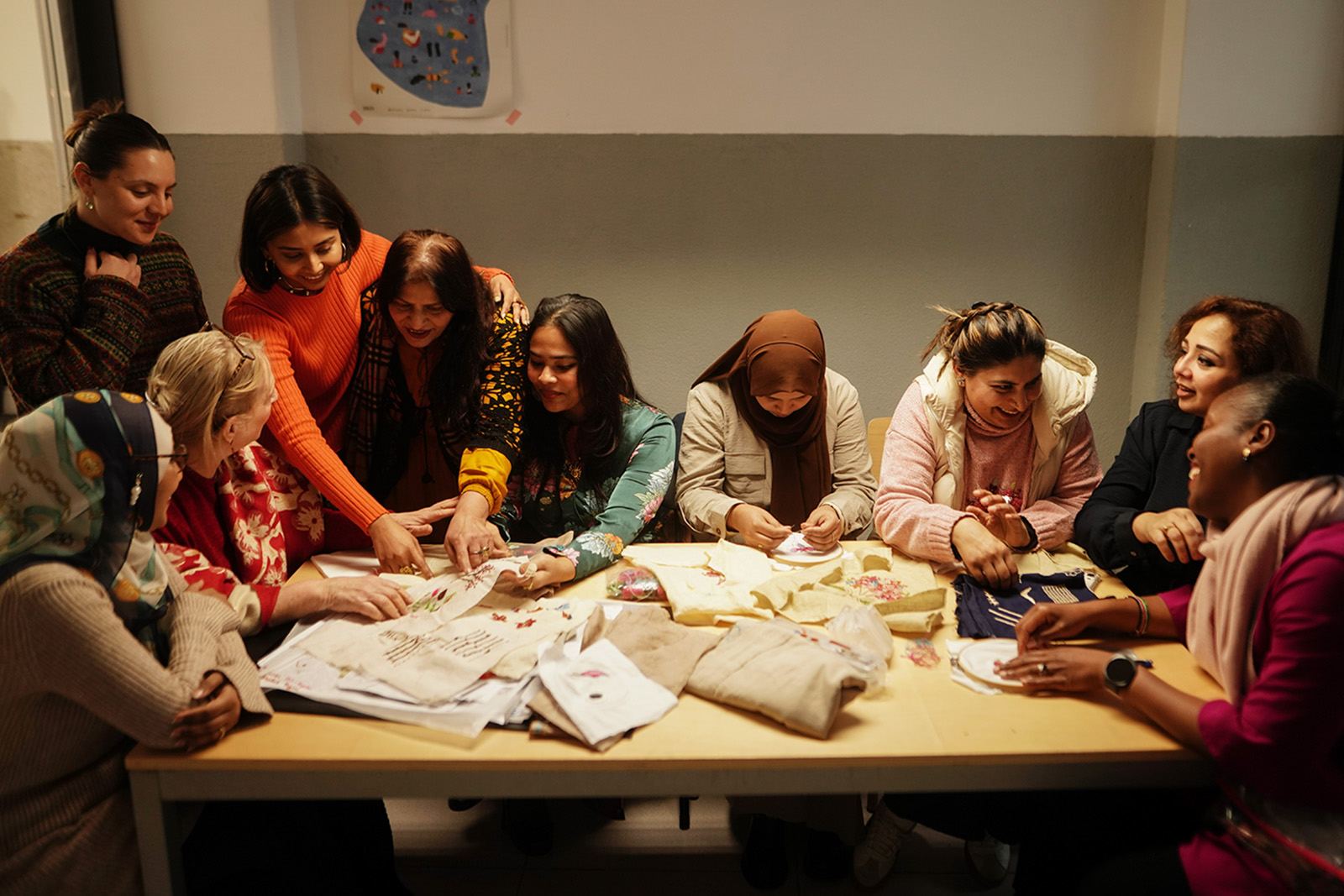
A table in a Lisbon studio is strewn with fabric, spools of thread and embroidery hoops. Eight women sit around it, stitching flowers into cotton. The conversation moves between English, Urdu, Bangla and Hindi. A box of nankhatai shortbread is passed from hand to hand.
This is Homelore, a community enterprise helping South Asian migrant women in Lisbon turn craft into connection — and income.
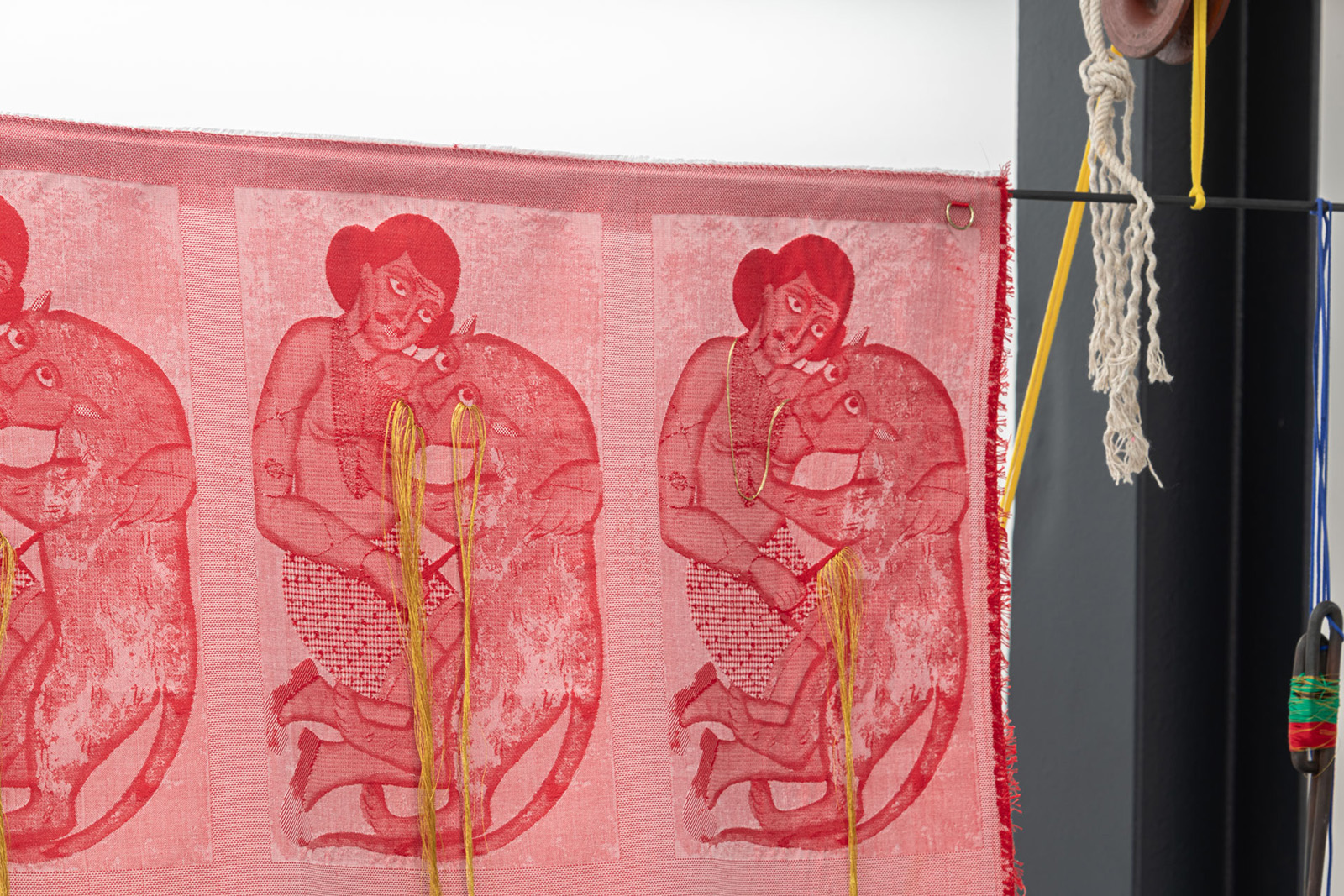
The group is finishing a series of tapestries for their latest exhibition, Taking Root, which is showing at Casa do Jardim da Estrela until 28 February. The show links flowers and migration. “The plants we now see as local were often once exotic,” reads a text accompanying the work. What began weeks ago with simple stitched lines has grown into detailed leaves and petals.
Related content
Homelore was started in 2024 by Riddhi Varma, a 28-year-old architect from Mumbai. She first came to Portugal in 2018 for an internship in Braga, the country’s oldest city, and returned to Lisbon in 2024 to do a master’s degree in business at Nova School of Business and Economics. On returning, she noticed greater diversity on the capital’s streets but something was missing: “Where are the women?”
“I went around the city. I was like, OK, I see a lot of brown men, but I don’t see women doing anything,” Varma said. “And then the question became, are there opportunities for women to participate in the economy that they are not aware of? Or does society here not acknowledge the barriers they face?”
She believes the answer is both. There is little data on the difficulties facing South Asian immigrant women in Portugal, but Varma says she has found anecdotally that transferring qualifications into the Portuguese system is a problem, as is the language barrier — though she thinks the latter isn’t necessarily the hurdle people fear it to be. There is also a broader issue.
“There are a lot of domestic responsibilities for women who are homemakers. In my culture, you have a lot of community to help you out,” said Varma, explaining that in South Asian countries mothers usually have a network of friends, family and neighbours to help with childcare if they need to go to work. This support is often missing for immigrants. “It takes time to build that friendship. You are not going to leave your kids with neighbours you don’t know.”
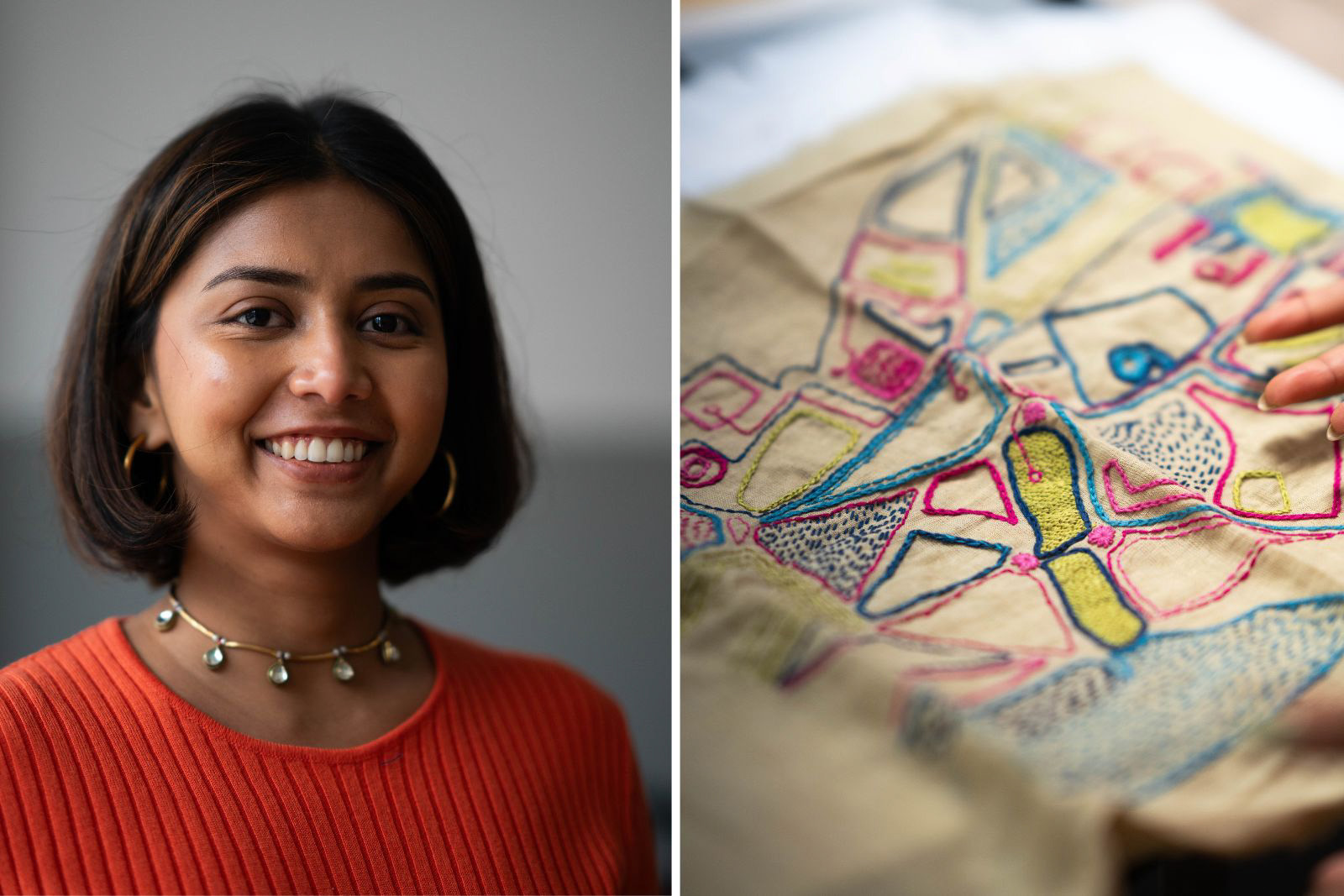
The result for immigrant women, Varma says, is economic and social isolation. Varma identified craft as a way to combat this and bring women together. With the aid of a €600 university grant for materials, she connected with the Lisbon Project — a non-profit organisation that supports migrants and refugees in the city — to start a guided embroidery workshop.
“I chose embroidery because it’s something you can practise at home. It was only meant to run for two days,” she said.
But the two-day course was such a success that responding to demand, Varma launched a two-month version with weekly afternoon meetings structured to fit around the participants’ children’s school timetable.
This has evolved into 12-week workshops and Varma has now run five in the past 15 months. Participants progress from learning basic stitches to developing complex artworks. They also forge friendships and build support networks. Most of the women are Muslims from Bangladesh and Pakistan, but previous groups have included participants from India, Nepal, Afghanistan, Morocco and Algeria.
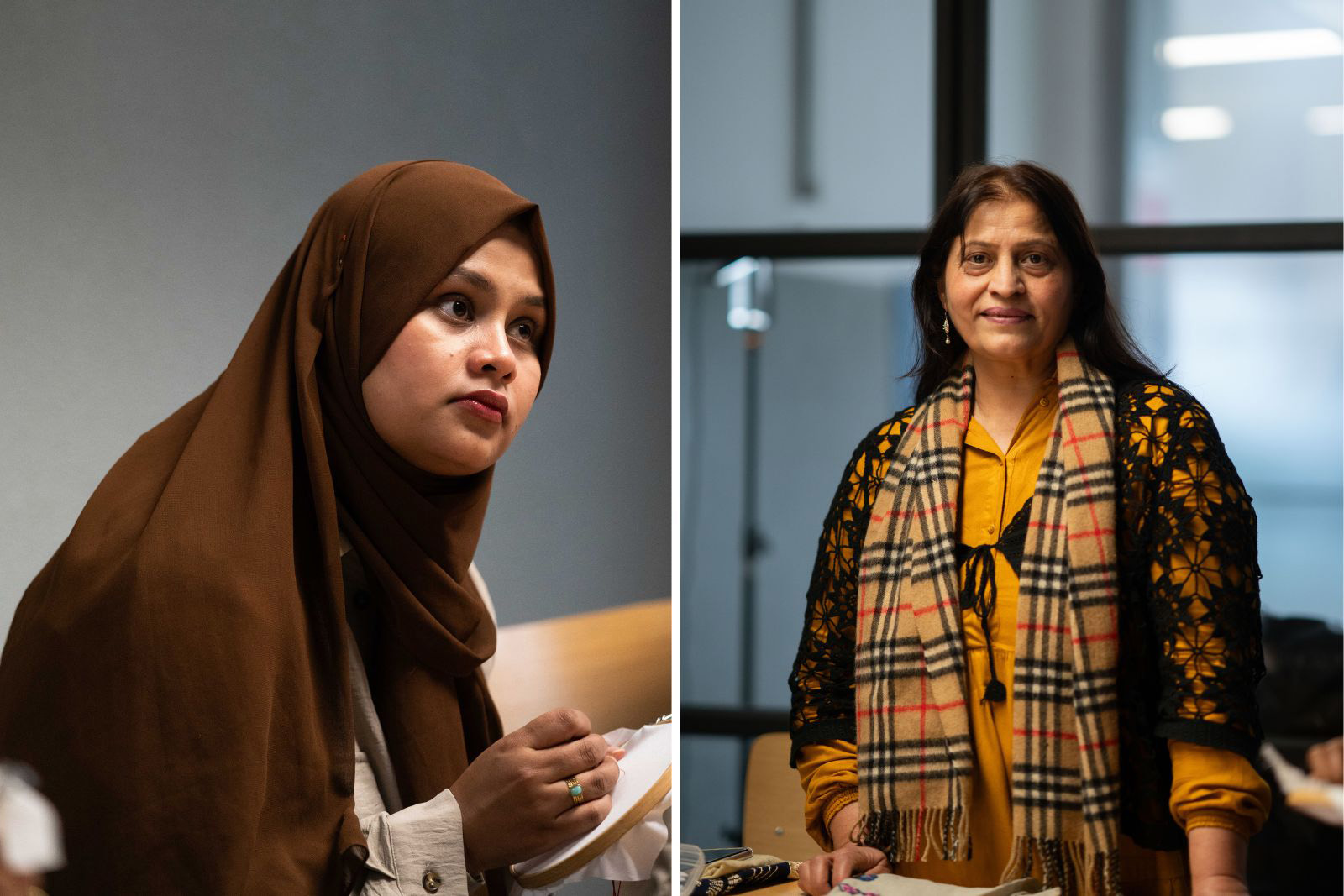
There are nine in the current cohort: women from Bangladesh, Pakistan, Kenya and the US. All are new to the project except for Shamim Muneer, who has been involved since the start and now has a paid teaching role with Homelore. The 47-year-old moved to Lisbon from Pakistan four years ago with her husband and three of their children. She learned stitching in her 20s but stopped when she was married. She was referred to Varma’s workshops by the Lisbon Project, after expressing an interest in picking up the craft again.
“When I came here I really started again and my memories came flooding back,” she said.
Others join with little experience. Al Muntaha, 28, from Bangladesh, had never embroidered before joining the group, which she heard about through a friend of her husband. A teacher back home, she moved to Lisbon nearly two years ago and now spends most of her time looking after their child.
“It’s hard without the language and a small baby,” she said. “When I’m home, I’m lonely with my boy. Because my baby is only eight months old, I can’t go outside. [The workshop] is one or two days in a week, so I can come here and I can talk with them. And I love them!”
In October last year Homelore received a grant of €50,000 from a municipal fund for community projects, which has enabled Varma to turn the workshop into a fully fledged enterprise. She’s clear she doesn’t want the group to become a solely commercial enterprise or just another feeder of Portugal’s large garment manufacturing industry; her aim is for Homelore to become a self-sustaining craft and social project. The group has started to take on some commercial work. They now stitch for Lisbon-based sustainable fashion brand Béhen Studio and tapestry commissions for people’s homes. Everyone involved is paid. Homelore aims to offer regular, reliable work rather than one-off commissions.
“Anything that can be embroidered, we do it,” Varma said.
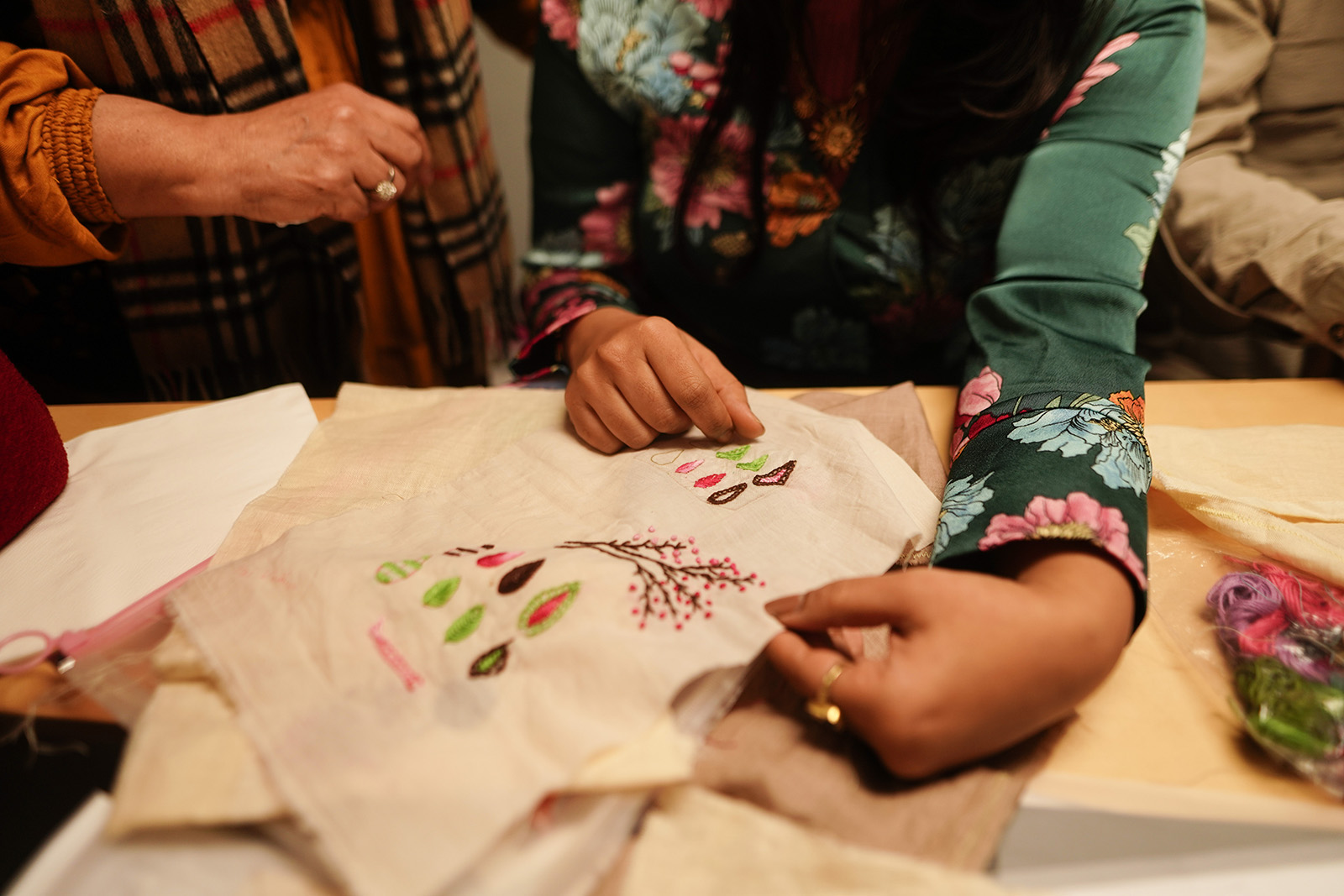
Most of the women in the current group joined for social and creative reasons. But for some past participants, the workshop has been a springboard into paid work in Portugal. “Homelore isn’t where you come to build a career,” Varma said. “It’s where you realise you could.”
In 2025 Homelore had three exhibitions, among them a collaboration with the Ourém municipality, a town near the centre of Portugal, once considered the border between the country’s Muslim south and Christian north. Inspired by the area’s history, the group produced tapestries playing on the idea of this border.
Maps — literal and emotional — recur throughout Homelore’s work. Taking Root includes fragments of Lisbon maps stitched with embroidered symbols marking places that matter in the women’s daily lives. Varma sees them as a record of migrant women’s movements through a city that does not formally document them.

Related content
In a parallel project, members collaborate with Lisbon residents who want to learn embroidery. Together, they map their different experiences of the city, creating a shared cartography of belonging.
Varma argues that too many social programmes — in Portugal and elsewhere — treat immigration as a problem to fix. She sees it instead as a chance to strengthen communities and widen participation. She hopes Lisboetas will come to the exhibition.
The exhibition falls during Ramadan and the group plan to have an iftar together on opening night. Varma is also already thinking about the next workshop, which starts in the spring. Several from the current group hope to continue with it. For them, Homelore provides something that is hard to manufacture. “I meet people here and I’m happy,” Muneer said. “Homelore is like my family now.”