

‘I used fear to guide me’: Tamer Nafar on his first English-language album
The Palestinian rapper oscillates between defiance and intimacy in his new album In the Name of the Father, the Imam & John Lennon

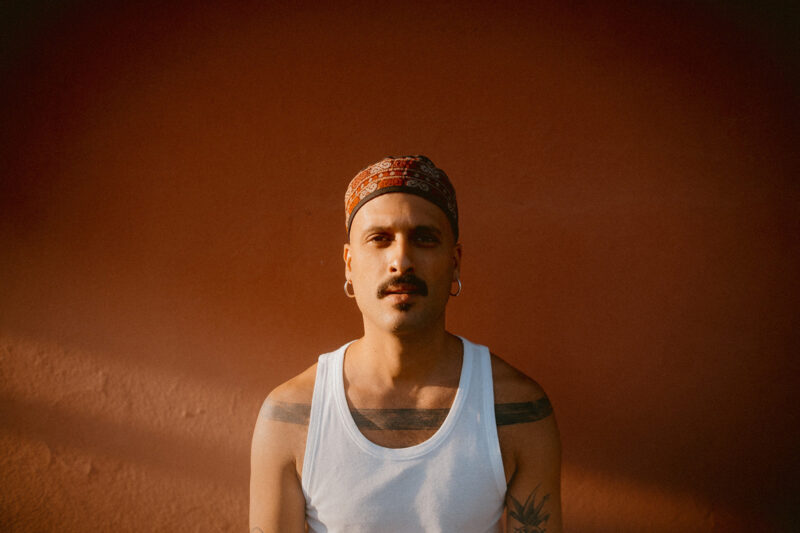
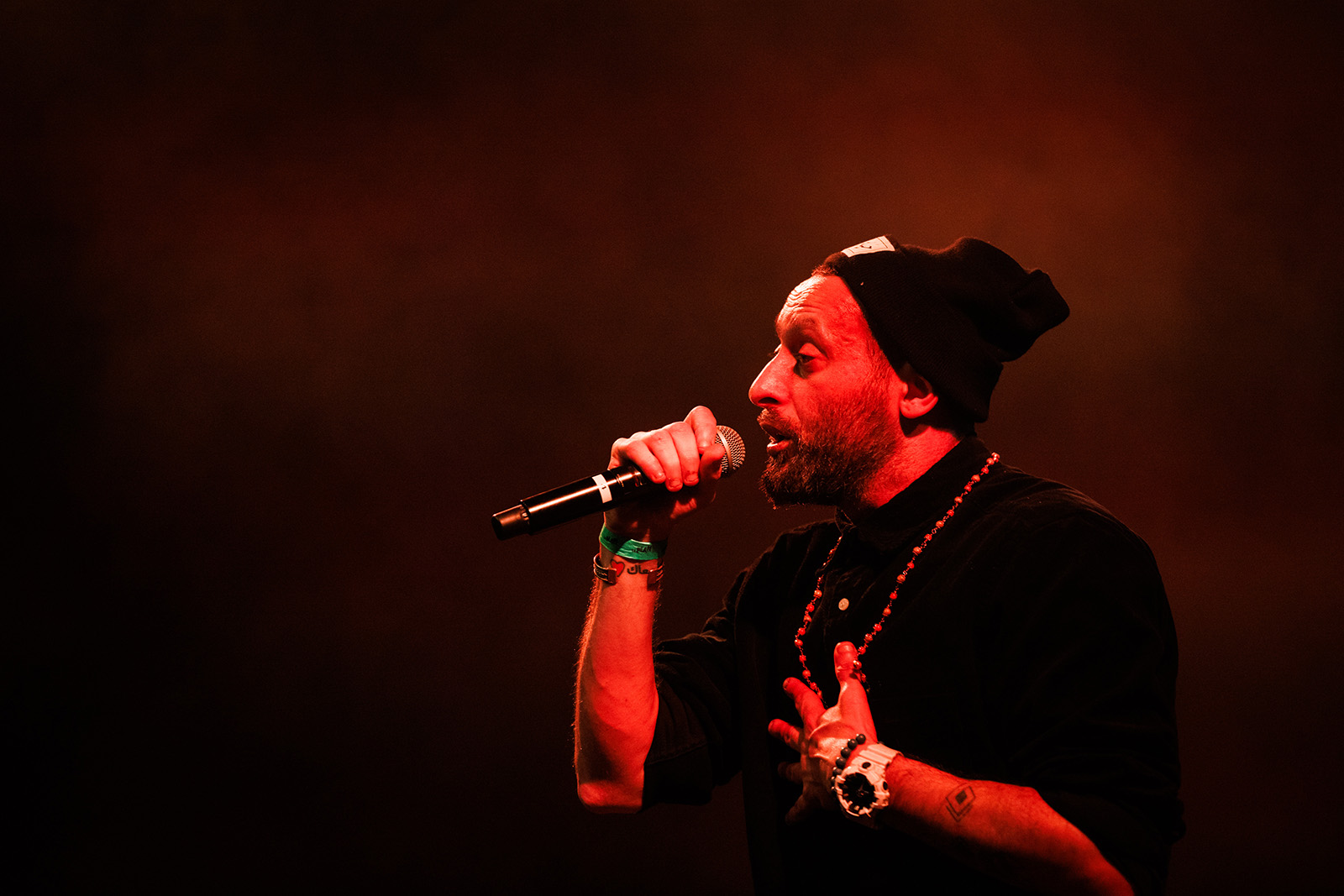
At 17, Tamer Nafar was rapping in broken English in his cramped bedroom in Lyd, a city near Tel Aviv, where he still lives. “I barely knew the language, but hip-hop came to me in English, so that’s where I started. I was trying, failing and laughing at myself in my bedroom pronouncing all these new words,” says Nafar, 46, over a video call from his balcony.
Armed with a Tupac cassette and an English-Arabic dictionary, Nafar was experimenting with beats and rhymes, unaware that two years later he would go on to co-found DAM, the first Palestinian hip-hop group.
The collective became pioneers, using Arabic-language rap as a politically charged voice from the region and shaping a generation of artists. Nafar also didn’t think that decades later, he would return to the language of his earliest experiments — not out of nostalgia, but necessity.
Related content
In the Name of the Father, the Imam & John Lennon is the Palestinian rapper’s first English-language album, out on Levantine Music/Empire Records on 20 January. The record has been years in the making — written and recorded largely before the pandemic, then left unfinished “sitting in a drawer”.
The decision to release it now, Nafar says, came after the ongoing devastation in Gaza intensified a long-standing question of how and by whom Palestinian stories are heard.
“At first, I stayed quiet, thinking about my family,” he says, referring to the dangers faced by Palestinian artists, particularly since 7 October 2023. “Over time, I returned to releasing music, learning to navigate fear without letting it dictate my work. I gave fear space, listened to it and used it to guide me rather than silence me.”
Nafar had always dreamed of making a full album in English. “But my Arabic career, and the political battles I kept finding myself in, kept pushing it further and further away,” he says. “And now the time came for politics, generational trauma, all of it, to come together in one album. Trauma that’s Palestinian, but also completely human.”
Over the years, Nafar has built a reputation across the region not only for his music but for speaking candidly on social and political issues, making him one of Palestine’s most recognised voices in hip-hop.
The album opens with The Beat Never Goes Off, a collaboration with young Palestinian artists including Gazan rapper MC Abdul and singer-songwriter Noel Kharman. MC Abdul, 17, contributed his verses remotely from Gaza. Their presence together exists only through production, but Nafar does not attempt to disguise the separation. The song signals the record’s terms: bold, collaborative and, as Nafar says, “alert to the fragility and resilience of Palestinian voices under pressure”.
Go There, Nafar’s first drill track, confronts rising crime and systemic neglect within Palestinian communities in Israel. It draws on UK drill’s heavy 808 basslines, bringing urgency to the song. Lyrically, Nafar refers to his own experiences navigating life in Lyd, a former Palestinian city now with a majority Israeli population.
“Crime doesn’t appear out of nowhere,” he tells me. “It grows where people are abandoned.”
For Nafar, that abandonment is structural rather than cultural. Communities left without investment or protection, then punished for the consequences.
Elsewhere, the album leans into hybridity. The song NaNa reworks a traditional Palestinian lullaby over a Detroit-techno inflected beat, featuring Palestinian American rapper Sammy Shiblaq. The song moves fluidly between Arabic and English; the languages sitting beside one another without translation.
“English isn’t the answer to everything, but it allows me to shape ideas and concepts differently,” Nafar says. It is not solely about accessibility, but emphasis. “I wanted people to hear the nuances in the lyrics like the punchlines, wordplay, metaphors, allegories. It’s not only about what I’m talking about in the songs, but how I say it, and the very specific, personal angle it’s coming from.”
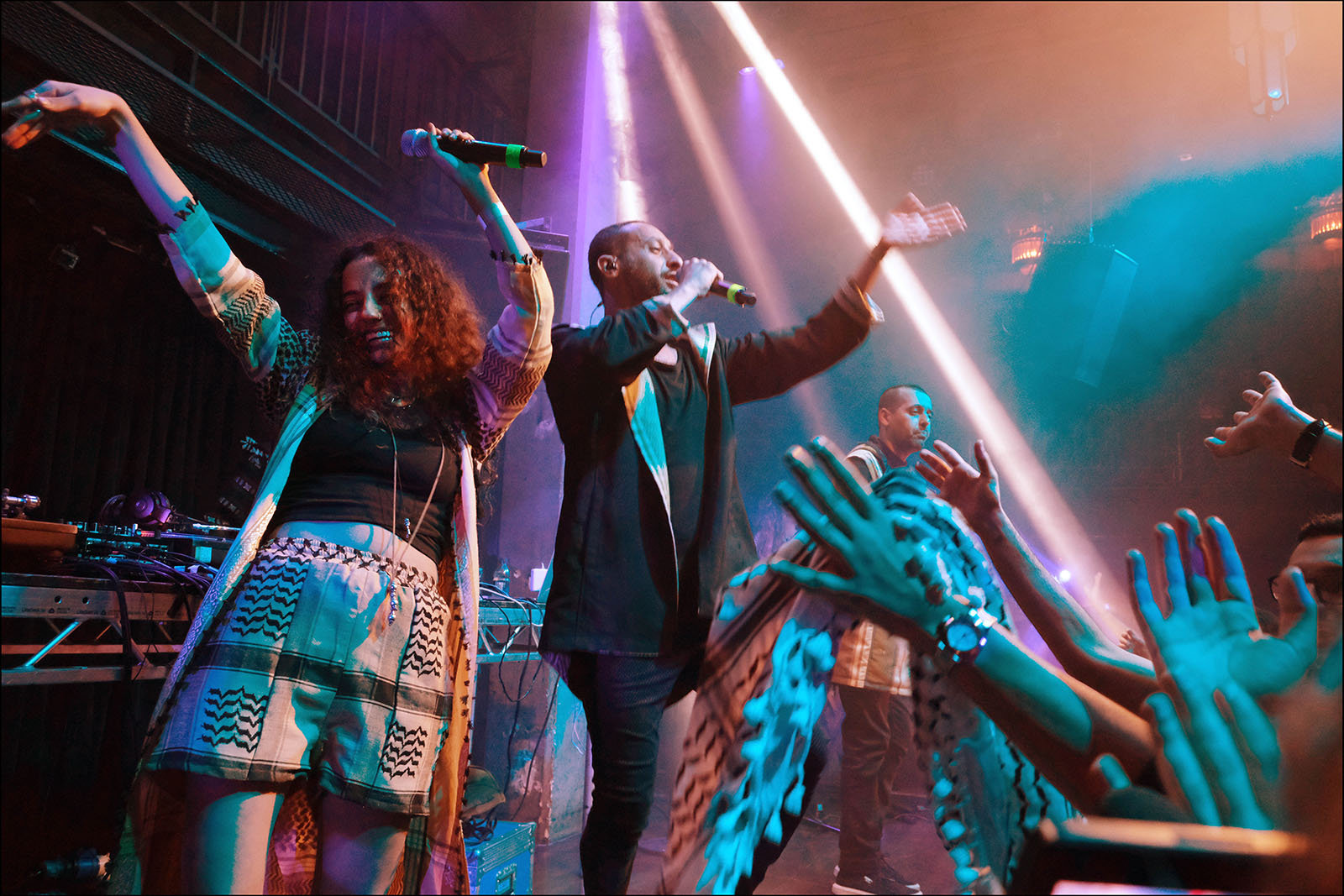
Nafar is conscious of the limits of art, but also its power. “Art isn’t a roar that moves systems. But I can make art, and there I can give 100% of myself,” he says.
“The people who were killed deserve their stories to be heard. They must be part of the central narrative. And art is one of the tools that has to reach Europe where decisions about funding, media exposure and political support often determine whose voices are amplified.”
In January Nafar begins his first European solo tour, after years in which performances by Palestinian artists have been threatened with cancellation, particularly after heightened political tensions. Europe, he notes, offers both opportunity and ambivalence.
“Sometimes stages open only when headlines flare,” he says. Attention often spikes around crisis — his aim is to be present beyond it, demanding that audiences engage with his work on musical terms, not just political ones.
Related content

Each track on In the Name of the Father, the Imam & John Lennon oscillates between defiance and intimacy, moving through elements of hop-hop, drill and funk, echoing the complexities of Nafar’s life and his homeland.
At the emotional core lies the title track, a meditation on fatherhood, memory and absence. Nafar imagines a conversation with his late father, a man who would play Qur’an recitations and Beatles songs while driving through Palestine. “He loved Lennon, I wished he could hear my music too. I break into that conversation through the song, not to talk politics, but to finally have a conversation with my father,” he says.
“This album is a chance to be honest about my life, my people and the realities we face. Each song is a chance to make people feel what we feel.”
In the Name of the Father, the Imam & John Lennon out on Levantine Music/EMPIRE Records on 20 January. Tamer Nafar is performing at Future Yard, Birkenhead on 26 January and London’s Jazz Cafe on 27 January.