

Is slow living possible when you have young children?
As a parent, not everyday will be slow, but changing the way you approach life might help you find pockets of calm

Recently, I’ve been dedicating time to work through an adult colouring book. It’s my attempt at slow living. This movement emerged to counter hustle culture, proclaiming the benefits of intentionally slowing down your pace of life, being mindful in everything you do and focussing on meaningful connections with friends and loved ones. It asks you to find joy and use in the material things you currently own, rather than purchasing more, and to make a deliberate decision to rest without feeling guilty about “doing nothing”.
But can you really do this while raising a child? Young children don’t slow down for anyone.
New parents are close to burnout, according to a 2025 survey by Bright Horizons, a provider of backup childcare. It found that a third of parents feel very stressed, 80% say they find it hard to focus and 67% find it difficult to function.
Towards the end of last year I experienced a mental health setback when I was unable to access NHS healthcare for my son’s eating disorder. I fell back into experiencing chronic anxiety, insomnia and depression. My solution was to simply do less and dedicate time to just one meaningful task. And as a parent, I found the only way I could try to engage in slow living was to involve my four-year-old son.
I began by reflecting on the way Ammar behaved as a toddler, how he pottered around the house instead of rushing about or charging up and down the stairs like me. It turns out, this is key to slow living, a skill that toddlers and the elderly are both adept at. Pottering around — moving about slowly and mindfully — has benefits including reducing stress and even bringing down the risk of cardiovascular disease in women. Instead of trying to get chores done at the speed of light, I decided to potter instead. My stress lifted almost instantly.
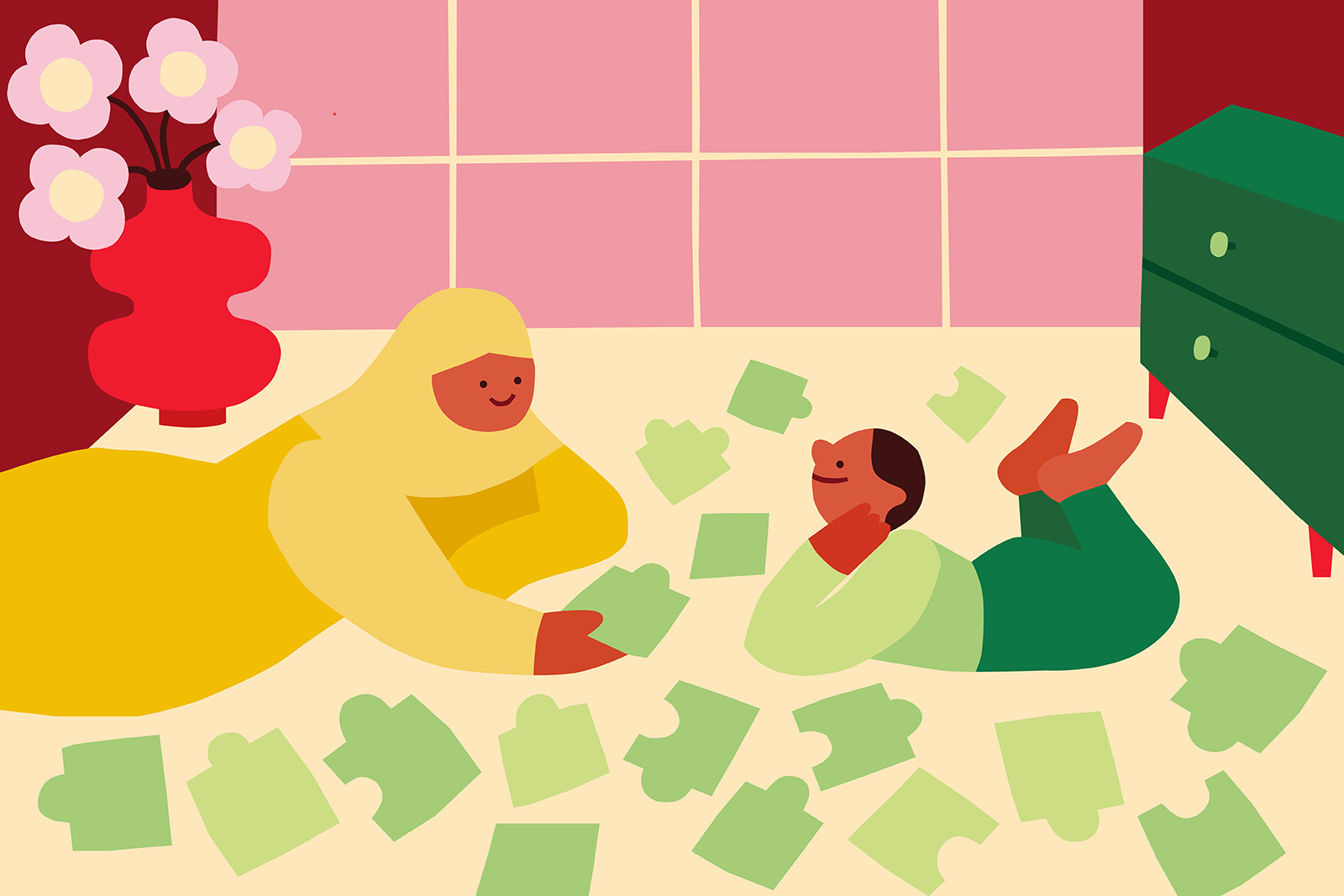
I thought about the immense joy Ammar takes in slow-paced pastimes such as colouring, Lego and jigsaw puzzles and decided to swap scrolling on social media for the adult equivalent of these activities. Having time on my own is not always possible, so I encourage Ammar to take part in the same things I’m doing. We will sit together but be absorbed in our own colouring or puzzles. It has definitely made for a calmer mother and son.
I realised that to increase my feelings of joy and calm, I needed to reframe periods of time at home from being “boring” or “doing nothing” to being moments in which we can both rest. I used to get anxious when I found Ammar just hanging around, thinking I needed to schedule something for him to do. But this is a normal part of childhood; he needs to be bored sometimes and to develop the skill of inventing his own games.
If you search slow living on social media, you’ll find young women strolling through lavender fields, baking pies from scratch and reading novels in cosy coffee shops. But slow living with children does not need to be Instagram-worthy. It does not need to be Ammar and I baking the perfect cookies together, frolicking in a field or milking a cow while I wear a prairie dress.
Slow living does not mean I’m neglecting my responsibilities either. For me, it is about reconsidering my to-do list and asking: “Do I need to do all these tasks in one day?” and “Is this social visit really an obligation?” As a parent, not everyday will be slow, but taking more time with things has taught me to find small pockets of calm and make the most of them.